AI Insiders Warn of Hyperscaling Risks
Major technology firms are investing billions of dollars in new data center facilities, power supplies, and computing resources. Industry insiders, however, are divided over whether artificial intelligence is worth the cost.
The five biggest cloud and AI infrastructure providers in the United States—Alphabet, Amazon, Meta, Microsoft, and Oracle—have committed to spending almost $700 billion combined on AI capital expenditures this year, Futurum reports.
AI’s computational resources, or “compute,” are a primary driver of the technology’s growing resource footprint. This includes things such as memory, processing power, and specialized hardware. Many AI models run on cloud computing, most of which is provided by one of three tech giants: Amazon Web Services, Microsoft Azure, and Google Cloud Platform.
According to Usage AI, those three companies alone represent around 68 percent of total global cloud compute spending, giving rise to the term “hyperscalers.”
Hyperscale facilities come with significantly higher resource demands, and there are an estimated 670 of these facilities planned in 2026, iRecruit.co reports.A growing number of Americans are using AI every day, with nearly half using some kind of AI chatbot regularly. Roughly one in four U.S. adults use these tools on a daily basis, according to a 2026 Pew Research Center study. The technology’s footprint has prompted some insiders working on the front lines to pause and consider the true cost of its rapid development.
“The engineers and architects actually building these systems are the ones asking the hard questions about compute, model redundancy, and whether the infrastructure footprint is proportional to the value being delivered,” Elvin Aghammadzada, an AI architect at NVIDIA whose job gives him “a ground-level view of what serious AI compute actually demands,” told The Epoch Times.
“The infrastructure required to run production agentic applications at enterprise scale—the GPUs [graphics processing units], the cooling, the redundancy—is substantial, and it compounds fast as adoption accelerates.”

Numbers vary, but there are currently more than 3,000 operational data centers in the United States, with roughly 1,500 more either planned or under construction, according to research by Consumer Reports.
Water and power demands are accelerating alongside AI’s growing footprint. Electricity price spikes between 2025 and 2026 have been observed in multiple states amidst the rush to build more data centers to support AI, the U.S. Energy Information Administration found. These facilities account for roughly 55 percent of U.S. electricity demand growth, according to Grid Strategies research.
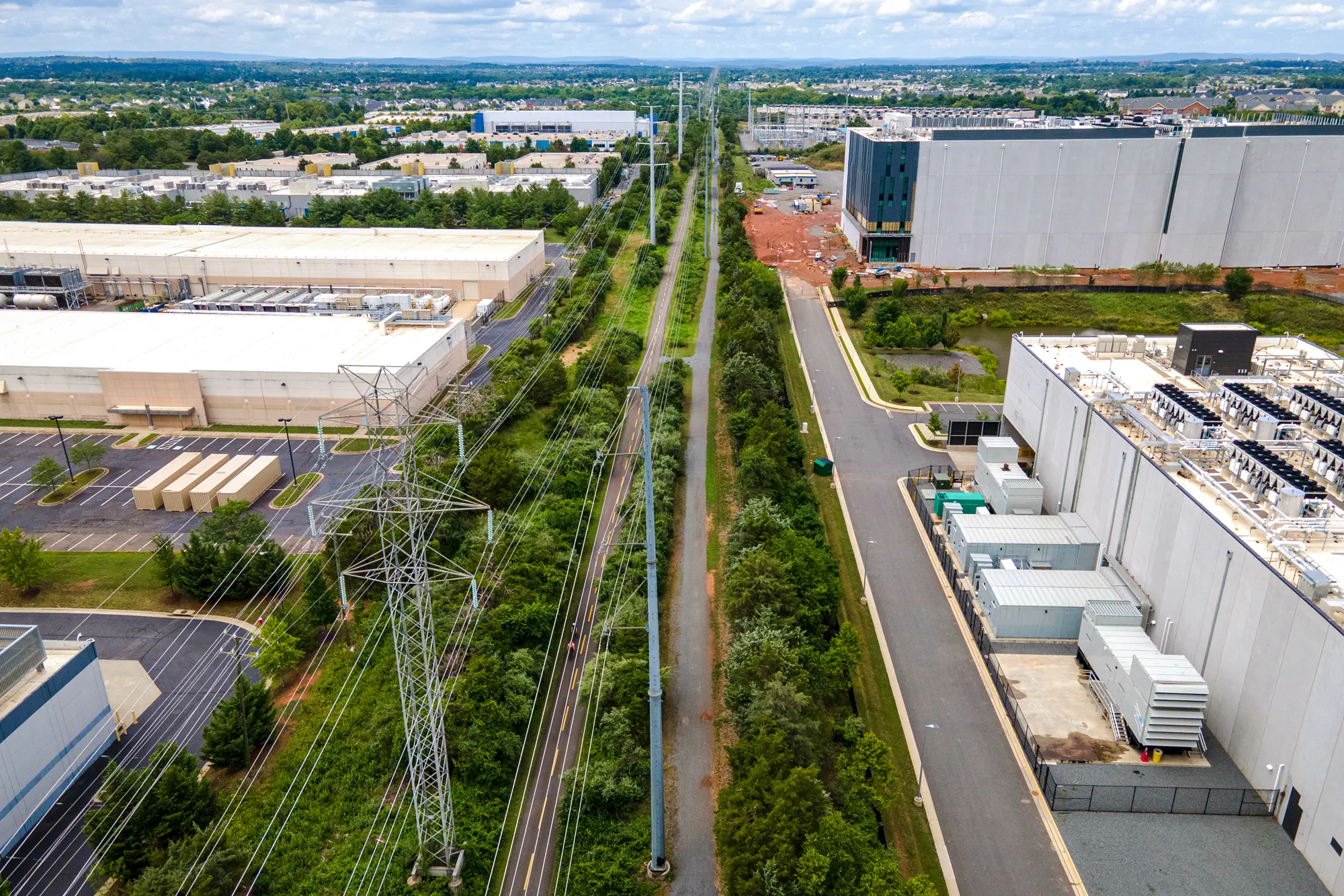 High-voltage transmission lines provide electricity to data centers in Ashburn, Va., on July 16, 2023. Data centers account for roughly 55 percent of the growth in U.S. electricity demand. Ted Shaffrey/AP Photo/File
“The honest answer the industry doesn’t want to say out loud is that current grid and water infrastructure in most markets was not designed for this trajectory,” Aghammadzada said.
Brent Fisher, co-founder of AI security firm Cognetryx, believes these resource demands are a reason to pause and consider a different approach.
“Most of my week is spent talking with banks, high-security clearance contractors, and health systems about what they can and can’t put into an AI tool,” he told The Epoch Times, adding that different decisions can be made in terms of data storage.
Fisher said most enterprise AI doesn’t need to run in a resource-stressed regional facility, such as in the Nevada desert. Adjustments to this could make AI more viable in terms of consumption.
“Short-term, there’s no clean fix,“ he said. ”Data centers already in the pipeline will get built outside of a few areas where legislation from municipal authority can be easily overturned by popular acclaim, and power contracts already signed will get used.
“What the industry can actually do right now is stop treating hyperscale cloud [compute] as the default deployment model for every AI workload.”
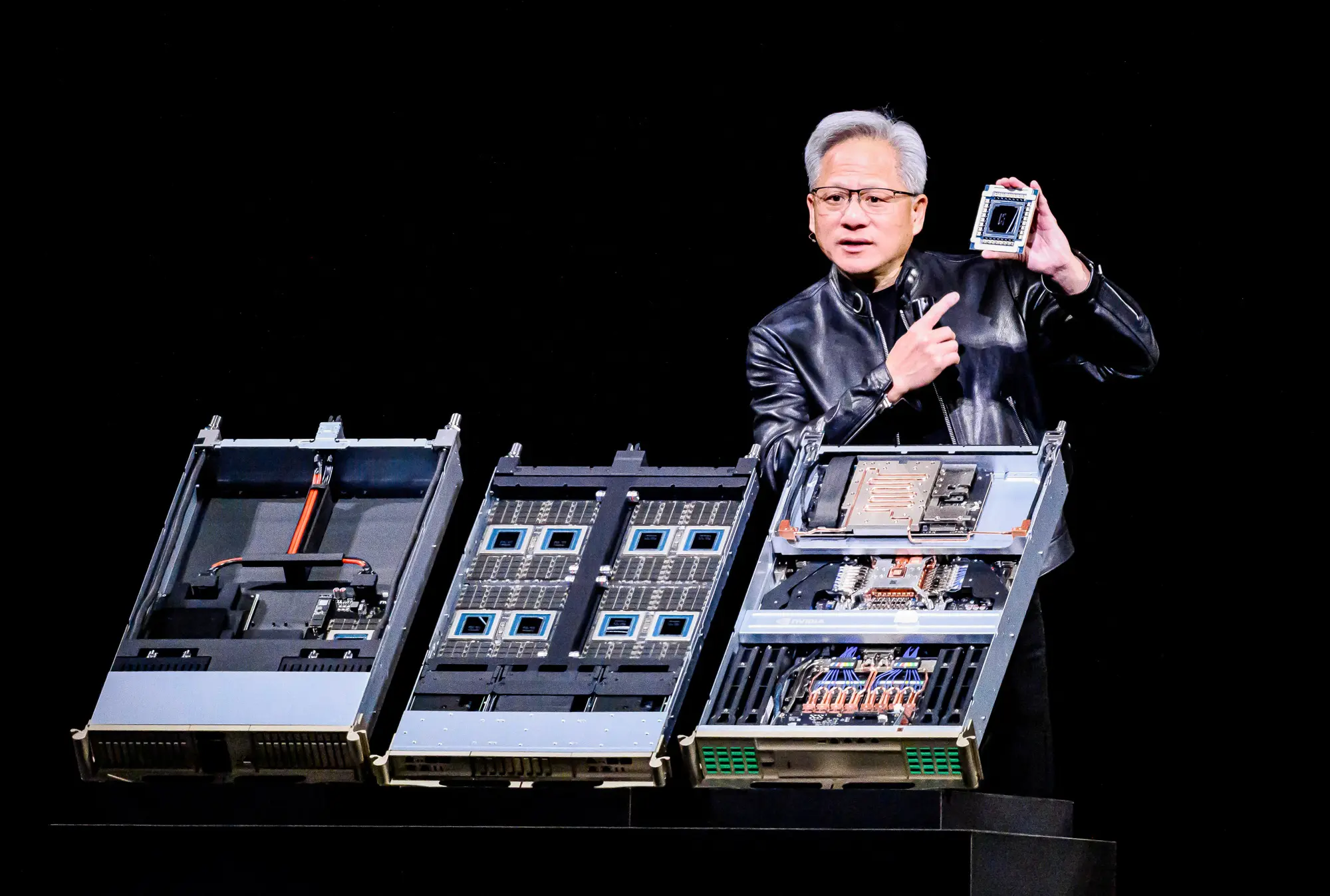 Nvidia CEO Jensen Huang introduces Vera Rubin, a next-generation AI data center platform, and Rubin Ultra, a next-generation AI GPU architecture, at the company's annual developers conference in San Jose, Calif., on March 16, 2026. Nearly half of Americans regularly use some kind of AI chatbot. Josh Edelson/AFP via Getty Images
A company using AI for internal document search, compliance monitoring, or operations support can run that workload on hardware they already own or lease, within a data center footprint they’re already paying for.
“It’s just a different architectural decision that almost nobody is pushing, or educating, enterprises to make,” Fisher said.
Michaela Brady, international AI policy adviser for the UK’s Department for Science, Innovation, and Technology, told The Epoch Times: “There is no feasible way we can meet the resource demand the top AI companies are proposing and still keep our communities alive. In hindsight, AI tools should have been deployed only in the sectors that truly needed it, such as medicine, diagnostics, engineering, and manufacturing.”
Brady said the idea of a gradual, structured AI rollout was abandoned early on.
“Instead, the models were released for general-purpose use to generate profit for both the companies that develop the models and those that adopt it,” she said.
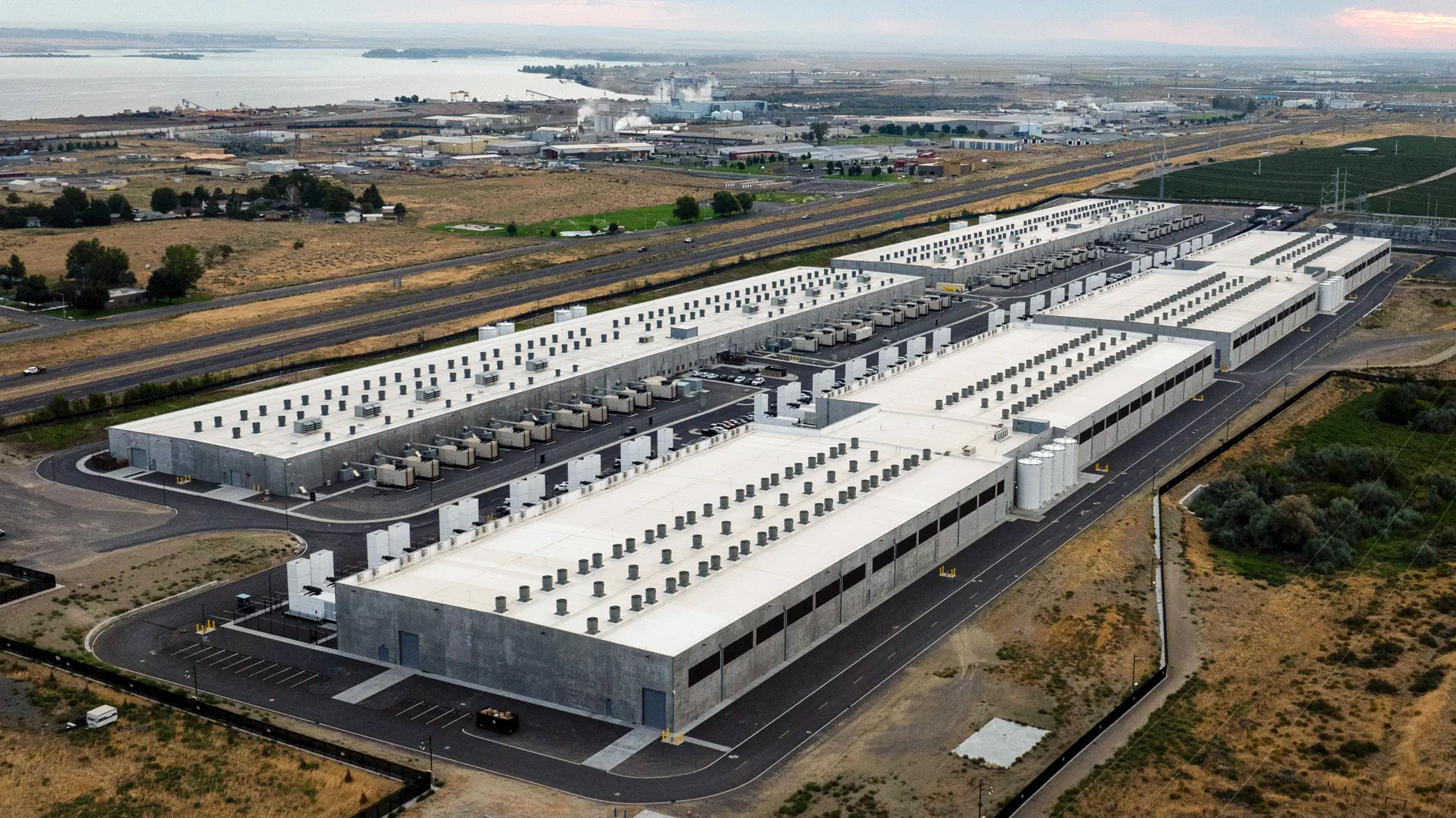 An Amazon Web Services data center in Boardman, Ore., on Aug. 22, 2024. Many AI models run on cloud computing, most of which is provided by Amazon Web Services, Microsoft Azure, and Google Cloud Platform. Jenny Kane/AP Photo/File
Brady also challenged the validity of the metrics used to measure how much of the population is using AI by choice versus by default.
Premium Picks


“AI’s utility is being fluffed up to justify its progression,” she said. “The demand itself is inflated, as tools like Google’s Gemini or Microsoft’s Copilot are now generating responses and summaries without user consent, and make it nearly impossible to opt out.”
She gave an example from her experience working with the UK government.
“We fully adopted Copilot this past year, and there was no option to turn off the document summary function on Word, even if a civil servant didn’t want it,” Brady said. “IT teams never responded to our queries about how to opt out.”
Meanwhile, industry groups and infrastructure say these concerns must be weighed against the economic and societal benefits AI infrastructure has already delivered.
Dollars and DemandIn March, a RoAI Institute survey of 1,006 global executives revealed nine out of 10 were experiencing moderate to great value from their companies’ AI investments. Additionally, businesses report earning $3.70 for every $1 invested in AI, according to an Elementor analysis.
“There are data centers in pretty much every industry, and the amount of storage needed is also increasing,” Rose Weinschenk, research associate for Uptime Institute’s Uptime Intelligence, told The Epoch Times.
 Attendees try out activities related to Google's use of AI with Gemini, during an event in Mountain View, Calif., on May 20, 2025. Camille Cohen/AFP via Getty Images
Weinschenk said one of Big Tech’s key challenges is the public’s response to data center expansion.
“I think the issue is, a lot of companies want to work with communities in a way that benefits the community. And because a lot of tensions are inflamed, it’s hard to have these conversations,” she said, acknowledging that it’s a bit of a catch-22. “A lot of the time, trust has already been breached [with communities], and you can’t even get that conversation started.”
Consequently, Weinschenk said one conversation that’s happening within the industry is how “micro grids” could be a potential electricity solution. These smaller grids would operate independently from the public power supply.
“It’s becoming more and more expected for data centers to pay for their own infrastructure,” she said.
Major players in tech have openly committed to reducing energy and water consumption as much as possible. On its website, Google said it strives to create the “world’s most energy-efficient computing infrastructure,” and outfits each of its data centers with servers designed to use as little energy as possible.
 People protest against the construction of the Stratos data center in Box Elder County, outside the Utah State Capitol in Salt Lake City on May 23, 2026. About 1,500 data centers are currently either planned or under construction in the United States. Natalie Behring/Getty Images
Amazon Web Services plans to become “water positive” with its campuses by 2030, meaning it will return more water to the communities than it uses in its operations.
“At a time when the average American household has 21 connected devices, the demand for data is increasing rapidly,” a spokesperson for the Data Center Coalition, an advocacy and public outreach association for those in the data center industry, told The Epoch Times.
“Data centers power modern life, from telehealth and digital classrooms to banking, air travel, financial transactions, and online shopping, and enable critical functions of the U.S. military, cybersecurity, and first responders.”
The spokesperson emphasized that the same facilities that power AI also ensure that homes, businesses, and critical infrastructure operate efficiently.
But the people who work closest with AI say these gains in efficient resource usage likely won’t matter if the technology continues to expand.
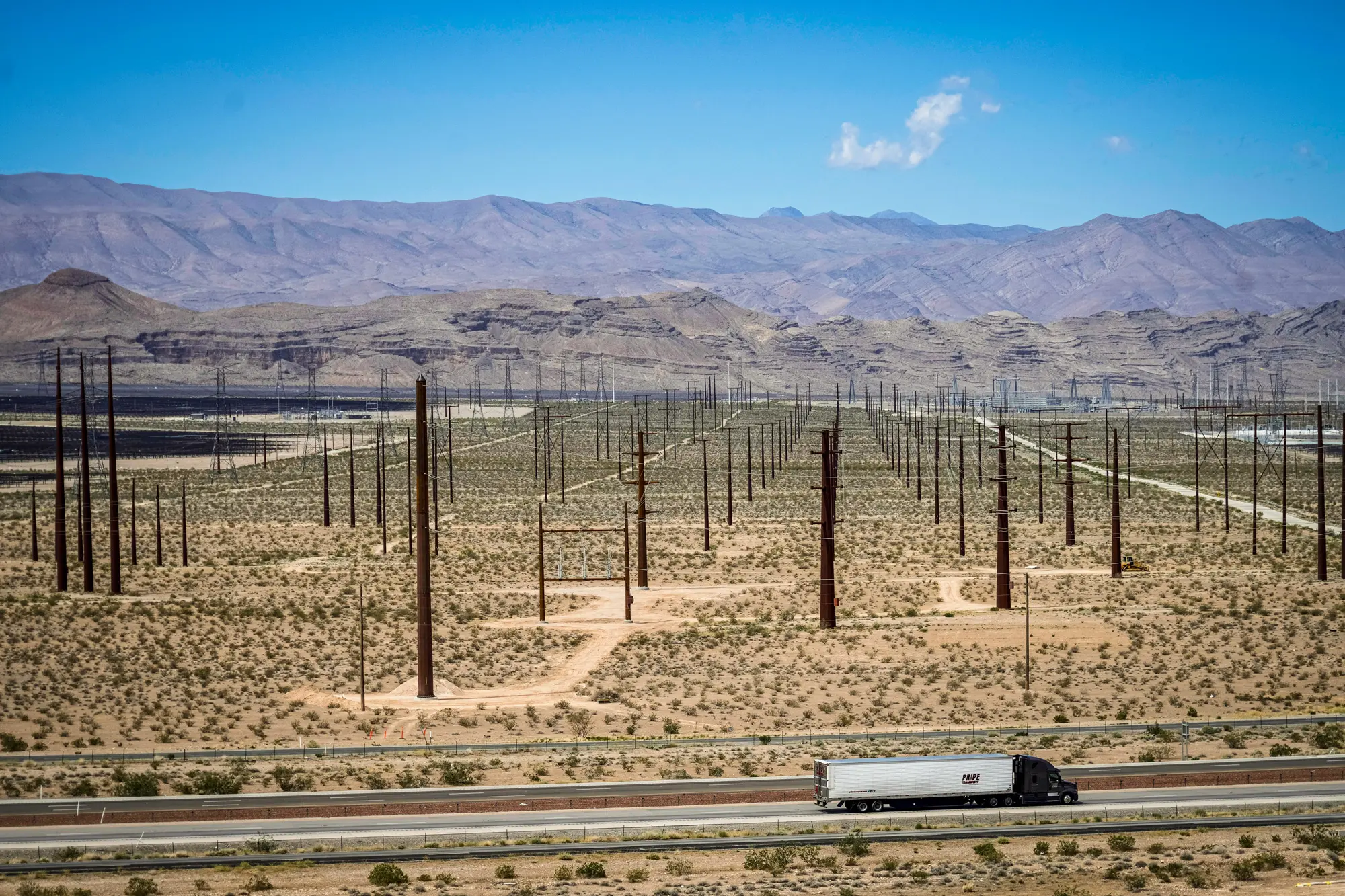 Electrical infrastructure located in North Las Vegas on April 2, 2026. Electricity prices have spiked in multiple states amid the rush to build more data centers to support AI. Ty ONeil/AP PhotoJevons Paradox
“Efficiency gains alone won’t solve the AI infrastructure problem. They help, but demand tends to expand as AI becomes cheaper and easier to deploy,” Sai Joshitha Kathari, senior site reliability engineer with Visa, told The Epoch Times.
In the near-term, Kathari believes companies need stricter workload placement, better utilization of existing GPU and central processing unit capacity, and a more transparent measurement of the impact on external resources.
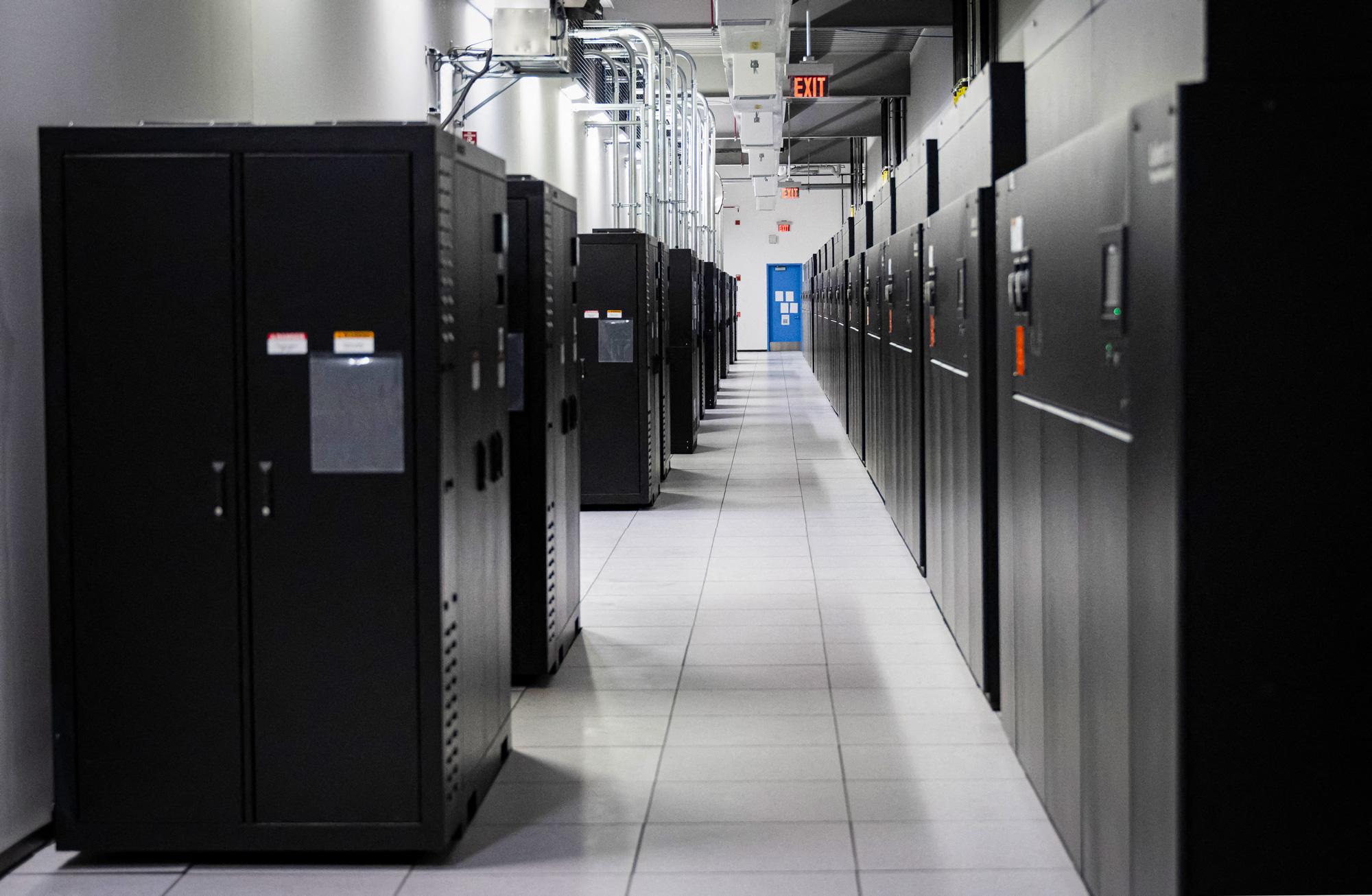 Power banks and servers at a Digital Realty data center in Ashburn, Va., on Nov. 12, 2025. Andrew Caballero-Reynolds/AFP via Getty Images
Fisher agreed.
“Efficiency gains lower the cost per unit of compute, which historically drives more total usage, not less. We’re already seeing it,” he said.
Fisher believes AI is an example of the Jevons paradox, an economic theory that states as technological progress increases the efficiency of resource usage, the total consumption of that same resource will only increase.
“AI is following the same curve that faster chips and cheaper cloud compute have followed for 30 years,” he said.
We had a problem loading this article. Please enable javascript or use a different browser. If the issue persists, please visit our help center.