‘Shall not be infringed’ — even if you're high, Supreme Court rules | Blaze Media
A Texas man who told federal agents he smokes marijuana every other day just walked away from the Supreme Court with his gun rights intact.
Federal agents had descended on Ali Hemani's Dallas-area home in 2022, chasing a terrorism lead that ultimately went nowhere.
‘To state the analogy is to expose its deficiency.’
What survived the raid was a confession. Hemani, who has American and Pakistani dual citizenship, surrendered his gun, showed agents the marijuana, and admitted in a voluntary interview that he used it every other day.
Texas treats simple possession as a low-level misdemeanor. Instead, federal prosecutors argued that Hemani's single admission — regular marijuana use — was enough on its own to support a felony charge carrying up to 15 years and a lifetime firearms ban.
It just collapsed at the Supreme Court.
Justice Neil Gorsuch made the gap explicit in the majority opinion: "No matter that the government did not assert Mr. Hemani was a drug addict. No matter that it did not contend his drug use had ever led him to pose a danger to himself or others."
The justices affirmed the dismissal 9-0 on the bottom line. The reasoning split 7-2.
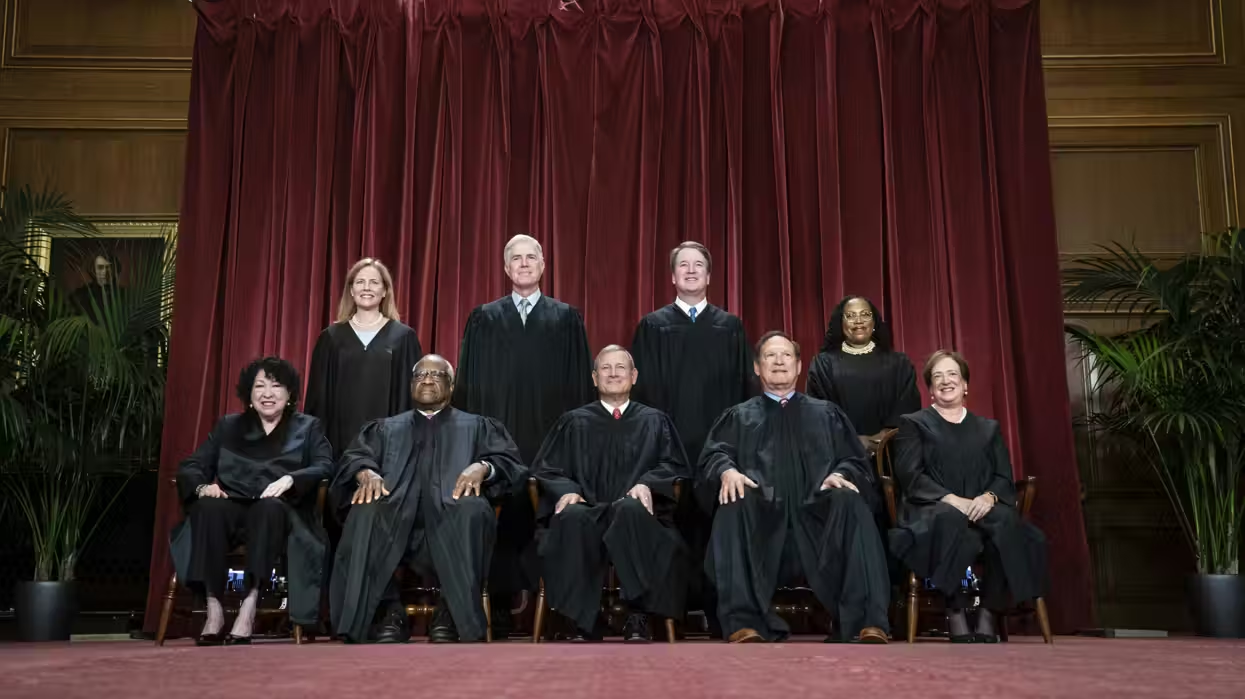 Jabin Botsford/Washington Post/Getty Images
Their holding: Charging Hemani under 18 U.S.C. §922(g)(3) — the law barring "unlawful users" of controlled substances from owning guns — violated the Second Amendment.
The government tried to justify the ban by analogy to historical "habitual drunkard" laws that once restricted gun rights for chronic alcoholics. The seven-justice majority rejected it for three reasons:
Handing the government that kind of unchecked power, the court warned, would risk letting it "quickly swallow" the Second Amendment.
The ruling is narrow. It leaves the law untouched for addicts, people currently intoxicated, and felons.
Two concurrences hinted at larger fights ahead.
Justice Clarence Thomas wrote that he doubts the broader gun-ban statute "could be an exercise of Congress's Commerce Clause powers as an original matter" — a favorite line for federalists, a headache for federal prosecutors.
Justice Ketanji Brown Jackson, joined by Justice Sonia Sotomayor, called the court's current Second Amendment framework "unworkable" — though for the opposite reason than conservatives might assume. Jackson wants courts to give the government more room to regulate guns, not less.
Justice Samuel Alito, joined by Justice Elena Kagan, also wrote a separate concurring opinion.
The ruling affirms the Fifth Circuit's decision.
Like Blaze News? Bypass the censors, sign up for our newsletters, and get stories like this direct to your inbox. Sign up here!