The Lost Charms of ‘Football,’ and of Life
Americans, like Indians, have largely been immune to the charms of soccer, or what we in Europe call football, and so am I, though in my case it was not always so. Whether the current World Cup changes that remains to be seen.
When I was a boy, I thought soccer was important, though never quite as important as Bill Shankly, the manager of Liverpool Football Club, thought it. He said that football was not a matter of life and death—it was much more serious than that.
The sport has changed out of all recognition since I first attended a professional match in England more than sixty-five years ago. The changes have been both for the better and worse: the changes for the better tangible, those for the worse intangible and therefore giving rise to nostalgia, an emotion that these days is much, and wrongly, deprecated. Past a certain age, if you feel no nostalgia, you must have led a miserable existence.
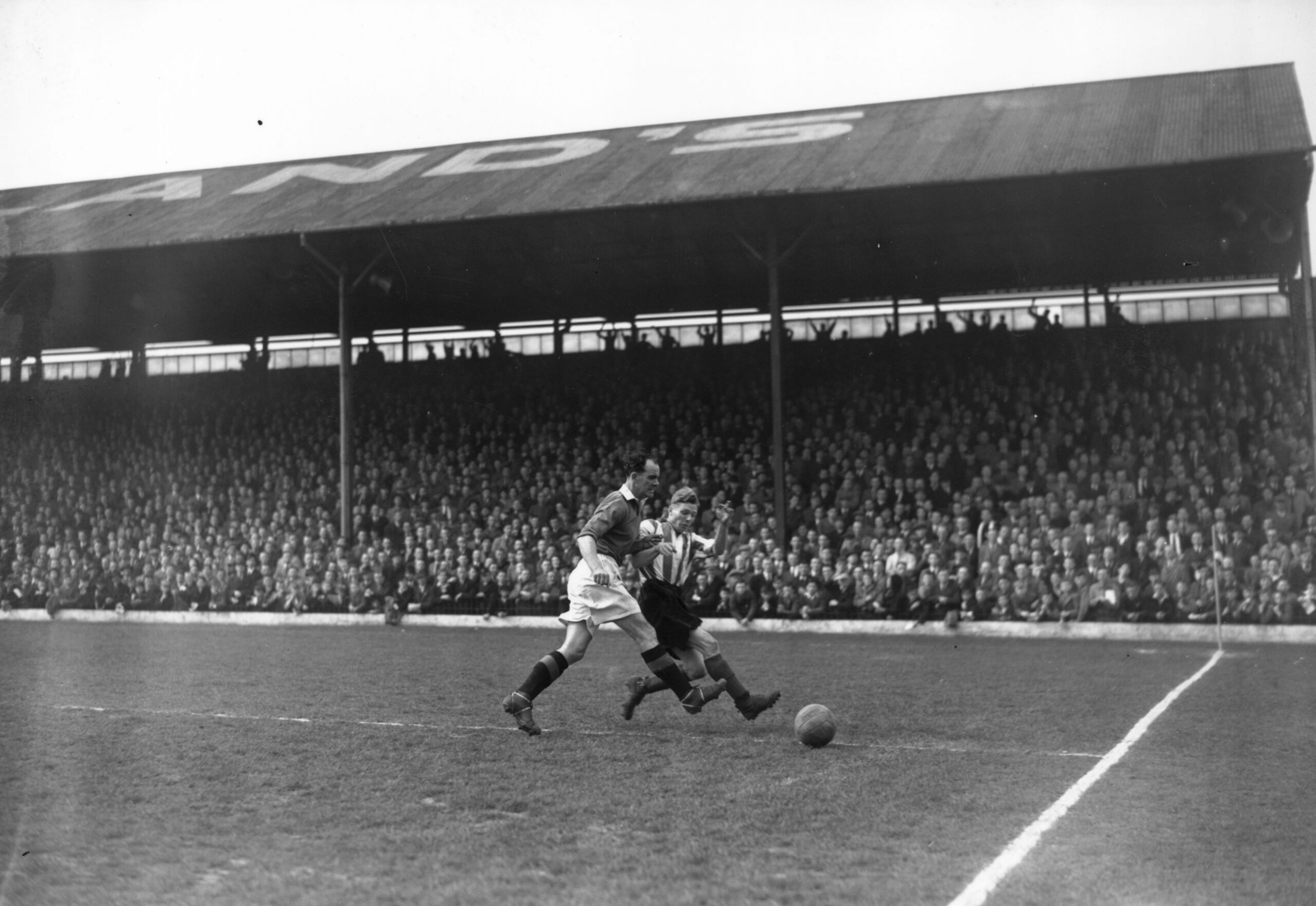
I look back almost with astonishment at the conditions of the game when I was very young. The stadiums were uncomforting and dilapidated, with terraces on which the majority of the crowd stood, not sat. If the stand was covered, which often it wasn’t, it was by a corrugated iron roof. The pitch was of real grass, and when it rained, as often it did (soccer being a winter sport), the ground turned to gloopy mud through which the players struggled as if in the trenches of Flanders during the First World War. The leather ball became heavy and sodden, and kicking it must have been like kicking a cannonball. Many were the players who must have suffered later in life (but not so very much later) from a form of dementia pugilistica from having repeatedly headed such a ball.
It was not even as if they, the players, had been well-rewarded for their efforts. Astonishing as it may seem, the professional players were subject to a maximum, not a minimum, wage, which was about that of a skilled factory worker (in those days, there were still factories in England that made things). No club was permitted to pay its players more than this, so no team, or small group of teams, could monopolise the star players, many of whom were local to the teams. This meant that the competition between teams was more open: trophies and championships were not shared out monotonously between three or four teams at most.
The players were heroes, not celebrities. After the match, they went home on the bus, not in Ferraris. They gave their signatures to adoring schoolboys, but their lives were otherwise a blank page to the public. Their pictures appeared on little cards in cigarette packets or in packets of tea, avidly collected and swapped by boys (not girls). They were not multi-millionaires by the age of twenty-two.
I met a professional footballer when I was seven or eight. It was in a place called Sennen in Cornwall, where I had gone with my mother and brother on holiday. His name was Johnny Rainford, and he played for a team—Brentford—which was not one of the most famous of teams, but nonetheless respectably good enough. He would have been about 27 at the time, a gentleman, by no means dazzled by his own status. Of course, we were in awe of him, my brother and I, but he played patiently with us on a beach, his skill with the ball astonishing to us. It probably bored him to play with two young boys who had no skill at all, but (if I remember well) he exuded a kind of decency, patience and good-humoured modesty. We even ate with him once or twice in our hotel.
Of his subsequent life I know nothing, except that he died, alas, at the now comparatively young age of 70, a quarter of a century ago, in 2001. Peace and honour be to his memory! Strangely enough, I think of him, though I doubt that he was high-born, whenever (which is rarely) the subject of gentlemanliness comes up.
Since then, of course, professional footballers have undergone a process of celebrification. They are heavily tattooed, wear diamond studs in their ears, crash Lamborghinis into trees, and then go out and buy another one the next day.
But the fact is that they are remarkable athletes, who run up and down a pitch about 110 yards long for ninety minutes without apparent exhaustion (players used to be much more exhausted after a game, possibly because they did not follow so strict a regime). Their strength and skill are astonishing, and even someone who hardly knew the rules of the game would be able to see that they were supremely good at what they did. Their skill is vastly superior to that of the players of my childhood, no doubt in part because the conditions under which they play are more propitious for the exercise of such skill. The ball is light, the ground is firm, their boots are soft and supple compared with the agonising clodhoppers that I remember. As a spectacle, the game has improved out of all recognition—though, of course, we couldn’t have known all those years ago that it would do so, and thus we were satisfied with what we saw.
Subscribe Today Get daily emails in your inbox
The sport was a cheap entertainment, easily within the means of the ordinary working man, requiring no great financial sacrifice on his part to attend regularly. Now, he must either pay a ridiculously large portion of his disposable income to do so or cede his place to a member of the middle class.
Our psychology and our culture have changed remarkably in the interval. Looking at films of old matches, I hear ordinary applause— clapping—when a goal is scored, and the players pat the scorer on the back in a relatively restrained way, rather than pile on top of him, embracing or even kissing him for what seems like an eternity. The scorer evinces no vainglory, as if he were a conquering hero, no excess of joy, only pleasure.
The game is better, the game is worse: I suppose a metaphor for life itself.