The Danish Immigration Lesson
What happens when a country with a long history of tolerance toward immigration and refugees has had enough? What happens when false asylum claims come to predominate, when immigrants resist assimilation? What happens when left-leaning politicians go too far in protecting the rights of immigrants and not far enough in assuring the rights of citizens?
You get Denmark. These are the real lessons for America in what happened to immigration and asylum policy there, showing immigration is a governance problem, not a moral abstraction.
Between 2019 and 2023, Denmark ushered in what is known domestically as the paradigm shift (paradigmeskiftet). The policy framework prioritized return of asylees and temporary rather than permanent protection when asylum was granted. In 2021, Denmark became the first European Union country to revoke Syrian refugees’ residency by claiming parts of Syria were safe to return to. The Danes reframed the debate and prompted a rethinking of mass immigration into Western Europe.
For years, Denmark was considered the EU’s black sheep of migration policy. In the aftermath of the 2015–2016 Syrian migration crisis (driven in large part by the Obama administration’s misdeeds in that country), Denmark adopted increasingly restrictive rules to deter arrivals. The key event was in 2019, when Denmark approved its paradigm shift law that made temporary protection for refugees the new norm. Permanent residence was eventually still available, but subject to, among other criteria, full-time, stable employment.
By limiting the duration of asylum (in the U.S. and most of Europe, a grant of asylum is indefinite), Danish authorities made it easier to check whether the grounds of protection were still applicable and, if not, whether deportation was feasible. Residence permits of hundreds of Syrian refugees were revoked. In 2021, Denmark signed a memorandum of understanding with Rwanda, under which the Danes would transfer asylum-seekers to a reception center in the African nation to wait for their applications, a kind of outsourcing strategy. Denmark later backed away from the plan under intense outside criticism.
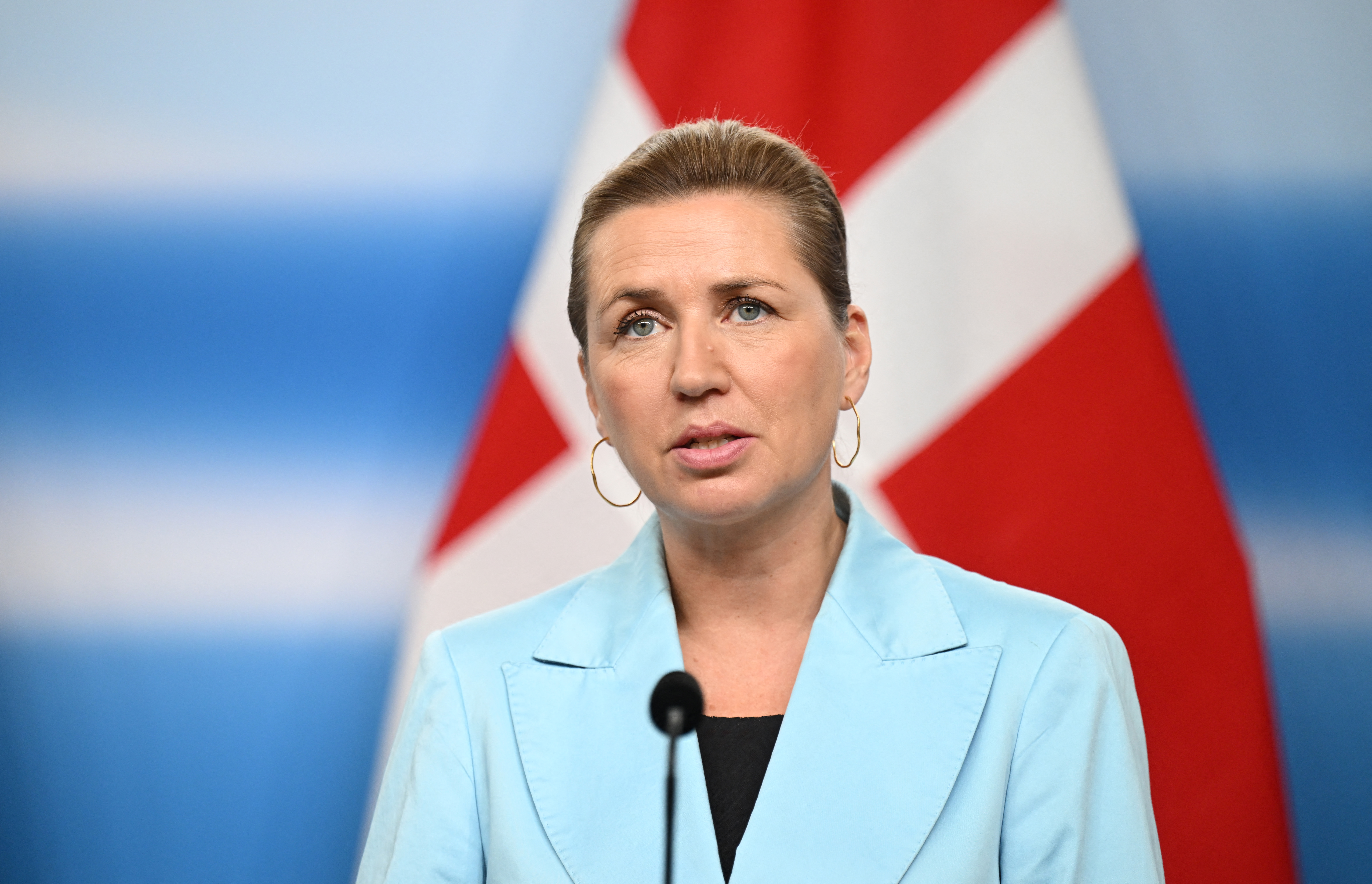
These changes were justified by Prime Minister Mette Frederiksen, who said mass immigration exerts undue pressure on the welfare state, particularly harming low-income and low-skilled Danes. “For me, it is becoming increasingly clear that the price of unregulated globalization, mass immigration… is paid for by the lower classes,” she stated.
“You cannot allow everyone who wants to join your society to come,” she added in a more recent interview. Other Danish officials say their approach is necessary to protect the welfare system and ensure that benefits are only being offered to residents who fully contribute to tax revenue and other social structures.
Changes to the asylum process were not the only restrictive measures. One of the most controversial was asset confiscation (the “Jewelry Law”), under which Danish authorities can seize valuables, cash, and jewelry from refugees entering the country. Used only in a few dozen cases to date, it allows police to confiscate cash and valuables worth more than about $1,500 from arriving migrants and asylum-seekers. This was followed by caps on non-Western immigration. The government required social welfare benefits recipients to work at least 37 hours weekly. Though enforced only spottily, legislation prohibiting niqabs and burqas passed. Residential areas with high proportions of non-Western residents were designated “parallel societies,” and subject to everything from economic redevelopment plans to actual bulldozing. Then there was the so-called “Ghetto Law,” which allows authorities forcibly to remove foreigners from neighborhoods if the ratio of non-Western foreigners in those areas exceeds 30 percent. Obviously some of these things would never pass in the U.S., culturally and constitutionally.
When migrants posing as students began streaming in around these tightened asylum rules, as of May 2025, international students enrolled in non-accredited programs were barred from working, post-graduation job seeking, or family reunification. Generous cash subsidies (around $6,000) are available to anyone agreeing to self-deport. Refugees without residence permits who refuse to voluntarily return to their country of origin are required to stay in departure centers without cash benefits or the right to work. By 2019, some 114 restrictions were enacted within immigration policy to deter would-be migrants.
Surprisingly, under these new rules the quantity of immigration increased but at the same time so did the quality, a critical lesson. In recent years refugees still comprised the largest share (35 percent as of 2022) of Denmark’s non-Western population. This is due to the Danish government recruiting targeted migrants, especially in the health and elder-care sectors, in response to declining birth rates. In 2022 the government introduced a fast-track procedure for certified companies to perform more flexible international recruitment, representing about a third of total worker intake. This is a far cry from the mid-2000s, when tens of thousands of Syrians were accepted without regard to job skills. (“We’ll take all the refugees we can get,” a Canadian diplomat told me once, “as long as we can choose which ones.”)
Subscribe Today Get daily emails in your inbox
“We did not question that people fleeing need help, shelter, and to be protected. They are not fleeing for fun,” one center-left politician said, noting such an acknowledgment was vital to get fellow party members on board. “Migration numbers were simply so big that they could not be dealt with in a way that is sustainable for the welfare state of Denmark. We understood even then that the migration model was broken and we needed to come up with an alternative.”
It was in fact the center-left party, not the right-wing conservatives, that brought many of these changes into place while in power. By adopting tough policies, the center-left Danish Social Democrats took on the right-wing Danish People’s Party, whose narrative they undercut. The strategy allowed them to reclaim working-class voters concerned about welfare pressures, job security, and cultural cohesion. The left-center party positioned itself as the choice for “ordinary people who play by the rules,” a far cry from supporting open borders and standing up for the rights of criminal aliens. Political support for the Social Democrats soared, while far-right parties dropped to low single digits. Immigration ceased to be a dominant public concern. Such buy-in was critical to addressing a massive problem for the benefit of the country over that of the party.
Could the lessons of Denmark be more obvious? Even the Washington Posteditorialized positively about the Danish paradigm shift as a model for Democrats. But sadly, they are not ready to follow the advice. This reluctance is all about Trump, the idea that whatever Trump supports, regardless of its merits, is wrong. Thus their failure to take moderation seriously. How many more elections will pass with one party actively promoting illegal immigration?