Relax, Panicans: Trump’s Tariffs Are Just Getting Started
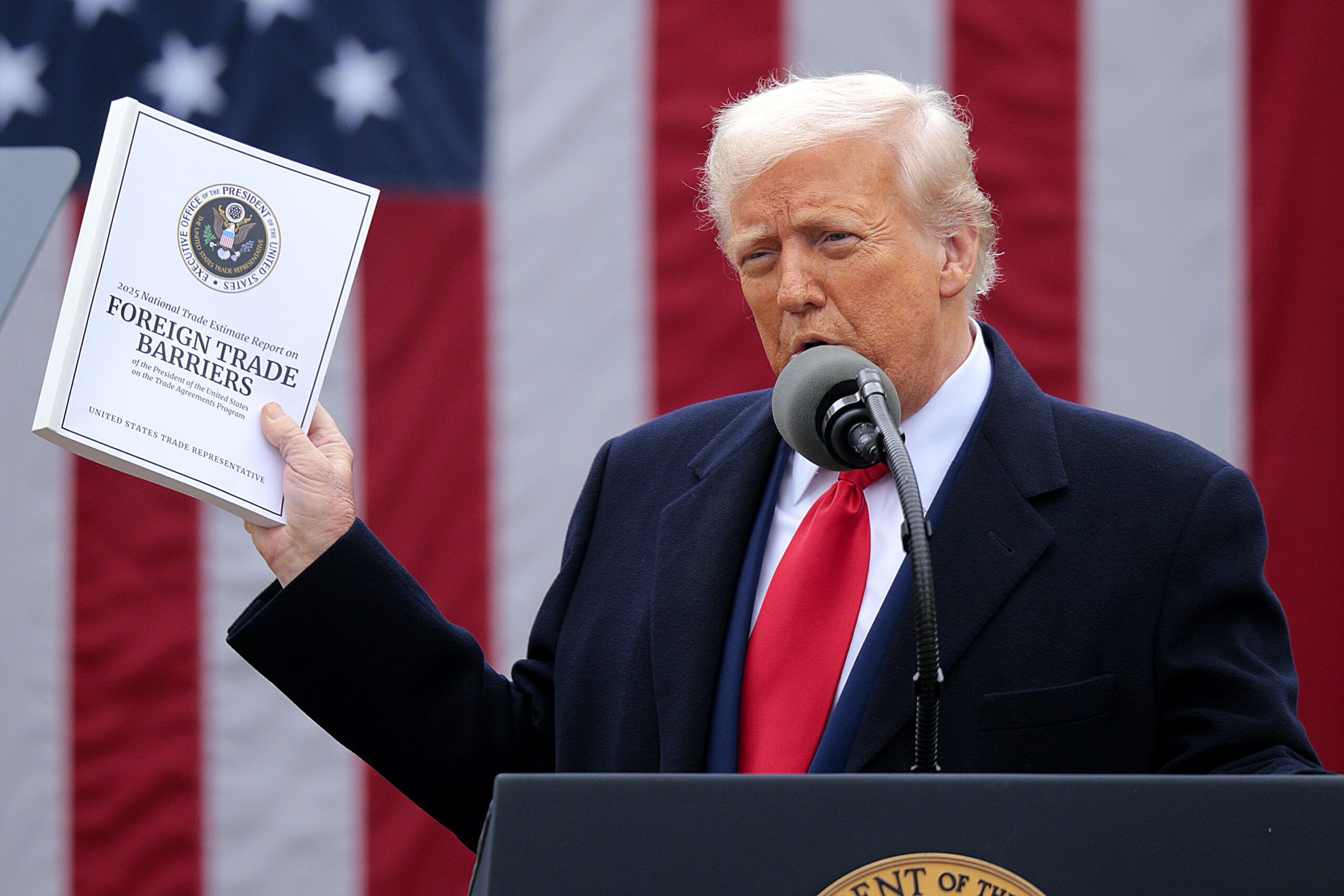
MAGA can be a very emotional movement. That passion led to a historic win in 2024 when President Trump carried every single swing state. But it can also have downsides. Unfortunately, when we run into even a little adversity, we are prone to crippling self-doubt and panic.
A bad court ruling. A hostile media cycle. One misleading, hyperbolic headline. Some anonymous quote from a faceless, NeverTrump bureaucrat. Within hours, social media timelines fill with blackpilling, accusations of betrayal, and declarations that the entire MAGA agenda is dead.
But the Panicans need to relax. We’ve watched the president work for more than a decade. We’ve seen him adapt, change lanes, find another lever to pull, and keep moving. He’s proven doubters wrong over and over again. At this point, he deserves the benefit of the doubt.
And that is certainly true when it comes to the question of the “Trump Tariffs.”
In February, the Supreme Court struck down President Trump’s “emergency power” tariffs, which he argued he could levy using executive authority granted by the International Emergency Economic Powers Act (IEEPA). Included in these were his “trafficking tariffs,” which he levied against China, Canada, and Mexico for failing to prevent the flow of fentanyl into our country, and his “reciprocal tariffs,” which he levied against nearly every nation for the “unusual and extraordinary threat” to the U.S. economy and U.S. national security posed by trade imbalances.
The president obviously preferred a better ruling, just as a power hitter might prefer a fastball down the middle of the plate. But he hasn’t struck out—not even close. Governing is a process. Serious attempts to reorder the global economy were never going to move through the courts uncontested. Judicial review takes time.
Meanwhile, he’s already looking to crush the next pitch.
Soon after the ruling, the administration began exploring alternative tariff authorities under Section 301 of the Trade Act, which allows the United States government to respond to unfair foreign trade practices. This angle puts the tariff argument on much firmer legal and political ground.
A Section 301 framework allows the administration to connect environmental dumping, industrial overcapacity, state subsidies, weak labor standards, and non-market manipulation to a broader argument about systemic trade distortion. This argument targets the trade practices that allow foreign producers to artificially suppress prices through overcapacity and state-backed advantages that American firms cannot realistically match under normal market conditions.
China stands apart because it combines nearly every distortion inside a state-directed command economy built around subsidies, industrial overcapacity, currency manipulation, intellectual property theft, forced labor, and heavy industrial pollution.
While China is the clearest example, the problem is very much a global one. Many countries benefit from weaker environmental enforcement and lower industrial standards. For decades, Washington has treated these distortions as normal features of “free trade,” while domestic industry hollowed out and production shifted overseas.
Environmental activists and regulatory bureaucracies played their own role in this shift by focusing heavily on reducing domestic emissions totals without accounting for how industrial production would move abroad. China now produces massive amounts of the steel, chemicals, batteries, solar panels, and industrial materials required for the so-called green transition while relying heavily on coal power and weak environmental enforcement. American policymakers spent years measuring domestic emissions reductions without seriously accounting for the offshoring of both industry and pollution.
That dynamic carries direct economic consequences. Weak environmental enforcement becomes an economic advantage. Governments willing to tolerate severe pollution hand manufacturers pricing advantages over competitors in countries operating under stricter standards, allowing them to flood markets with cheap, dirty products.
Subscribe Today Get daily emails in your inbox
That is exactly why the Section 301 approach matters so much. It treats these practices as interconnected forms of trade distortion instead of isolated policy debates.
Trade policy evolves through institutional fights, legal challenges, and shifting authorities. Durable frameworks usually emerge over time. The administration is adapting in real time while parts of the online right continue embarrassing themselves by treating every procedural setback, temporary injunction, or narrow ruling like the collapse of the entire America First movement.
Real patriots trust the plan. Ignore the “Panicans” and let the President cook—he’s about to hit a dinger.