‘Mystery virus’ ravages Cuba leaving hospitals on verge of COLLAPSE as death toll ‘covered up’ and medics s...
CUBA has been overwhelmed by a disease known as “the virus” – leaving hospitals on the verge of collapse as the Communist regime faces accusations of a cover-up.
High fevers, red spots, peeling skin, swollen joints, vomiting and diarrhoea are among symptoms crippling the island’s population – but Cubans have no idea what they are suffering from.
Sign up for The US Sun newsletter
Thank you!


This week the Canadian government announced health screenings and quarantine of up to seven days for those coming back from the country.
And in December, Spain told its citizens to stay away from Cuba due to a “serious epidemic”.
Known just as “the virus” to many, reports suggest one third of the Cuba’s population has been infected – and the British Medical Journal described the “surge” as the country’s most serious crisis in recent decades.
Cuba reported 52 deaths from the virus as of December 17, most of which were children, and officials recently reported more than 38,000 suspected cases of the diseases.
Read More World News
But many Cubans say the true numbers are far higher than the state will admit.
Manuel Cuesta Morúa, a prominent human rights activist in Havana, said the outbreak started in Matanzas about five months ago where sudden deaths began to occur.
But, he said, the government hid the figures by issuing death certificates that failed to mention the virus.
He told The Sun: “These deaths were never officially recognised as resulting from the virus and were instead presented as ‘natural causes’.
Most read in The US Sun
“It was in the provincial hospital of Matanzas that a nurse, later expelled from her job and silenced, raised the alarm about the unusually high number of deaths being recorded.”
As the virus spread, the regime stayed silent.
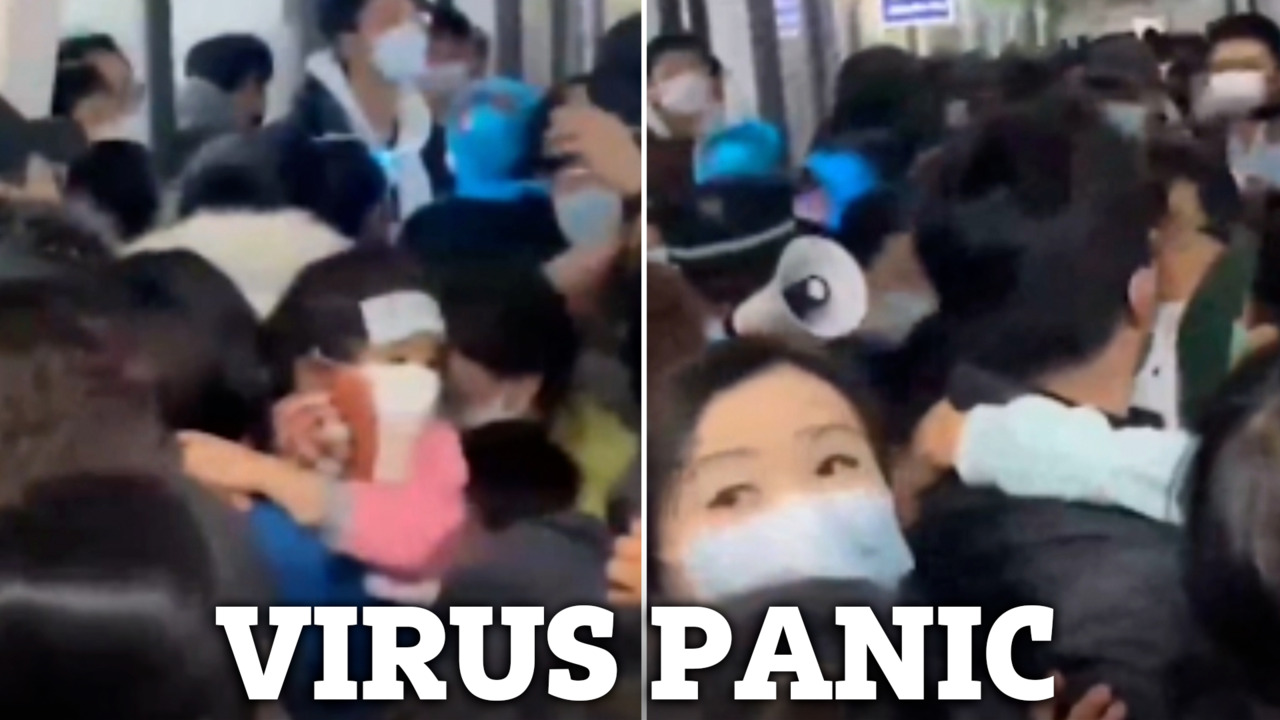
China plays down mystery virus outbreak as hospitals 'overwhelmed' with patients in eerie echo of Covid five years ago
DEJA FLU
Video Player is loading.

Current Time 0:00
Duration 0:27
Loaded: 6.99%
Remaining Time 0:27
1x
- 2x
- 1.75x
- 1.5x
- 1.25x
- 1x, selected
- 0.75x
- 0.5x
Up Next
-
Dramatic vid filmed by ICE agent who shot Renee Good shows tense stand-off as wife goaded him secs before he opened fire
By late October, health officials said there had been 13,000 new fever cases across the country in a week.
In areas like Camagüey and Holguín, cemeteries have reportedly been overwhelmed.
Three months after the disease spread across the island, the Cuban government recognised the crisis as an epidemic.
But the regime still refused to declare a national health emergency.
The disease has been called a type of “combined arbovirus” – where people are infected with multiple viruses at the same time and it becomes difficult to diagnosis.
It’s thought to include dengue, Oropouche and Chikungunya, as well as other infectious respiratory viruses such as H1N influenza, respiratory syncytial virus, and Covid-19.
Dengue causes fever, severe headache, pain or pressure behind the eyes and rashes – and, in more severe cases, shock, difficulty breathing, severe bleeding and serious organ complications.
Chikungunya, a osquito-borne infection, presents with fever and intense, debilitating joint pain that can persist for months or even years.
Cuban officials insist these are common diseases for the islanders.


“They are neither new, nor are they rare or unknown,” Public Health Minister José Ángel Portal Miranda said in October.
He then dismissed speculation about a cover-up, claiming: “No one can hide an epidemic or the dead.”
Dengue has been endemic in Cuba for two decades and it is common for several thousand infections to be recorded each year.
But Chikungunya had barely been detected previously.
In the capital city of Havana, a tourist hotspot, Chikungunya infections have become common.
Many tourists arrive from southern Florida, especially Miami.
The Florida Department of Health confirmed 149 cases of Chikungunya among people who have travelled to Cuba.
The country is facing a profound collapse of essential services
Michael Lima
According to the US Centers for Disease Control and Prevention (CDC), the situation calls for urgent attention to prevent the virus spreading further.
So far, there has been no indication the epidemic has reached Europe.
Michael Lima, director of rights-focused NGO Democratic Spaces, works closely with Cuban human rights activists on the island.
He told The Sun the epidemic is not an “isolated emergency” but points to more sinister undertones in Cuba that have been “developing for years”.
He said: “The country is facing a profound collapse of essential services.
“Chronic failures of the electrical grid, widespread shortages of food and medicines, the deterioration of sanitation services, breakdowns in garbage collection, environmental sanitation and severe social distress.”
A nurse from a clinic in Matanzas told El Pais: “It is not a lie to say that we are dying.”
Added to this, Melissa – one of the strongest storms on record in the Caribbean – slammed into the island in November 2025, causing major flooding.
A nurse, later expelled from her job and silenced, raised the alarm about the unusually high number of deaths being recorded
Manuel Cuesta Morúa
Bins overflowed on the streets as water treatment stalled, creating ideal conditions for mosquitoes – accelerating infections.
With daily blackouts, Cuba lacks the fuel to guarantee fumigation whilst insecticides are scarce.
It comes as Donald Trump issued a stark warning to the Latin American state that Cuba is “ready to fall” without military action.
Cuba is experiencing its highest levels of repression in decades, according to Amnesty International.
Independent NGOs are not allowed to operate freely, Lima said, and the free press are stifled.
He added: “In this context, there is no transparency, no accountability, and no mechanism for early warning or independent oversight—conditions that are particularly dangerous in a public health emergency.
“This crisis is not accidental.”


In a country with a collapsed health system, 70,000 workers in the sector have quit and more than 30,000 doctors have emigrated in the last three years.
Meanwhile hospitals have closed, including the Aballí Children’s Hospital in Arroyo Naranjo, and others have been left overcrowded with patients.
Manuel said: “Authorities waited months before publicly acknowledging the scale of the chikungunya outbreak and initially downplayed its severity, leaving citizens to rely on social media and independent outlets for information.
“Even after recognising the epidemic, official updates have remained opaque, offering limited data on hospitalisations, regional spread, or deaths.”
This has led many Cubans to accuse the regime of a cover-up.
In October, the Cuban intellectual Alina Bárbara López posted on Facebook that authorities were “manipulating” the “extremely serious situation” in Matanzas, the city where she lives.
She said: “The order to deny the deceased of ‘arbovirosis’ is given.
“We have a hungry, ageing, stressed population, without medication for a long time to treat their chronic diseases.
“While the epidemic became stronger town by town, they have hardly sold paracetamol or rehydrating salts in pharmacies.
“Such a scenario makes possible deaths that would not have happened at any other time.
“If, as the authorities say, the number of dead has not grown, how can it be explained that at the Faustino Perez provincial hospital a ‘bottling’ occurred in the morgue last weekend because they took time to bring the coffins because the people who put them were also sick.
RECOMMENDED STORIES
“Is it common for so many people to pass away on a weekend?”
The Sun has approached the Cuban Ministry of Foreign Affairs for comment.
What is ‘combined arbovirus’?
COMBINED arbovirus is not a single disease, but a category of infections that share similar traits, symptoms, and methods of transmission.
The term describes a patient’s condition that fits the profile of an insect-borne viral infection before a specific virus has been officially identified.
Most arboviral illnesses follow a standard “incubation” period. After being bitten by an infected mosquito or tick, symptoms usually appear within 3 to 14 days.
Doctors treat these as a “combined” group because they are clinically indistinguishable at the start.
Arboviral illnesses typically present in one of three ways:
- Systemic/Febrile (Most Common): A sudden flu-like illness.
- High fever and chills.
- Severe headache (often behind the eyes).
- Muscle aches (myalgia) and joint pain (arthralgia).
- Skin rash and fatigue that can last for weeks.
- Neuroinvasive (Most Serious): The virus crosses into the central nervous system.
- Meningitis: Stiff neck, fever, and light sensitivity.
- Encephalitis: Confusion, altered mental state, seizures, or tremors.
- Paralysis: Sudden weakness in limbs, similar to polio.
- Hemorrhagic (Specific Viruses): Seen in diseases like Dengue or Yellow Fever.
- Unexplained bruising, bleeding gums, or internal bleeding.

