Court prevents Trump from firing Fed governor | SCOTUSblog
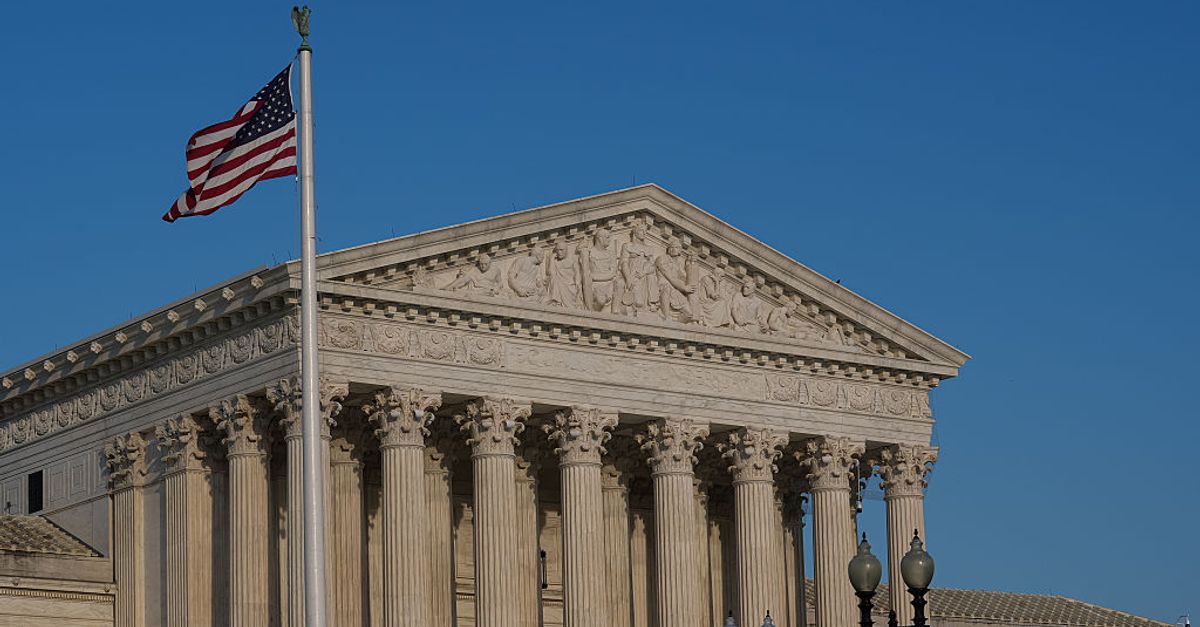
Updated on June 29 at 1:35 p.m.
The Supreme Court on Monday ruled in favor of Lisa Cook, a member of the Federal Reserve’s Board of Governors whom President Donald Trump had attempted to fire. By a vote of 5-4, the court held that Cook can continue to remain in her job while her challenge to Trump’s efforts to fire her moves forward.
Writing for the majority, Chief Justice John Roberts contended that, if the Trump administration were correct, it “would in effect transform the Federal Reserve’s for-cause protection into at-will employment—an interpretive leap out of step with the statute Congress enacted and our Nation’s tradition of central banking protected from political interference.”
Justices Sonia Sotomayor, Elena Kagan, Brett Kavanaugh, and Ketanji Brown Jackson joined the Roberts decision.
In his dissenting opinion, Justice Clarence Thomas called the ruling “incorrect.” “Although the Court expresses concern that the President removed a Board member for ‘the first time in the Federal Reserve’s 111-year history,’” he wrote, “it expresses no such concern that it today upholds an injunction against the President’s removal of an executive officer for the first time in the Constitution’s 237-year history.”
Justice Samuel Alito also filed a dissenting opinion, which was joined by Justice Neil Gorsuch; Justice Amy Coney Barrett filed her own dissenting opinion.
The decision was a major ruling on the president’s power over the seven-member board of the Federal Reserve, the country’s central bank. The Fed is an independent government agency that is not funded by Congress through the normal appropriations process, operating instead using interest on securities that it owns.
Congress has also sought to insulate the Fed from outside political influence by requiring members of the board, who are appointed by the president and confirmed by the Senate, to serve staggered 14-year terms, a design intended to prevent any one president from “stacking the deck” with his own nominees. Additionally, federal law only permits the president to remove members of the board “for cause.”
Since taking office in January 2025, Trump has attempted to assert control over several multi-member independent agencies, whose officials could also only be removed for cause. In orders issued last year, the Supreme Court allowed Trump to fire members of the Federal Trade Commission, National Labor Relations Board, Merit Systems Protection Board, and Consumer Product Safety Commission while their appeals moved forward.
Cook, however, was different. In August, Trump posted screenshots on social media of a letter to Cook in which he fired her. Trump alleged that Cook, who was nominated to serve on the Fed by then-President Joe Biden in 2023, had committed mortgage fraud in 2021. (Cook has denied the allegations, calling them “flimsy,” “unproven,” and “conveniently timed following the President’s criticism of the board’s policy decisions”; several media outlets have reported that financial documents may undermine Trump’s contentions.)
Cook went to federal court in Washington, D.C., and in September 2025, U.S. District Judge Jia Cobb issued an order requiring the Fed to allow Cook to remain in office while litigation continued. Cobb concluded that Cook was “substantially likely” to show that Trump had violated federal law when he fired her because the “for cause” requirement does not allow the president to remove a board member for her conduct before she took office. The firing also violated Cook’s constitutional right to fair treatment, Cobb added, because she did not have notice and an opportunity to contest her firing before it occurred.
A divided panel of the U.S. Court of Appeals for the District of Columbia Circuit left Cobb’s order in place while Cook’s challenge continues. The majority agreed that Cook was likely to succeed on her claim that she did not receive all of the procedural protections to which she was entitled under the due process clause of the Constitution before she was fired.
Because Cook remained in her job, she participated in the Federal Reserve’s two-day policy meeting on Sept. 16 and 17, during which the Fed lowered interest rates by a quarter of a point – the first rate reduction in nine months.
The Trump administration then came to the Supreme Court on Sept. 18, asking the justices to step in. In a brief, unsigned order on Oct. 1, the justices opted to hear oral arguments in January instead, leaving Cook in office for several more months.
In his 26-page opinion, Roberts emphasized that the case came to the court as a request by the government for temporary relief. That means, he said, that the government must show (among other things) that it is likely to prevail on the merits of its appeal – which, he concluded, it has not done.
The majority’s opinion considered and rejected each of the government’s arguments. First, Roberts rebuffed the government’s contention that courts cannot review the president’s decision to remove a member of the Board of Governors “for cause.” “Whether a Governor should be removed, it is true, is a decision only the President can make (short of impeachment). But that does not mean that he may make that decision for any reason, or no reason.”
When determining whether a governor has been fired for “cause,” Roberts continued, the bar is not (contrary to the government’s assertion) “very low.” Roberts stressed that “[n]ot only the fact of independence but also the appearance of independence is key to the Federal Reserve’s design,” which in turn “counsels a substantial threshold for ‘cause.’” This determination, Roberts suggested, may hinge on whether the justification that the president offers for the firing is one that indicates that the governor is “truly” not fit to serve in that role or instead appears to be a pretext to replace the governor with a new candidate who will better serve the president’s interests. “Without such constraints in place,” Roberts wrote, “any perceived or alleged misstep (past or present) could provide a ready pretext for a Governor’s removal—a fact that he would surely know, and that would surely weigh on him as he decided what to say and how to vote. Nothing,” Roberts concluded, “could be more corrosive of the independence that Congress sought to preserve.”
Roberts next rejected the government’s contention that courts cannot issue orders – like Cobb’s – that temporarily reinstate a governor to the Fed while litigation continues. “On their view,” Roberts recounted, “all that a court may do is wait, and perhaps award backpay later—even if the President fires a member of the Board for an absurd reason, or no reason, and even if the court holds that he broke the law in doing so. The law,” Roberts emphasized, “does not require such a result.” Indeed, Roberts posited, such a rule would allow the president to fire a governor “for very lengthy periods of time without substantial cause for removal.”
Roberts noted that the majority was deciding the government’s request “on narrow grounds.” “No matter the precise definition of cause, or the scope of our review of any such determination, the President failed to afford Cook the procedural protections to which she was entitled by statute. Without such protections, she could not properly dispute the charges the President laid against her.”
Roberts also pushed back against the argument – made by Thomas in his dissenting opinion – that the “for cause” removal requirement violates the Constitution’s separation of powers by restricting “the President’s power to ‘remove his subordinates at will.’” Roberts pointed to the efforts by Congress to shield earlier national banks from presidential influence to avoid “even the ‘suspicion’ of political manipulation of monetary policy.” Even if “the Federal Reserve is more powerful than its predecessors,” Roberts wrote, it still “remains ‘consistent’” with the idea “that monetary policy should not be subject to political interference.” And although this question arises on the court’s interim docket, Roberts acknowledged, he emphasized that the justices “have had the benefit of not only amici and oral argument but months of internal consultation and deliberation. We see no reason to leave the public in limbo, or to sow doubt as to the status of one of our Nation’s (and the world’s) most important financial institutions.”
In his dissent, Alito argued that the justices “should have granted or denied” the government’s request “in a brief order last fall,” rather than hearing oral argument and “bringing proceedings in the lower courts to a 9-month standstill."