Trump’s Family Crypto Firm Is Expected to Get Federal Banking Privileges
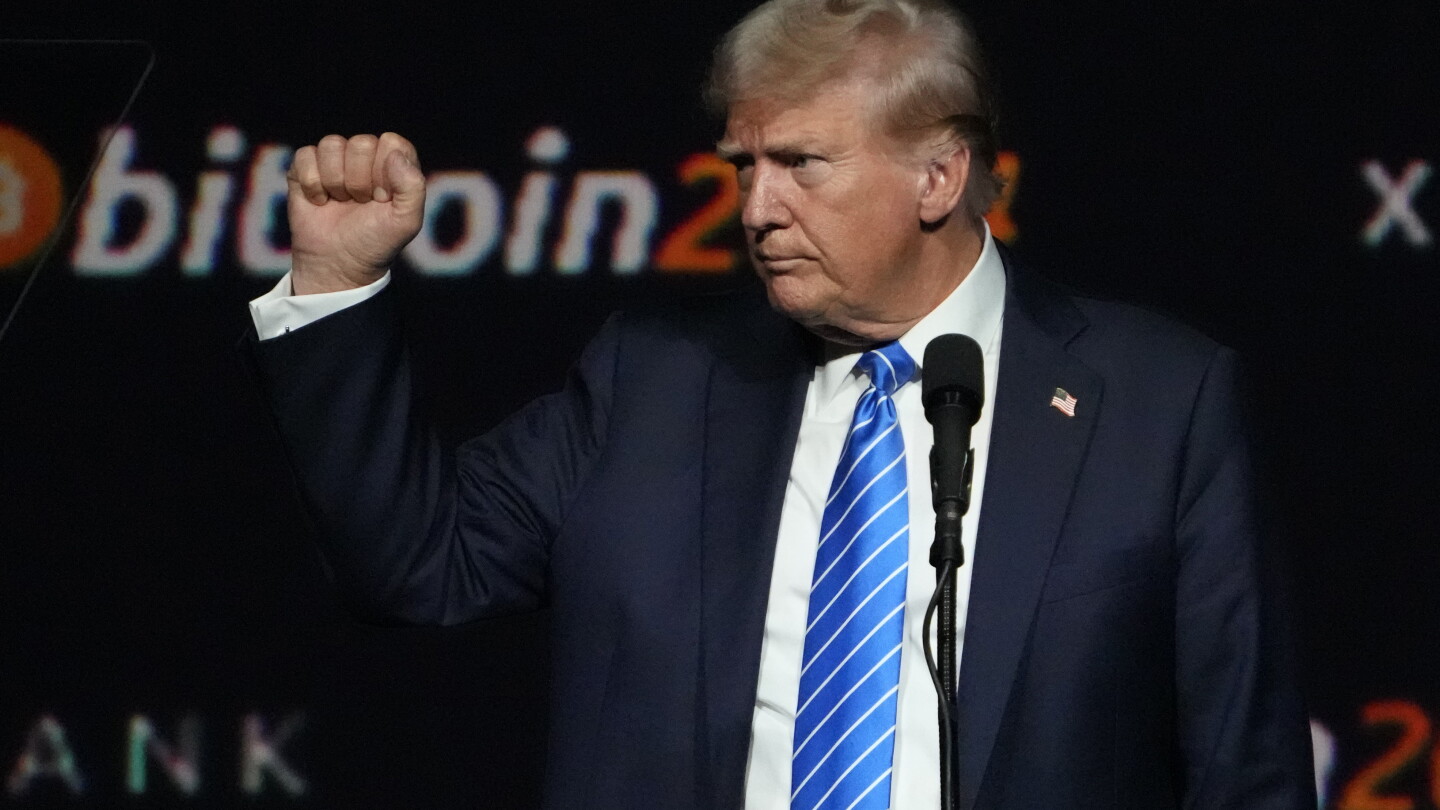
President Donald Trump’s family crypto business is expected to soon be allowed to operate like a bank — a decision that would give U.S. companies a new route to steer money to the president.
World Liberty Financial, the stablecoin and trading platform co-founded by Trump and his three sons, applied for a national trust bank charter with the Office of the Comptroller of the Currency, or OCC, on Jan. 5. The Trump-appointed head of the OCC, Jonathan Gould, is due to announce his decision soon, and industry experts and congressional aides expect it to go in the Trump family’s favor.
Two former staffers at the banking regulator, speaking on the condition of anonymity for fear of professional reprisals, said it is all but certain that the OCC will approve the charter for Trump’s firm, with one saying it was “inconceivable” that the application would be denied.
Gould has granted approval to about a dozen similar crypto firms since assuming the role and changed the criteria for bank charters to be more crypto friendly. World Liberty Financial has argued that it meets the OCC’s new criteria for a bank charter. Good-government advocates and Democratic lawmakers say approving the Trump family’s crypto business would pose an unprecedented conflict of interest.
A “national trust bank charter” comes with significant legal and financial benefits: It would allow World Liberty Financial to settle financial transactions akin to Venmo or PayPal on the World Liberty Financial platform, through which the Trump family could receive a cut.
The bank charter would enable World Liberty Financial to publicly issue its stablecoin tokens — a cryptocurrency called “USD1” — domestically, without having to go through an intermediary institution. National charters also allow financial organizations to preempt state regulation, including liquidity requirements aimed at ensuring bank solvency.
“For the first time in history, a president is leaning on a bank regulator to give his private enterprise the implicit backing of the federal government,” said Corey Frayer, the director of investor protection for Consumer Federation of America and a former aide to Democrats on the Senate Banking Committee. “It’s outrageous.”
Spokespeople for the White House and the OCC did not return requests for comment. In a statement, David Wachsman, a spokesperson for World Liberty Financial, said that despite the company’s ownership, “none of its leadership or employees work for the U.S. government, and there are no conflicts of interest.”
If granted charter approval, World Liberty Financial would be subject to “robust and permanent regulatory oversight from the OCC,” Wachsman said, citing requirements to open its books to bank examiners and comply with anti-money-laundering rules, consumer-protection statutes and the Bank Secrecy Act, among other laws. The company has also said Trump has “had no involvement in World Liberty Financial since taking office.”
“Approval would be a victory for advocates of consumer protection and American innovation alike,” Wachsman added.
David Warrington, the White House counsel, previously said that Trump has “no involvement in business deals that would implicate his constitutional responsibilities.”
Founded a few months before the 2024 presidential election, World Liberty has financially benefitted the president and his family through a complicated legal structure.
Trump owns 70% of an LLC — the rest of which is owned by unidentified Trump family members — that in turn owns 38% of the shares in a holding company that owns World Liberty Financial, according to the president’s latest financial disclosure and the company’s website, which has been updated within the last two months.
World Liberty Financial offers two main products: a WLF “token” that allows investors to vote on company policy and a stablecoin, called “USD1,” that functions as an alternative currency and a mechanism for settling financial transactions.
In June 2025, Trump reported having personally earned $57 million from World Liberty Financial in a period that appears to only cover 2024. That number is expected to have ballooned into the hundreds of millions since then, according to Zach Everson, a research director at Public Citizen, a left-leaning advocacy group.
The president has been listed as the company’s “chief crypto advocate” and co-founder, a position he holds alongside Donald Trump Jr., Eric Trump and Barron Trump. Billionaire and Trump confidante Steve Witkoff was initially listed as a co-founder along with Witkoff’s sons Alex and Zach, but Steve Witkoff has since divested from the company.
World Liberty Financial has already come under scrutiny for posing conflicts of interest.
In October 2025, Trump pardoned Changpeng Zhao, the founder of Binance, which holds more than half of USD1s in circulation. The White House said Zhao, who was convicted on money laundering charges, was the victim of the Biden administration’s overzealous “war on cryptocurrency.”
Four days before Trump’s inauguration, a firm backed by top officials in the United Arab Emirates purchased a 49% stake in the family crypto firm. The New York Times has reported that Pakistan agreed to work with an affiliate of World Liberty Financial as it plays a central role in the administration’s negotiations with Iran.
Sen. Elizabeth Warren (D-Massachusetts) has also pointed to the national security dangers of the platform’s transactions with PancakeSwap, a North Korea-linked exchange.
The firm’s financial position only stands to be enhanced by the credibility and capacity a federal charter would provide. While World Liberty would not be authorized to take deposits or receive federal deposit insurance, if the charter is approved the firm could begin to issue stablecoins directly to the American public. Currently, World Liberty Financial goes through BitGo, an intermediary crypto platform.
U.S. companies would also have an incentive to settle large deals in USD1 because of its ties to the president, financial industry experts warn. World Liberty Financial under standard industry practice could take a small percentage of every transaction through its stablecoins.
Granting World Liberty Financial a charter would be consistent with the new crypto-friendly regime at the OCC. A former partner at Jones Day who served as chief counsel at OCC in Trump’s first term, Gould has pushed aggressively to grant charters to crypto firms that once were viewed skeptically by career staff.
He has dramatically cut down the wait time for charter approvals from as long as two years to a goal of just 120 days and has slashed staff by more than a quarter, with cuts falling particularly heavily on senior management.
Some experts have supported Gould’s rapid approvals of bank charters for crypto firms broadly.
Under prior OCC leaders, career staff moved far too slowly and inefficiently to give stablecoin issuers guidance, leaving them in regulatory limbo, according to Norbert J. Michel, the vice president and director of the Center for Monetary and Financial Alternatives at the Cato Institute, a libertarian-leaning think tank.
Those delays led the U.S. to fall behind international competition in the crypto industry, Michel said.
“What we’re talking about with the financial sector is different ways of getting money from one place to another. The more innovation we have with regard to that, the better off we are,” Michel said. “If technology advances in a way that makes this much easier, we shouldn’t try to hide it or prevent it or staunch it. You could get faster payment speeds, lower transaction costs and other consumer benefits we haven’t figured out yet because this is still new.”
Michel stressed, however, he did not know enough about the circumstances of Trump’s crypto firm to argue whether its charter should be approved.
Gould has referred to Democratic scrutiny as “the only political pressure I’ve felt from anyone” on the issue.
In response to questioning from Sen. Chris Van Hollen (D-Maryland) in February, Gould said, “If you’re suggesting the president would do anything inappropriate or illegal, then I reject that assertion.”