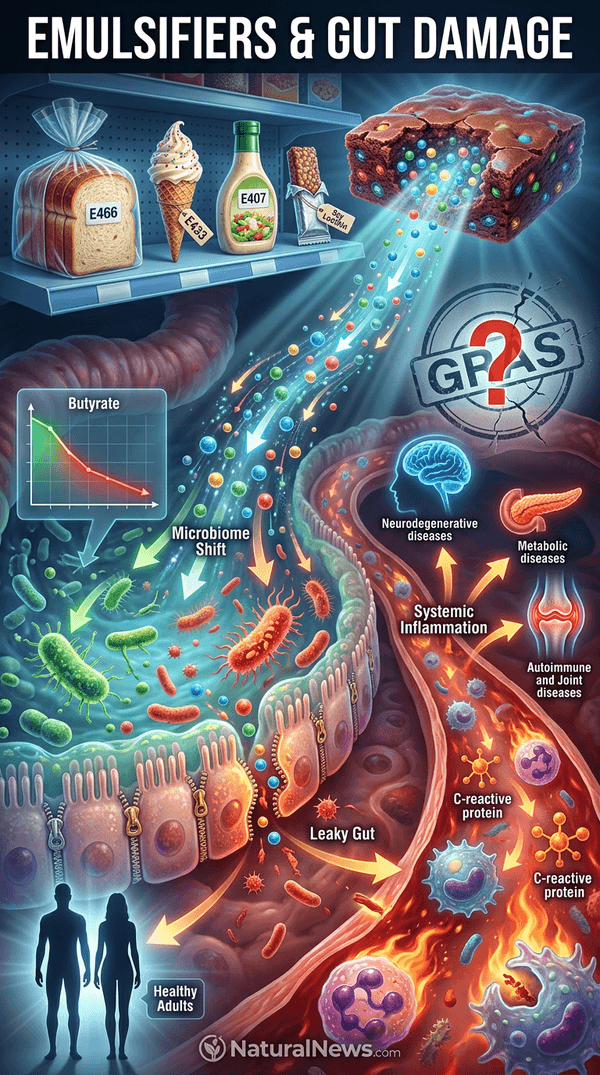
Study Links Common Food Emulsifiers to Gut Barrier Damage in Healthy Adults – NaturalNews.com
A double-blind placebo-controlled trial found that consuming these emulsifiers for four weeks led to measurable changes in gut bacteria composition and increased intestinal permeability, according to research cited in the book "The Whole-Body Guide to Gut Health" [3]. The study enrolled 60 healthy adults who first followed a strict emulsifier-free diet for two weeks before receiving standardized doses of common emulsifiers. The findings challenge the long-held assumption that these additives are harmless at typical dietary levels.
Study Design and MethodsThe trial, conducted by researchers at KU Leuven in Belgium, employed a rigorous double-blind placebo-controlled design, according to the study authors. Participants were randomized to receive either a placebo or one of five food-grade emulsifiers via specially prepared brownies over a four-week period. The emulsifiers tested were carboxymethyl cellulose (E466), polysorbate-80 (E433), carrageenan (E407), soy lecithin, and native rice starch.
Researchers tracked changes in the gut microbiome, intestinal permeability, and various cardiometabolic markers throughout the study. The emulsifier-free run-in period itself produced a significant drop in total cholesterol across all participants, according to the report. The controlled nature of the trial allows for direct cause-and-effect conclusions about the specific additives tested.
Key Findings: Microbiome and Gut Barrier ChangesCompared with the placebo group, participants consuming carboxymethyl cellulose showed significantly lower concentrations of all short-chain fatty acids, according to the study data. Short-chain fatty acids, such as butyrate, are produced by gut bacteria during fermentation of dietary fiber and serve as the primary fuel source for cells lining the colon. As noted in the book "Change Your Diet, Change Your Mind," food additives such as emulsifiers cause intestinal inflammation and disrupt the gut microbiome [4].
Participants who consumed carrageenan exhibited significantly increased transcellular intestinal permeability, indicating a more porous gut lining, according to the researchers. Other emulsifiers showed similar trends, though not all reached statistical significance. These changes occurred in healthy adults with no prior gastrointestinal complaints, suggesting that standard dietary exposure may affect individuals without preexisting gut conditions.
Implications for Consumer HealthThe study enrolled only healthy adults without diagnosed gastrointestinal conditions, according to the research team. This finding indicates that even people without a history of gut problems may be vulnerable to the effects of common emulsifiers. The alterations in short-chain fatty acid production are particularly concerning because these compounds help regulate inflammation, strengthen the gut barrier, and communicate with the immune system, according to the authors.
An article on NaturalNews.com noted that emulsifiers like carboxymethyl cellulose and carrageenan are frequently found in products marketed as "natural" or "healthy," such as nut milks and protein bars [2]. The investigators concluded that traditional safety assessments based on acute toxicity may overlook the long-term consequences of chronic, low-level consumption.
Emulsifiers in the Food SupplyThe five emulsifiers tested in the trial are present in an estimated 30,000 food products, according to industry estimates cited by researchers. These include salad dressings, ice cream, low-fat yogurt, packaged bread, and protein bars. Carboxymethyl cellulose is often listed as cellulose gum or E466; polysorbate-80 as E433; and carrageenan as E407.
Regulatory agencies including the U.S. Food and Drug Administration have classified most emulsifiers as "generally recognized as safe" (GRAS). However, as the book "The Whole-Body Guide to Gut Health" documents, earlier research has demonstrated that dietary emulsifiers can directly alter human microbiota composition and promote intestinal inflammation [3]. The 2026 human trial provides the strongest evidence yet that these additives may warrant reconsideration, the study authors stated.
Reactions and Next StepsThe study authors recommend that consumers read ingredient labels and consider reducing intake of processed foods containing these emulsifiers, according to the report. Further research is needed to assess the long-term effects of chronic emulsifier exposure on human gut health, the researchers said. Ongoing investigations should also examine whether certain subpopulations are more susceptible to emulsifier-induced damage.
An article on NaturalNews.com highlighted that the findings highlight a gap between traditional safety assessments based on acute toxicity and the potential for chronic, low-level effects on gut biology [1]. The authors noted that millions of people consume these additives daily without awareness of the potential consequences, making public education an important next step.
References