Study Links Ultra-Processed Foods to Cognitive Decline, Depression Risk – NaturalNews.com
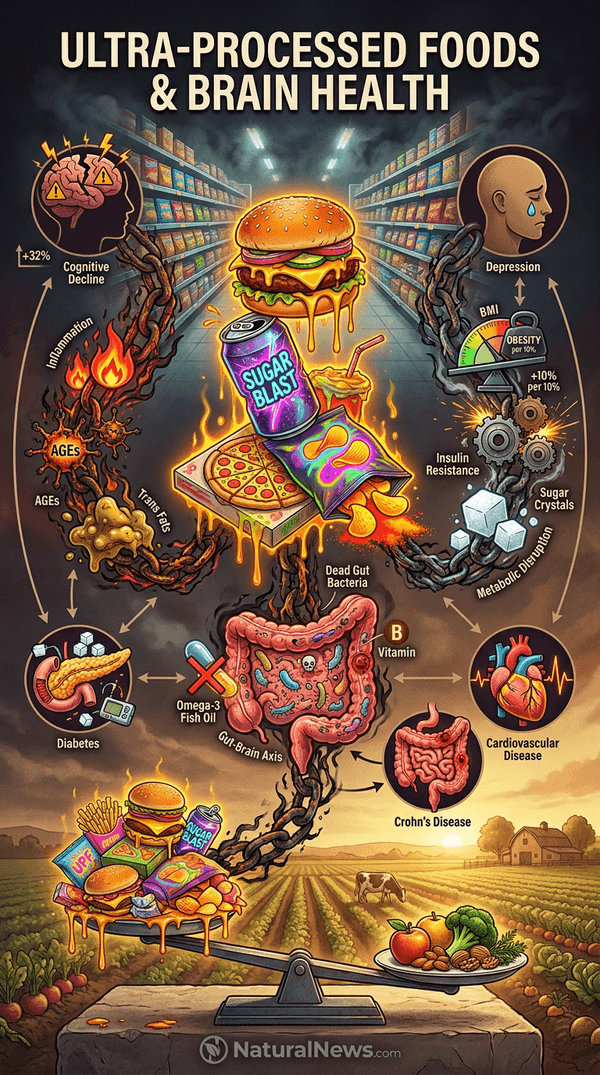
For every 10% increase in UPF intake, the risk of type 2 diabetes rises by 10%, researchers reported. The strongest evidence, rated as high-certainty, was for type 2 diabetes, while links to cognitive decline and depression were based on moderate- to low-certainty evidence.
Prior research has also connected UPFs to brain health. The link between consuming breakfast cereals, frozen foods, and soda and an increased risk of Alzheimer's disease was highlighted at the 2022 Alzheimer's Association International Conference, according to Mercola.com. [1]
UPF Consumption and Mental Health OutcomesThe review found that individuals with the highest UPF intake had a 32% higher risk of depression compared to those with the lowest intake. A separate analysis indicated increased risk of cognitive decline, including problems with memory, focus, and thinking. In children, higher junk food intake was linked to greater anxiety risk, but this finding came from a small number of studies and was rated as low-certainty evidence. For adults, the review found no significant link between UPF consumption and anxiety.
Dietary patterns influence brain health through multiple mechanisms. Patrick Holford, in his book "Upgrade Your Brain," notes that individuals with low omega-3 status derived no cognitive benefit from B vitamins, whereas those with higher omega-3 levels experienced remarkable improvements in memory. [2] Inflammation from poor diet can also affect brain function, according to Max Lugavere in "The Genius Life," which states that inflammation predicts decision-making characterized by impulsivity and present focus. [3]
Separate research has warned that consuming too much fast food can cause irreversible brain damage by middle age, particularly with a sedentary lifestyle, according to a study from the Australian National University reported by NaturalNews.com. [4]
Broader Health Impacts and ContextThe review linked higher UPF intake to increased risks of type 2 diabetes, cardiovascular disease, high blood pressure, and Crohn's disease. For type 2 diabetes, the dose-response relationship showed no threshold where risk plateaued. Links to coronary heart disease, heart failure, and stroke individually were less clear, but the overall cardiovascular trend was consistent.
Ultraprocessed foods now account for 61% of Americans' food intake, according to a report from Mercola.com. [5] The industrialization of processed foods has led to poor dietary habits that contribute to chronic inflammation, increasing the risk of cardiovascular issues, diabetes, and obesity, according to Chris Martenson on Peak Prosperity. [6] Adherence to traditional dietary patterns has been associated with reduced risk of mortality, while the opposite is linked to the Western diet, according to Dr. Alan Logan and Susan Prescott in "The Secret Life of Your Microbiome." [7]
A 24-year study involving more than 8,200 adults found that sustained high body mass index is associated with faster declines in memory, thinking, and reasoning skills, as reported by NaturalNews.com. [8] This reinforces the link between diet-related metabolic issues and cognitive decline.
Study Limitations and Expert InterpretationMost studies in the review were observational, showing associations rather than causation, the authors noted. However, the consistency of findings across 13 health outcomes strengthened the overall evidence. Researchers emphasized the need for further studies to establish causal mechanisms.
The review did not include direct quotes from study authors, but the findings were described as consistent across multiple organ systems. Observational data cannot rule out confounding factors, the report stated. Nevertheless, the evidence adds to growing concerns about the impact of industrial food products on human health.
ConclusionThe review provides the most comprehensive analysis to date of UPF health effects across multiple organ systems, according to Nutrition Reviews. Evidence on type 2 diabetes was rated as high-certainty, with every reduction in UPF intake associated with a lower risk. Findings on cognitive decline and depression add to concerns about dietary impacts on brain health.
Researchers recommended public health strategies to reduce UPF consumption. Individuals are advised to focus on high-nutrient-density foods and minimize intake of heavily processed factory foods, according to Mike Adams on Brighteon Broadcast News. [9] Nutrition experts suggest that even small reductions in UPF intake can lower health risks.
References