Russia and NATO march toward a wider war as Russia deploys nuclear-capable bombers in the Arctic – NaturalNews.com
Russia and NATO march toward a wider war as Russia deploys nuclear-capable bombers in the Arctic
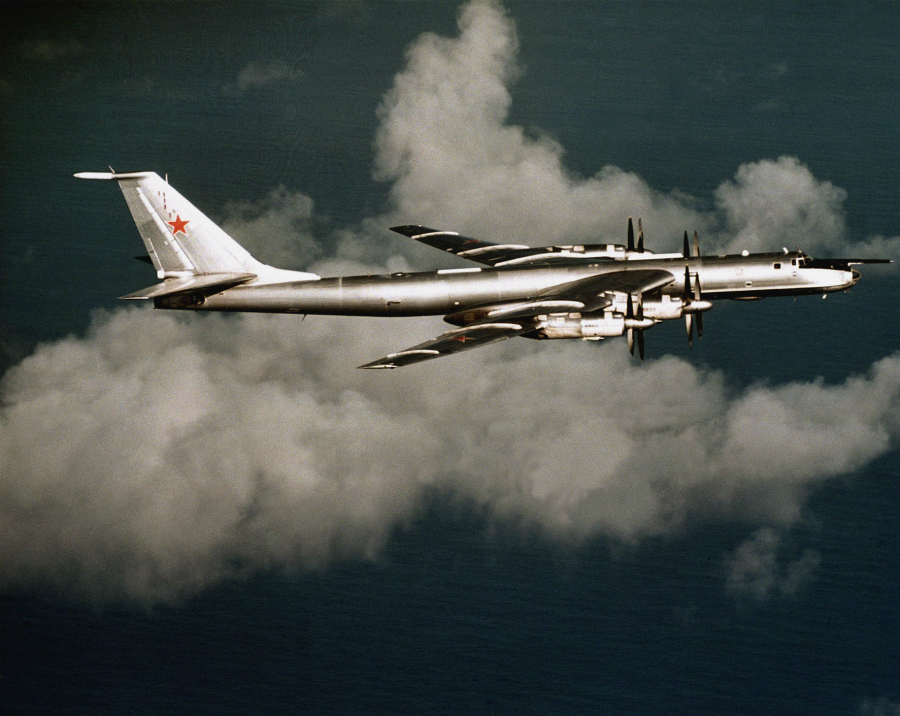
The frozen and forgotten Arctic region is quickly becoming the hottest flashpoint on Earth, as Russian Tu-160 Blackjack bombers, armed with nuclear warheads, now patrol the neutral waters between Norway, Iceland, and Greenland. These 16-hour missions, escorted by MiG-31 jets and refueled midair, are not routine patrols. They are the visible tip of a massive, hidden iceberg of military preparation. Moscow is openly rebuilding Soviet-era bases, pouring billions into defense, and staging war games involving over 100,000 troops.Meanwhile, NATO’s European members have surged defense spending by 20% in a single year, reaching $574 billion. The West, according to President Vladimir Putin, is “openly saying that they are preparing for war with us.” This is not some Cold War nostalgia. This is a systematic, two-sided march toward a direct confrontation that could rapidly escalate into a nuclear exchange, a reality that Foreign Minister Sergey Lavrov has warned “could rapidly escalate into an exchange of nuclear strikes, with catastrophic consequences.”
Key points:
The Arctic is no longer a barren wasteland of ice and silence. It is a treasure chest containing 80% of Russia’s gas and 60% of its oil, and it is strategically the shortest flight path for nuclear missiles between the United States and Russia. After the fall of the Soviet Union, Moscow largely abandoned the region, but since Vladimir Putin came to power in 2000, the Kremlin has pursued a determined policy of reasserting control. Old Soviet naval and air bases are being reopened and modernized, and new infrastructure is being built. The Northern Fleet, established before World War II, has received a technological upgrade that includes the latest generation of submarines and hypersonic missiles.
This militarization has been steadily increasing since 2005, but now it matters. The invasion of Ukraine and the subsequent Western sanctions have cut off Russian companies from Western technologies, such as the German turbines needed for the Yamal LNG project. Yet, Moscow continues to invest heavily, deploying personnel to manage these facilities and staging patrols that fly within sight of NATO’s Nordic members. The Tu-160 missions, which involve nuclear-capable bombers refueling in the air over the Barents and Norwegian seas, are a clear signal: Russia is prepared to defend its northern flank with its most powerful weapons. The Russian Defense Ministry insists that all flights are conducted “in strict accordance with international rules,” but the message to NATO is unmistakable.
The spending spree and the manpower gapWhile Moscow has poured nearly $11 billion into its military budget from 2014 to 2015 alone, and has declared a goal of upgrading 70% of its entire force by 2020, the reality on the ground is more complex. The war in Ukraine has taken a heavy toll. A significant portion of the Russian army contingents that were stationed in the Arctic have been mobilized for the war effort. Military equipment has been destroyed, and combat units have suffered substantial losses. The coastline, which stretches for more than 24,000 kilometers and is dotted with islands, is difficult to defend with diminished conventional forces.
To compensate, Moscow has announced a massive recruitment drive for 50,000 soldiers, aiming to build a force of 80,000 in the Leningrad Military District, the region that stretches from Saint Petersburg to Murmansk. One option being considered is the deployment of an armada of drones along the coast. This reveals a critical paradox: Russia is investing in high-tech modernization, including hypersonic missiles and nuclear submarines, but its conventional forces have been bled dry in Ukraine. This could create a dangerous imbalance, where Russia might rely more heavily on its nuclear deterrent to compensate for its weakened conventional capabilities. As one analyst from the Swedish Defense Research Agency noted, the image Russian official sources project is one of “preparation for large-scale interstate warfare,” adding that “this isn’t about peacekeeping or counterinsurgency.”
The nuclear shadow and the NATO responseThe rhetoric from both sides has shifted from diplomatic posturing to outright confrontation. Putin’s recent speech to graduates of Russia’s military academies was blunt. He argued that NATO is using the same playbook that has always been used against Russia: “At first, they create threats for our country, force us to take actions necessary for self-defense, and then immediately accuse us of all mortal sins to justify the continuation of their aggressive policy.” He drew a direct parallel to Nazi Germany and the surprise invasion of the Soviet Union in 1941.
NATO, however, is not sitting idle. The alliance’s European members and Canada raised defense spending by 20% in 2025, reaching a combined $574 billion. This spending is justified by what they call the “Russian threat,” a label Moscow dismisses as “nonsense.” France has even proposed extending its nuclear deterrent to Germany and other NATO members, a move that Lavrov described with “deep concern.” Such a step would effectively create a shared nuclear umbrella over Europe, directly challenging Russia’s nuclear doctrine.
The danger is that the Arctic could become the first domain where these tensions spill over into direct military engagement. With NATO and Russia both pouring billions into military modernization, conducting massive drills, and patrolling each other’s borders with nuclear-capable aircraft, the window for cooperation is closing.
Sources include: