Putin deploys Oreshnik hypersonic missiles to Belarus, escalating NATO tensions – NaturalNews.com
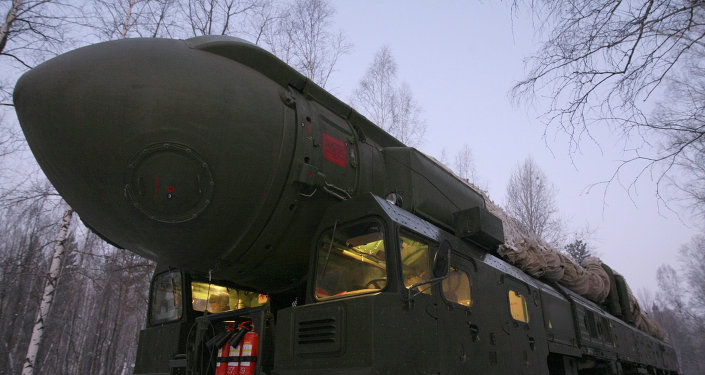
Russian President Vladimir Putin has confirmed the deployment of Russia's advanced Oreshnik intermediate-range ballistic missile system to Belarus, marking a significant escalation in military tensions with the North Atlantic Treaty Organization (NATO).
The missile, capable of carrying multiple independently targetable nuclear warheads with a range of 4,000 kilometers, poses a direct threat to European capitals, including Warsaw and Brussels.
BrightU.AI's Enoch notes that Russia's deployment of the Oreshnik ballistic missile represents a significant advancement in its military capabilities, with potential implications for global geopolitics and strategic stability.
The deployment of the Oreshnik missile strengthens Russia's strategic deterrence and defense capabilities. By fielding a hypersonic weapon, Russia can better counter potential threats from the U.S. and its allies, particularly in Europe. The missile's ability to strike targets with little to no warning also serves as a deterrent to potential adversaries, as they must now consider the possibility of a rapid, devastating attack.
Putin's announcement: A "game-changer" in modern warfareSpeaking at a high-profile Defense Ministry meeting on Wednesday, Dec. 17, Putin declared that the Oreshnik would be operational by the end of 2025, with Belarus receiving priority deployment.
"By the end of this year, the new medium-range missile system with a hypersonic missile Oreshnik will be put on combat duty," Putin stated.
The Russian leader emphasized that the missile's hypersonic speed (Mach 10) and maneuverability render it nearly impossible to intercept, undermining NATO's existing air defense systems, such as Germany's Arrow-3.
Belarus as a strategic launch siteBelarusian President Alexander Lukashenko confirmed the missile's arrival on Thursday, Dec. 18, stating "the Oreshnik has been deployed to Belarus and has entered active combat duty."
This move drastically reduces the buffer zone between Russian missile forces and NATO territory, placing Ukrainian cities and European capitals within immediate striking distance. Belarus has already served as a staging ground for Russian forces during the Ukraine invasion, hosting tactical nuclear weapons since 2024.
First combat test: A warning to the WestThe Oreshnik was first unveiled in November 2024 during a strike on Dnipro, Ukraine, which Putin described as a "successful combat test."
"We will keep working on those systems. Tune them and improve them, but we already have them," Putin boasted.
Analysts suggest the missile's conventional variant delivers destruction comparable to a low-yield nuclear weapon, raising fears that Russia could use it against NATO-backed Ukrainian targets without crossing the nuclear threshold.
NATO's dilemma: A new era of strategic deterrenceThe Oreshnik's deployment has alarmed Western leaders, with Ukrainian President Volodymyr Zelensky warning: "The missile's range poses a threat to Europe."
Russian Ambassador to the United Kingdom Andrey Kelin claimed the missile has already influenced British policy, forcing London to reconsider deep strikes into Russian territory.
Escalating nuclear doctrineRussia's revised nuclear doctrine (2024) now considers any conventional attack supported by a nuclear power as a joint nuclear threat, effectively extending Russia's nuclear umbrella over Belarus. This policy lowers the threshold for potential nuclear escalation, particularly if NATO-supplied weapons strike deep inside Russia.
Expert skepticism vs. Kremlin claimsWhile Putin insists the Oreshnik is unstoppable, Western analysts remain skeptical. Some question whether Russia can sustain mass production, estimating a capacity of only six missiles per year.
However, given Russia's rapid militarization since the Ukraine invasion, NATO must now reassess its deterrence strategy in Eastern Europe.
A new Cold War frontThe Oreshnik's deployment signals Russia's intent to project power across Europe, leveraging Belarus as a forward base. With hypersonic speed, nuclear capability and evasion of air defenses, the missile reshapes the strategic balance—forcing NATO to either adapt or risk vulnerability.
As Putin warned: "Those who convinced themselves that Russia can be spoken to in the language of force are fully responsible for those missed opportunities."
The West now faces a critical choice—diplomatic de-escalation or preparing for a prolonged military standoff.
Watch the video below about Russia's new hypersonic missile Oreshnik.
This video is from The Prisoner channel on Brighteon.com.
Sources include: