Russia Hit by 660-Drone Overnight Barrage Targeting Moscow, Crimea and Key Military Sites
Russia said its air defenses intercepted 660 Ukrainian drones overnight into Friday in one of the largest drone attacks since the start of Moscow’s full-scale invasion, as strikes targeted the capital, a major chemical plant in Tula region, and Russian-occupied Crimea.
According to Russia’s Defense Ministry, drones were shot down over more than a dozen regions, including Moscow, the annexed Crimean Peninsula, the Black Sea, and the Sea of Azov.
JOIN US ON TELEGRAMFollow our coverage of the war on the @Kyivpost_official.
Moscow Mayor Sergei Sobyanin said at least 47 drones heading toward the Russian capital had been intercepted.
“Emergency service specialists are working at the sites where debris fell,” Sobyanin wrote on Telegram, adding that there were no immediate reports of casualties or significant damage.
Advertisement
The overnight attack forced temporary flight restrictions at Moscow’s Domodedovo, Vnukovo, and Sheremetyevo airports, where arrivals and departures were allowed only under special authorization.
Since mid-June, Ukraine has launched a series of large-scale drone attacks targeting Moscow and surrounding regions. Russian authorities reported intercepting 60 drones near the capital on June 16, 76 on June 19, and 84 on June 22.
The largest attack came on June 18, when Moscow Mayor Sergei Sobyanin said Russian air defenses shot down 194 drones aimed at the capital. The strike caused major disruption across Moscow’s aviation network, with 527 flights delayed or canceled, according to Russian authorities.
Other Topics of Interest
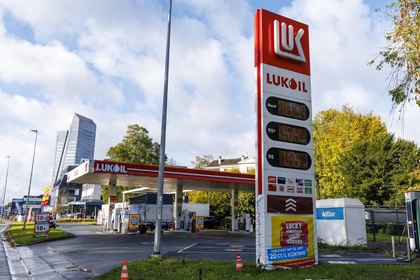
Fuel Shortages: A Turning Point in Russia’s War?In recent days, the Ukrainian army has stepped up its attacks on Russian refineries and oil depots.
Kyiv says the strikes are intended to weaken Russia’s ability to sustain its war effort and reduce revenues from the energy sector that help finance the invasion.
Major chemical plant reportedly targetedRussian monitoring channels reported that one of the main targets was the Azot chemical plant in Novomoskovsk, Tula region.
Residents reported hearing explosions and drones overhead for several hours. Local social media posts also described a strong smell of ammonia and power outages following the attack.
Advertisement
Tula region Governor Dmitry Milyaev confirmed that the region had come under a “massive” drone attack. He said a private home in the Shchekino district was damaged and one woman was injured.
Azot is one of Russia’s largest chemical enterprises, producing mineral fertilizers, ammonia, nitric acid, methanol, and other industrial chemicals. Open-source analysts have linked the facility to Russia’s defense sector, saying it supplies chemical feedstocks used in the manufacture of explosives and ammunition.
The plant was previously targeted by Ukrainian drones on June 14, when the strike triggered a fire.
Explosions reported in occupied CrimeaExplosions were also reported overnight in Russian-occupied Crimea.
According to Russian monitoring channels, blasts were heard near the Kerch ferry crossing, while residents reported the smell of smoke and burning.
The Kerch area is one of Russia’s most important military logistics hubs, serving as a critical transport link between occupied Crimea and mainland Russia after repeated attacks on the Kerch Bridge.
The ferry crossing has become increasingly important for transporting military personnel, equipment, and supplies to Russian forces in southern Ukraine.
Advertisement
Zelensky announces 40-Day SBU pressure campaignThe massive overnight drone barrage came just hours after President Volodymyr Zelensky announced that he had approved a 40-day Security Service of Ukraine (SBU) operation designed to increase pressure on Russia and compel Moscow to end its war against Ukraine.
The decision followed a report from Maj. Gen. Yevhen Khmara on Ukraine’s long-range and medium-range strike plans, as well as the latest operational results of the SBU, particularly its Alpha Special Operations Center.
“I approved a 40-day influence operation for the Service against the aggressor state aimed at compelling it to end the war,” Zelensky wrote on Thursday.