Iran agrees not to produce or acquire nuclear weapons in draft MOU - Reuters
Hassan Mousavi Chalak told Khabar Online that worsening economic conditions were forcing more families to rely on their children's income to meet basic needs.
"We must accept that poverty in Iran has deepened," Mousavi said. "The more difficult economic conditions become, the more the use of children's labor capacity to cover family expenses increases."
Criticizing what he described as political efforts to downplay the issue, Mousavi said child labor extended far beyond children visible on city streets. He pointed to the use of children in slaughterhouses, livestock farms, underground workshops, orchards, farms and industrial settings, adding that many remained hidden from public view while facing dangerous and damaging working conditions.
There were no reliable statistics on the number of child laborers in Iran but that the phenomenon appeared more widespread in major cities and pilgrimage and tourist destinations, Mousavi said.
Physical and psychological toll
Children who work are deprived of the safety of school environments and normal socialization processes, Mousavi said, forcing them to adapt to harsh street conditions and sometimes engage in risky behavior to survive.
He warned that child laborers face serious health risks, including malnutrition, skin and infectious diseases, gastrointestinal problems and drug use, as well as different forms of violence and sexual exploitation.
"Social comparisons are also harmful," Mousavi said. "When a child compares themselves with others and sees peers enjoying ordinary and happy lives with their families, they experience psychological pressure and emotional suffering."
He cautioned that economic hardship increases the likelihood that children will be exploited, "sometimes even by those closest to them."
Economic strain fuels concerns
In recent weeks, multiple reports have highlighted the worsening economic situation in Iran, with citizens describing rising unemployment, sharp increases in the prices of essential goods and persistent economic stagnation.
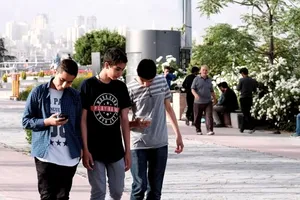 Iranian teens say rising costs turn simple wishes into distant dreams
Messages sent to Iran International have pointed to mounting pressure on household finances as living costs rise and employment opportunities decline, deepening concerns about livelihoods and the future of the labor market.
Research published in 2025 found that a combination of poverty, migration and marginalization, alongside ineffective support policies, was pushing both Iranian and Afghan migrant children into street work and workshops.
The study argued that child labor should be understood within the framework of profiteering from children in a dysfunctional economic structure, where shortcomings in the welfare system and ineffective social interventions have left the street to serve as a substitute for formal support mechanisms.
Mafia networks target some children
Addressing remarks about organized criminal involvement, Mousavi said the existence of mafia-like networks in the child labor sector could not be entirely dismissed, particularly when it came to homeless children.
However, he said field experience did not support the assumption that all working children were controlled by such groups.
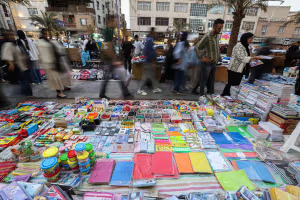 Rising costs push poor Iranian children out of school, activist warns
Many children, he said, were sent by their families from poorer provinces to wealthier areas to help cover household expenses.
"Some children, especially those without guardians or effective caregivers, may fall under the control of such networks," Mousavi said. "In these circumstances, they may be forced into illegal or criminal activities."