Trump-backed Daylight Saving Time bill clears key House hurdle
A bipartisan push to make Daylight Saving Time permanent is heading for a chamber-wide vote after clearing a key House hurdle.
The House Rules Committee on Monday teed up a floor vote on the Sunshine Protection Act, which would allow states to enact Daylight Saving Time year-round — with an option to opt out. The committee approved the rule in a 6-4 vote.
The measure has the support of many coastal lawmakers and President Donald Trump, who has repeatedly urged Congress to make Daylight Saving Time permanent and end the twice-a-year ritual of changing clocks — a practice currently observed by every state except Hawaii and most of Arizona.
Proponents argue that resetting clocks has negative health impacts, while permanent Daylight Saving Time would boost outdoor recreation, tourism and economic activity, among other benefits.
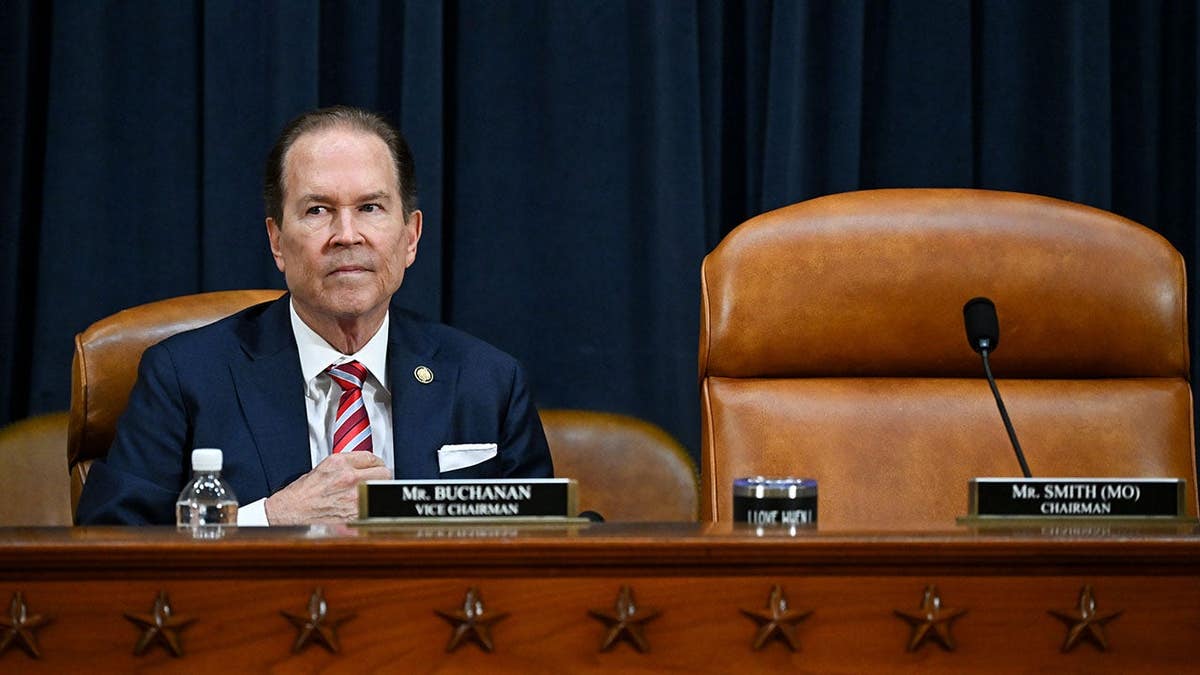
Rep. Vern Buchanan, a Republican from Florida, attends a House Ways and Means Committee hearing in Washington, D.C., on April 22, 2026. (Graeme Sloan/Bloomberg via Getty Images)
CONGRESS EYES RARE BIPARTISAN HOUSING WIN WITH OR WITHOUT TRUMP'S HELP
Most Americans already set their clocks forward one hour each spring to preserve more evening daylight before "falling back" one hour in November.
"Americans are overwhelmingly supportive of this policy and want to end the practice of ‘springing forward’ and ‘falling back.' Locking the clock all year long would have positive impacts on sleep schedules, energy conservation, motor vehicle safety, and our economy," Chairman Brett Guthrie, R-Ky., said in an opening statement Monday.
"In practice, this change would mean more time for people to exercise outside, visit family, attend concerts and sporting events, attract customers to their retail businesses, and more."
"Floridians and Americans across the country are tired of the biannual time change, and the evidence is clear that permanent daylight saving time can improve public health, reduce traffic accidents, lower crime and encourage more outdoor activity," Rep. Vern Buchanan, R-Fla., who authored the measure, previously said in a May news release.
"Ending the clock change is a commonsense reform that will improve everyday life for millions of Americans," he added.
The legislation’s momentum comes after the House Energy and Commerce Committee overwhelmingly passed the measure 48-1 in May.
"It’s time that people can stop worrying about the ‘Clock,’ not to mention all of the work and money that is spent on this ridiculous, twice-yearly production," Trump wrote following the Sunshine Protection Act’s advancement out of committee. "It will also be a very nice WIN for the Republican Party. Take it! We are going with the far more popular alternative, Saving Daylight, which gives you a longer, brighter Day — And who can be against that — This is an easy one!"

President Donald Trump speaks to the media as he arrives at the U.S. Capitol on June 24, 2026, in Washington, D.C. (Andrew Harnik/Getty Images)
SLEEP DOCTOR REVEALS THE BRUTAL HEALTH DOWNSIDE OF DAYLIGHT SAVING TIME
Roughly 20 states have already passed legislation that would make Daylight Saving Time permanent if Congress were to authorize the practice. Alabama, South Carolina, Oregon, Maine and Florida are among those places.
But opponents, including several medical organizations, argue that permanent standard time — which provides more sunlight in the morning — would be the healthier option because it would more closely align with the body’s natural circadian rhythms.
Rep. Mary Gay Scanlon, D-Pa., proposed amending the bill with language from her co-sponsored Sunshine for Our Kids Act, which would make standard time permanent nationwide. The amendment was quickly rejected.
Scanlon argued that permanent daylight saving time would pose significant health and safety risks by leaving more Americans — particularly children — in darkness during morning hours. She also pointed to the nation's brief experiment with year-round daylight saving time in 1974, which Congress abandoned after widespread public backlash.
Rep. Nanette Barragán, D-Calif., was also the lone lawmaker to oppose the legislation during the Energy and Commerce Committee markup in May, citing concerns that year-round daylight saving time could negatively affect children’s health and sleep schedules.
Some conservative lawmakers have also argued that GOP leadership should be focused on what they describe as more pressing legislative issues, including legislation codifying Trump's border security executive orders and the stalled SAVE America Act.
"Republicans are majoring in the minors — fiddling with the clocks while the country burns," Rep. Keith Self, R-Texas, a member of the conservative House Freedom Caucus, wrote Monday.
The House has already passed versions of the SAVE America Act multiple times, but the measure has struggled to overcome the Senate's legislative filibuster.
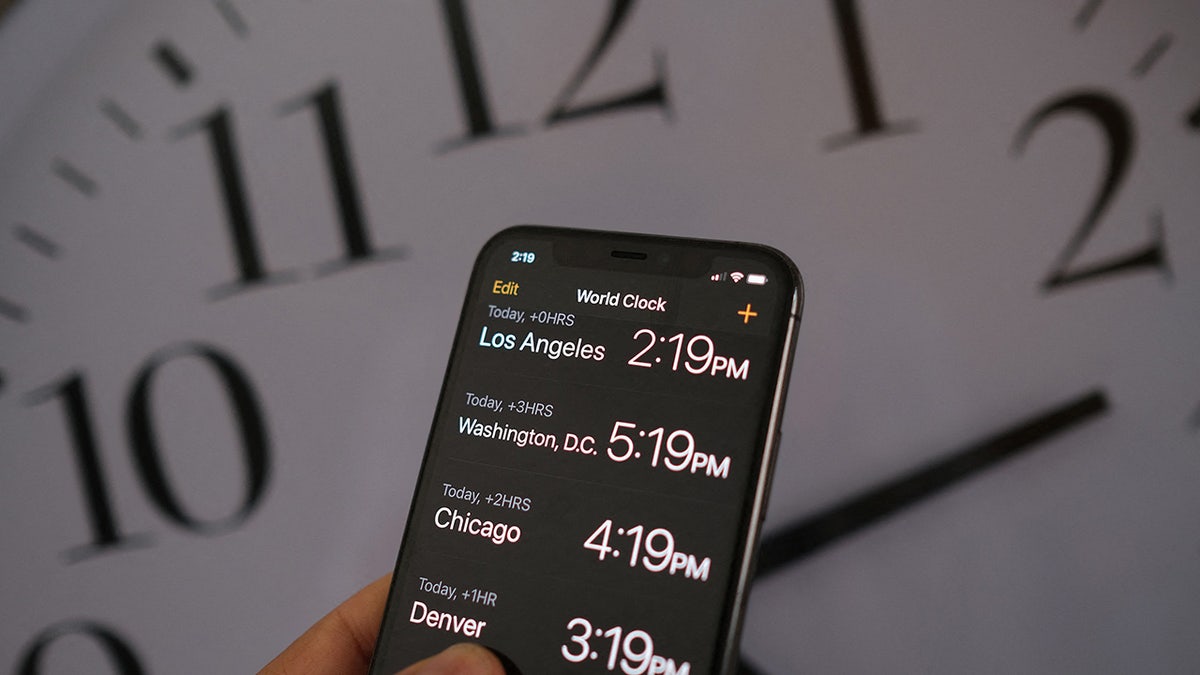
This illustration photo shows a clock in the background of a smartphone showing the time after Daylight Saving Time was implemented in Los Angeles. (Chris Delmas/Getty Images)
CLICK HERE TO DOWNLOAD THE FOX NEWS APP
The Senate unanimously passed a version of the Sunshine Protection Act in 2022, but it died in the House amid opposition, including from lawmakers who voiced concerns about darker morning hours in parts of the country during the winter.