100 games that explain college football in 2026

Bill Connelly
CloseBill Connelly is a writer for ESPN. He covers college football, soccer and tennis. He has been at ESPN since 2019.In a few more weeks, the 158th college football season will kick off. It will feature players on seven-digits-a-year contracts and coaches on eight digits a year. It will finish with a 12-team playoff amid a slate of 40-something bowls. It will feature conference games like West Virginia-Utah, UCF-Oklahoma State and USC-Rutgers but won't feature Pitt-West Virginia, Oklahoma-Oklahoma State or USC-Notre Dame.
The games remain thrilling, and Saturdays remain immaculate. But it's sometimes worthwhile to step back and ask, how the heck did we get here? So with games broken up into key categories -- from change agents (like tactical innovations and conference realignment) to the things that keep us coming back (like upsets and epic endings) -- here are 100 games that explain college football in the year 2026.
Jump to a theme:
Making legends | Innovations
Postseason drama
Upsets | Frustrating finishes
TV rules | Realignment's effects | Classic endings

The game has seen some titanic figures and titanic performances. We'll start this list off with some of history's best players and their most noteworthy games.
1. Nov. 11, 1911: Carlisle 18, Harvard 15. Jim Thorpe remains one of the sport's most mythical legends. Playing for the Carlisle Indian Industrial School -- coached at that time by another legend, Pop Warner -- Thorpe rushed for 173 yards against a typically untouchable Harvard defense, and he booted four field goals as Carlisle upset the Crimson in front of 25,000 in Cambridge. Harvard wouldn't lose again until October 1915.
2. Oct. 18, 1924: Illinois 39, Michigan 14. The first game in the history of Illinois' Memorial Stadium is still its most famous thanks to Red Grange. Against mighty Michigan -- which hadn't lost in three years -- he returned the opening kickoff 95 yards for a touchdown, then scored on runs of 67, 56 and 44 yards by the end of the first quarter. The Galloping Ghost scored a fifth touchdown later in the game, then passed for another as the Illini trounced the Wolverines.
Editor's Picks2 Related
About Grange, legendary sportswriter Grantland Rice would later write:
A streak of fire, a breath of flame,
Eluding all who reach the clutch;
A gray ghost thrown into the game
That rival hands may never touch.
3. Oct. 18, 1924: Notre Dame 13, Army 7. Of course, Rice didn't write that about Grange that day because he was in New York penning the ultimate tribute to Notre Dame's Four Horsemen.
Outlined against a blue-gray October sky, the Four Horsemen rode again. In dramatic lore they are known as Famine, Pestilence, Destruction and Death. These are only aliases. Their real names are Stuhldreher, Miller, Crowley and Layden."
You'd have thought the Irish won by 100. But beating Army, at that time, was still pretty impressive.
4. Dec. 1, 1945: No. 1 Army 32, No. 2 Navy 13. World War II was ending, but Army was still able to compile an all-star team of sorts on the gridiron. And it might have been the best team of all time. Led by Doc Blanchard and Glenn Davis ("Mr. Inside" and "Mr. Outside"), the Cadets pummeled their first eight opponents -- four of which were ranked -- by a combined 380-33, then finished the year by obliterating the second-best team in the country in front of 102,000 at Philadelphia's Municipal Stadium.
5. Nov. 9, 1946: No. 2 Notre Dame 0, No. 1 Army 0. A sold-out Yankee Stadium hosted maybe the most anticipated game ever. Frank Leahy had built a war chest of his own -- Notre Dame would go 36-0-2 from 1946 to 1949 -- but Army still had Blanchard, Davis & Co. and entered with a 25-game winning streak. The game was a stalemate, which basically meant it was treated as a win for the Irish.
6. Oct. 4, 1975: No. 2 Ohio State 41, No. 13 UCLA 20. In less than a decade, we'll celebrate the 100th birthday of the Heisman Trophy. Incredibly, only one person has won it multiple times to date. While Archie Griffin's best collegiate game was perhaps his second -- he rushed for 239 yards against North Carolina as a freshman -- he wasn't known just yet. But as a defending Heisman winner, he basically locked up a second win with a 21-carry, 160-yard performance against unbeaten UCLA.
7. Sept. 6, 1980: No. 16 Georgia 16, Tennessee 15. "He's running over people! Oh, you Herschel Walker! My God Almighty, he ran right through two men! Herschel ran right over two men! ... My God, a freshman!"
8. Jan. 2, 1996: No. 1 Nebraska 62, No. 2 Florida 24. It took Tom Osborne more than 20 years to finally win an elusive national title at Nebraska. It took only 12 months -- and one of the most famous runs of all time -- to win a second.
0:50
Frazier sheds tackles en route to Fiesta Bowl TD
9. Jan. 4, 2000: No. 1 Florida State 46, No. 2 Virginia Tech 29. Way more than two people saw the field when Bobby Bowden's Seminoles and Frank Beamer's upstart Hokies faced off for the 1999 national title, but you can be forgiven if you don't remember anyone beyond Peter Warrick and Michael Vick. Vick threw for 225 yards and rushed for 97 more as Tech charged back from 28-7 down to take a 29-28 lead into the fourth quarter. But Warrick, the 1999 Heisman front-runner until a misdemeanor arrest and brief suspension derailed his hopes, scored on a 59-yard punt return and catches of 64 and 43 yards to lead preseason No. 1 FSU to a wire-to-wire national title.
10. Nov. 19, 2005: No. 1 USC 50, No. 16 Fresno State 42. Technically, Reggie Bush was one of many incredible players for the USC dynasty that nearly won three straight national titles. His career stats (4,470 yards from scrimmage and 38 TDs) weren't that different from those of batterymate LenDale White (3,490 and 57). But he clinched a Heisman and immortality with this single-game performance, gaining 364 yards from scrimmage, scoring two touchdowns and producing one of the best sizzle reels you'll ever see.
11. Jan. 4, 2006: No. 2 Texas 41, No. 1 USC 38. Bush, Matt Leinart and White versus Vince Young. Maybe the most legendary game of the 21st century.
12. Nov. 26, 2010: No. 2 Auburn 28, No. 9 Alabama 27. With Auburn trailing defending national champion Alabama 24-0 in Tuscaloosa, Cam Newton led the Camback, throwing three touchdown passes and rushing for a fourth while Auburn allowed 67 total yards in the second half. The win solidified Newton's one-year legend (and introduced us to Harvey Updyke Jr.).
InnovationFrom the legalization of the forward pass to the proliferation of run-pass options, the way teams try to score points -- and the way opponents try to stop them -- has changed significantly through the years. Here are 13 games that document that change pretty well.
13. Oct. 20, 1906: Chicago 39, Purdue 0. In an attempt to open up the game and tamp down the number of serious injuries, the rules of the game were changed to allow the forward pass starting in 1906. It probably isn't a surprise that legendary coach/tinkerer Amos Alonzo Stagg was one of the first to figure out how to do it effectively. His Maroons led the nation in scoring that season and lost more than one game only once between 1904 and 1913.
14. Oct. 4, 1941: Missouri 21, Colorado 6. With the T-formation ruling college and pro football in the early 1940s, Missouri's Don Faurot did some tinkering after losing star quarterback Paul Christman; he encouraged larger splits between his offensive linemen and had his quarterback slide out from under center instead of pivoting. That allowed for more deception and allowed the QB to read defenders better. The result: the split-T formation, modern option football and, for at least a year, a massive competitive advantage. Faurot fully unveiled his new attack in the second game of 1941, and Mizzou would win eight straight by an average score of 27-3.
Who won the offseason? We ranked them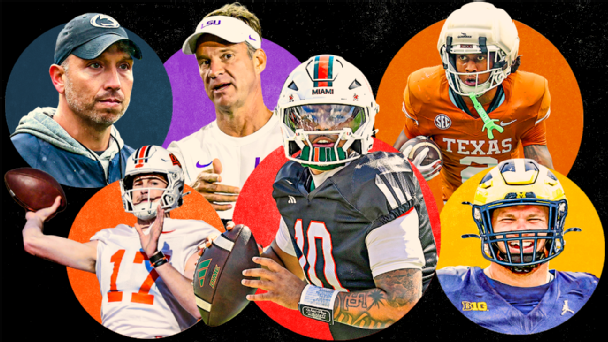
Nail the transfer portal? Miss a big recruit? Find a top coordinator? All are part of our offseason evaluations.
Read more
15. Sept. 28, 1968: Texas Tech 31, No. 6 Texas 22. Texas joined the triple-option party in 1968 with a funky new formation. Coordinator Emory Bellard, tasked with sprucing up a stagnant offense and maximizing a loaded Texas backfield, started with the split-T and brought the middle back closer to the quarterback for quicker-hitting dive plays and better blocking. Houston sportswriter Mickey Herskowitz said the formation looked like a "pulley bone." "Wishbone" ended up sticking. It wasn't an immediate hit, but after falling behind Texas Tech 21-0 in the second game, coach Darrell Royal elected to put backup QB James Street in. The Horns nearly came back and beat Tech; they would win their next 30 games; and, after Royal kindly agreed to teach Bear Bryant and Barry Switzer the ways of the wishbone, Alabama and Oklahoma would dominate the 1970s with it.
16. Jan. 1, 1988: No. 2 Miami 20, No. 1 Oklahoma 14. By the late 1980s, it was getting harder for the Switzers of the world to recruit elite offensive talent to play in the wishbone -- they wanted to play in pro-style offenses like Miami's and go high in the NFL draft. With option throwback Jamelle Holieway behind center, OU won the 1985 national title and went 33-3 from 1985 to 1987. Those three losses? All to Jimmy Johnson's Miami. The Hurricanes engulfed OU's option with speed and talent, and they wrapped up the program's first unbeaten season and second national title by holding the Sooners to 179 rushing yards and getting two touchdown passes from Steve Walsh.
17. Sept. 23, 1989: Iowa Wesleyan 49, Grinnell 7. Hal Mumme's first win as a college head coach. With Mumme's and Mike Leach's Air Raid attack, Wesleyan threw for 408 yards and six touchdowns -- almost unfathomable numbers. They would become much more fathomable in the years to come.
18. Dec. 11, 1993: East Central 49, Glenville State 35. During practice one day at NAIA's Glenville State, 30-year-old head coach Rich Rodriguez watched quarterback Jed Drenning bobble the snap on an inside zone handoff; when the defensive end crashed in to tackle the running back, Drenning held on to the ball and ripped off a nice gain. Rodriguez put it in the playbook, and Glenville State made a run to the national title game. Only East Central, with a great run game of its own and a young defensive coordinator named Todd Graham, could topple the Pioneers. Within 15 years, Rodriguez was nearly winning a national title with West Virginia.
19. Oct. 4, 1997: Kentucky 40, No. 20 Alabama 34. Kentucky had enjoyed just one winning record in 12 seasons when it rolled the dice and hired Mumme in 1997. He didn't win big (and he eventually left the program with some NCAA sanctions), but he proved you could score points and win big games by going all-in with the pass. Tim Couch threw for 355 yards and four touchdowns, including the game winner in overtime, as Kentucky beat the most traditionalist of SEC programs, Alabama, for the first time in 75 years.
20. Nov. 4, 2000: No. 21 Northwestern 54, No. 12 Michigan 51. After consulting with Rodriguez after a poor first season, Northwestern head coach Randy Walker and offensive coordinator Kevin Wilson elected to shift their power running game to a spread formation. They experimented with tempo, too. The Wildcats leaped from 110th to 10th in scoring offense, and against traditional old Michigan, they rushed for 332 yards, threw for 322 and snapped the ball 90 times. They scored 18 fourth-quarter points to beat the Wolverines in a thriller and snagged a share of the Big Ten title.
21. Sept. 8, 2007: Oregon 39, Michigan 7. Seven years later, Michigan was again on the losing end against a peppy new offense. This time, it was new Oregon offensive coordinator Chip Kelly's particularly fast and particularly read-heavy spread. Oregon rushed for 331 yards, Dennis Dixon threw for 292, and the Ducks scored the last 36 points in a laugher in Ann Arbor. Three years later, with Kelly as head coach, Oregon nearly won the national title.
22. Nov. 1, 2008: No. 6 Texas Tech 39, No. 1 Texas 33. Four verticals, three field stormings and one legendary touchdown.
0:37
On this date: Crabtree's clutch catch wins game for Texas Tech
23. Nov. 26, 2010: No. 19 Nevada 34, No. 3 Boise State 31. As with the wishbone, a little formational tweak opened up a new world of possibilities. When Chris Ault began lining his quarterback up closer to the line with the running back directly beside him, the pistol formation was born. It created a more quick-hitting run game, and with Colin Kaepernick as the pivot man, it wreaked havoc. Kaepernick threw for 3,022 yards and rushed for 1,206 in 2010, and against Boise State's best-ever team, he led a 17-point comeback, and an overtime win, in one of the best games of the 2000s.
24. Jan. 1, 2011: No. 3 TCU 21, No. 4 Wisconsin 19. Just as Jimmy Johnson found ways to get more speed onto the field on defense, Gary Patterson did the same in the 2000s, building a wrecking ball of a program around a 4-2-5 defense that would soon become commonplace. His 2010 team could have done major damage in a playoff but instead settled for shutting down Wisconsin in the Rose Bowl to finish unbeaten.
25. Jan. 13, 2020: No. 1 LSU 42, No. 3 Clemson 25. The offensive innovations of the previous 20 years -- wider splits, more passing, the run-pass options that came into vogue in the mid-2010s -- all came together in 2019 to produce one of the best offenses we've ever seen. Joe Burrow threw for 5,671 yards and 60 touchdowns -- absolutely preposterous numbers -- and LSU topped 40 points in 12 of 15 games, rolling to a demonstrative national title. Against defending champion Clemson in the title game, Burrow threw for 463 yards and five scores.
Bowls, for better and worseWith teams rarely traveling outside of their conference's footprint, and with regular-season television exposure limited, bowls were often nearly the only time in a season when you might see the best players and teams competing against each other. They clung to their relevance and power-broker status for decades, fending off growing discontent about the absence of a playoff, but they couldn't hold on forever.
26-28. Jan. 1, 1923: USC 14, Penn State 3; Jan. 1, 1925: Notre Dame 27, Stanford 10; Jan. 1, 1926: Alabama 20, Washington 19. In a four-year span, the Rose Bowl gave us coming-out parties for three eventual blue-blood programs. USC won its first of 25 Rose Bowls in its first year of major college football, then Notre Dame's Four Horsemen led a romp over Pop Warner's Stanford in the only bowl they would choose to participate in until 1970.
Then came the big one: Alabama upset mighty Washington, proving that the South could compete in big-time football (and that it was really, really fun to do so). It's called The Game That Changed the South.
29. Jan. 1, 1963: No. 1 USC 42, No. 2 Wisconsin 37. Bowls became massive events in the mid-1900s -- especially the Rose Bowl -- but the AP poll was nearly 30 years old when a bowl finally produced a No. 1-vs.-No. 2 matchup. And it was a doozy. John McKay's unbeaten, national champion Trojans raced to a 42-14 lead early in the fourth quarter, but Wisconsin nearly pulled off an all-time comeback, scoring 23 late points.
30. Dec. 31, 1973: No. 3 Notre Dame 24, No. 1 Alabama 23. Notre Dame refused bowl invitations for nearly 50 years; it didn't stop the Irish from winning five national titles in the first 30 years of the polling era, but in 1973 they won a title because of a bowl.
31. Jan. 2, 1987: No. 2 Penn State 14, No. 1 Miami 10. By the end of the 1970s, the pro-playoff chorus had begun to grow as bowls increasingly chose TV-friendly brands over top teams and failed to produce a number of truly top matchups. But when independents Miami and Penn State both reached the end of 1986 unbeaten, the Fiesta Bowl raised its status by securing a matchup between the two teams and moving the matchup to the day after Jan. 1 bowls. It was a true national title game, and it became one of the most watched games ever. Penn State was a touchdown underdog but picked off Vinny Testaverde five times to secure the upset.
32. Jan. 1, 1993: No. 2 Alabama 34, No. 1 Miami 13. After another 1-versus-2 matchup in 1987, bowls got in their own way again; not only did we stop getting top matchups, we also ended up with split titles in 1990 and 1991. The resulting discontent (and iffy ratings) resulted in the Bowl Coalition, an attempt to pull together all major bowls (besides the Rose) and increase the odds of a No. 1-vs.-No. 2 game. It wasn't incredibly successful overall, but the formula worked in the Bowl Coalition's first year. No. 2 Alabama scored an upset and gave us the greatest non-play in the history of the game.
33. Jan. 2, 1995: No. 4 Colorado 41, Notre Dame 24. To say the least, the Bowl Coalition still had some flaws -- like, say, Notre Dame getting a Fiesta Bowl bid with a 6-4-1 record and getting drubbed in 1994. So we got a slightly strengthened Bowl Alliance in 1995.
34. Jan. 4, 1999: No. 1 Tennessee 23, No. 2 Florida State 16. When the Bowl Alliance proved nearly as imperfect as the Bowl Coalition -- we got another split national title in 1997 -- we finally got our guaranteed 1-versus-2 game thanks to the Bowl Championship Series in 1998. It still wasn't a playoff, and it enhanced controversies around who should rank in the top two, but it was literally something.
35. Jan. 3, 2001: No. 1 Oklahoma 13, No. 3 Florida State 2. In just the BCS' third year, we ended up with a major controversy when AP No. 2 Miami, which had beaten Florida State earlier in the season but also had one loss, ended up behind the Seminoles in the BCS formula and was denied a shot at the title. The grumbling grew when FSU's offense no-showed against a spicy OU defense and the Noles went down easily.
36. Jan. 4, 2004: No. 2 LSU 21, No. 3 Oklahoma 14. In the BCS' sixth year ... we got another split national title. USC, the AP's top-ranked team, finished third in the BCS standings, won the Rose Bowl and remained No. 1 while LSU claimed a share of the title by beating OU in the BCS' title game. As it turned out, the BCS' biggest issue was getting to pick only two teams. It took another decade to rectify that.
37. Oct. 11, 2008: No. 5 Texas 45, No. 1 Oklahoma 35. With three one-loss heavyweights (Texas, Oklahoma and Florida) and an unbeaten and dominant mid-major (Utah), the 2008 season would have been perfect for a four-team playoff. But we were still six years away from that. Instead, Oklahoma lost a delightful Red River track meet but eked out a spot against Florida in the title game thanks to a late-season run of scoring 60-plus points in five straight games.
38-39. Nov. 18, 2011: Iowa State 37, No. 2 Oklahoma State 31; Jan. 9, 2012: No. 2 Alabama 21, No. 1 LSU 0. The two games that broke the camel's back. The drumbeat for a playoff had already grown deafening by 2011, but when Iowa State upset unbeaten Oklahoma State late in the season -- thanks in part to a field goal Oklahoma State missed by a millimeter, if at all -- Alabama ended up landing the No. 2 spot and getting a rematch against unbeaten LSU after a classic 9-6 Tigers win in November. The title game was a 60-minute sleeper hold in the Tide's favor, and the poor TV ratings that resulted from it convinced the final holdouts that a four-team playoff was a pretty good idea.
40. Jan. 1, 2018: No. 3 Georgia 54, No. 2 Oklahoma 48. In the College Football Playoff era, major bowls serve a different purpose -- the biggest bowls are now semifinals and, in the 12-team era, quarterfinals. But on occasion these games can still be remembered as bowls, playoff games and absolute classics. And the 2018 Rose Bowl was a nearly perfect football game no matter the stakes.
3:49
Georgia tops Oklahoma in 2OT thriller
41. Dec. 2, 2023: No. 4 Florida State 16, No. 15 Louisville 6. In 2023, the last year before the CFP expanded from four to 12 teams -- a move delayed, in part, by the ACC's own resistance to the idea -- an unbeaten power-conference champion was denied a shot at the title. It was an all-time moment of shame for the CFP and its selection committee. With quarterback Jordan Travis out for the season with injury, FSU won the ACC championship game with incredible defense, but the Seminoles' iffy-looking offense scared the committee, which put a one-loss Alabama in their place.
42. Jan. 9, 2025: No. 3 Notre Dame 27, No. 5 Penn State 24. In the 12-team era, the most successful teams play in -- and, potentially, win -- multiple major bowls. This classic Orange Bowl pitted the winners of the Sugar Bowl (Notre Dame) and Fiesta Bowl (Penn State). You can fill up a trophy case awfully quickly these days.
1:00
Notre Dame hits go-ahead FG in final seconds to reach title game
UpsetsFor a sport so dominated by a specific ruling class, upsets are the lifeblood. No one can ever get too comfortable, and nothing can ever become too predictable. And just as the sport's Goliath class began to form a century ago, an endless list of Davids have waited their turn to try something spectacular. And when they've succeeded, it has produced some of the sport's most perfect moments.
Bill Connelly's Conference Previews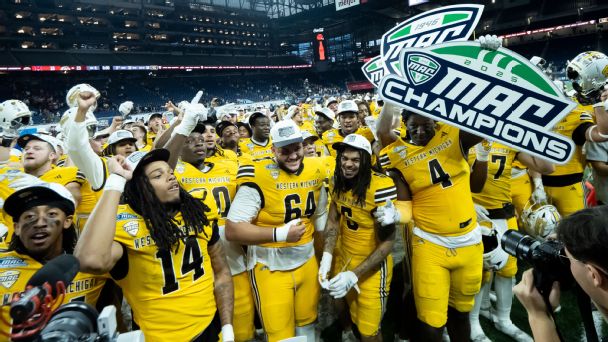
Leading up to the 2026 season, we're previewing every conference in college football.
SEC | Big Ten | Big 12 | ACC | Pac-12 | MWC | American | Sun Belt | Conference USA | MAC
43. Nov. 27, 1926: Carnegie Tech 19, Notre Dame 0. Even coaching greats can make bone-headed errors. With his team two games from a second unbeaten season in three years, Notre Dame's Knute Rockne elected to attend the Army-Navy game in Chicago -- a game that dedicated the newly opened Soldier Field -- instead of going with his team to Pittsburgh for what was sure to be an easy win over what is now Carnegie Mellon. Whoops. A crowd of 45,000 witnessed a resounding performance by the home team and rushed the field at the end of it.
44. Sept. 18, 1953: Southern Miss 25, No. 5 Alabama 19. Southern Miss wouldn't officially enter the world of major college football for another decade, but against a Bama team coming off a 10-2 campaign in 1952 -- a team Grantland Rice named as the preseason No. 1 -- Mississippi Southern (as it was then called) played a stunning game. Hugh Pepper scored on a pair of long touchdowns, and Jim "Brick" Mason scored to give the visitors the lead midway through the fourth quarter. The lead held up, and Hattiesburg was the center of the college football universe for a weekend.
45. Nov. 16, 1957: Notre Dame 7, No. 2 Oklahoma 0. OK, not every amazing upset was pulled by a David. Oklahoma lost to Notre Dame to start the 1953 season, but Bud Wilkinson's Sooners hadn't tasted defeat in the more than four years that followed. It took the Irish -- a team that had been thumped by Navy and Michigan State in its two previous games, no less -- to end OU's unfathomable 47-game winning streak.
46. Jan. 1, 1966: No. 5 UCLA 14, No. 1 Michigan State 12. Tommy Prothro inherited a sub-.500 UCLA team and turned it into a Rose Bowl champ in his first season. The Bruins had begun the season with a loss to a brilliant Michigan State team but got a shot at revenge as a two-touchdown underdog in Pasadena.
UCLA led 14-0 heading into the fourth quarter and 14-6 going into the final minute. State scored, but UCLA's Bob Stiles knocked himself unconscious knocking big Bob Apisa down short of the goal line on the 2-point conversion.
47. Nov. 22, 1969: No. 12 Michigan 24, No. 1 Ohio State 12. Woody Hayes' Ohio State was the defending national champion and a winner of 22 games in a row. Michigan was trying to reestablish its footing under first-year coach Bo Schembechler. The Wolverines scored an upset that started what became known as the Ten Year War, the peak of one of the sport's most celebrated rivalries.
48. Dec. 2, 1972: No. 9 Auburn 17, No. 2 Alabama 16. Since adopting the wishbone to start the 1971 season, Alabama was 21-1 with a loss only to an immortal 1971 Nebraska team. But Auburn figured out a surefire upset hack: Simply have one guy (Bill Newton) block two fourth-quarter punts, and have another guy (David Langner) return both of them for touchdowns! It became known as Punt Bama Punt, and it turned a 16-3 deficit into an all-time rivalry win.
49. Oct. 25, 1980: Mississippi State 6, No. 1 Alabama 3. Alabama had gone 41-2 since the start of the 1977 season, with losses only to mighty USC and Nebraska, and the Tide brought a 28-game winning streak to Jackson to face an MSU team that hadn't beaten them since 1957. What followed was maybe the SEC's greatest upset.
50. Jan. 2, 1984: No. 5 Miami 31, No. 1 Nebraska 30. When Miami hired Howard Schnellenberger in 1979, it was a program without much of a history, one that had famously almost been discontinued. Five seasons later, it was a title program. Against an all-time great Nebraska team, the Hurricanes pulled off a history-altering upset.
51. Sept. 2, 1989: Southern Miss 30, No. 6 Florida State 26. Bobby Bowden's FSU went 22-2 in 1987-88, with both losses coming to epic Miami teams. But they began 1989 against Brett Favre and an upset-minded Southern Miss team. Favre threw for 282 yards and two touchdowns, the second of which came in the final seconds. Southern Miss has been a hell of a David through the years.
52. Sept. 2, 1995: Northwestern 17, No. 9 Notre Dame 15. Gary Barnett famously took the Purple to Pasadena in 1995, but the journey began in South Bend, where the Wildcats took down the mighty Fighting Irish as 28-point underdogs. The NU defense stuffed a late fourth-down attempt, and the rushing of Darnell Autry (160 yards on the day) ran out the clock.
53. Jan. 1, 2007: No. 9 Boise State 43, No. 7 Oklahoma 42. Maybe the most famous upset of the 21st century ...
1:59
On this date: Boise State uses trickeration to shock Oklahoma
54. Sept. 1, 2007: Appalachian State 34, No. 5 Michigan 32. ... unless this one is the most famous upset of the 21st century.
55. Oct. 6, 2007: Stanford 24, No. 2 USC 23. The 2007 season began with one of the biggest stunners on record (No. 54), but Stanford sent matters into overdrive. Jim Harbaugh's first Cardinal team was a 40.5-point underdog, but Tavita Pritchard -- now the school's head coach -- found Mark Bradford for a 10-yard, fourth-down touchdown in the final minute, and Stanford pulled a stunner.
56. Dec. 1, 2007: Pitt 13, No. 2 West Virginia 9. The amazing 2007 season reached its denouement in Morgantown, where West Virginia found itself one Backyard Brawl win away from a trip to the BCS title game. The Mountaineers were 28.5-point favorites over 5-6 Pitt, but star quarterback Pat White was hurt and ineffective, star running back Steve Slaton rushed for just 11 yards, some guy named Pat McAfee missed two field goals (but punted well, to be fair), and Pitt pulled off a devastating upset.
57. Sept. 2, 2017: Howard 43, UNLV 40. UNLV has lost lots of games through the years; how do the Rebels make it on this list? By losing as a 45-point favorite. Caylin Newton -- Cam's brother -- rushed for 190 yards and threw for 140, and Howard finished the game on a 22-7 run for a stunner.
58. Oct. 5, 2024: Vanderbilt 40, No. 1 Alabama 35. Vandy was turnt.
0:52
Vanderbilt fans storm field after historic win over Alabama
The sport can still (always) frustrate usClose calls, unsatisfying endings, presidential interference. Without even getting into all the ways that millionaire boosters and message board conspiracy theorists add a steady dose of drama to all of the goings-on -- and don't even get us started on conference realignment (that section's a little further down) -- this sport can drive us absolutely batty sometimes.
59. Nov. 19, 1966: No. 2 Michigan State 10, No. 1 Notre Dame 10. With two incredible, unbeaten teams meeting late in the 1966 season, this was one of the first true Game of the Century situations. And it ended in a tie when Notre Dame, making do with backup quarterback Coley O'Brien after starter Terry Hanratty was injured, elected to play it safe and let the clock run out instead of risking mistakes driving for a winning field goal. It was logical and extremely unsatisfying. (Sports Illustrated's Dan Jenkins wrote that head coach Ara Parseghian chose to "tie one for the Gipper.") And it became even more controversial when AP voters still gave the national title to the Irish over unbeaten (and untied) Alabama.
60. Dec. 6, 1969: No. 1 Texas 15, No. 2 Arkansas 14. Another of the true Game of the Century moments, this game was a true event, pushed to the end of the regular season for TV purposes and attended by President Richard Nixon. Texas scored 15 fourth-quarter points to win a thriller, but things got weird after the game when Nixon provided the Longhorns with a plaque declaring them national champions even though (A) they still had to beat Notre Dame in the Cotton Bowl and (B) Joe Paterno's Penn State was also unbeaten. As Paterno would say at a commencement speech a few years later, "I've wondered how President Nixon could know so little about Watergate in 1973 and so much about college football in 1969."
61. Oct. 15, 1988: No. 4 Notre Dame 31, No. 1 Miami 30. The biggest game of 1988 -- and the subject of a 30 for 30 -- was decided by an openly terrible call: With Miami down seven in the fourth quarter, Cleveland Gary was tackled at the Notre Dame 1 and was clearly down before the ball came loose, but he was ruled to have fumbled, and the Irish recovered. Granted, that call was evened out by a shaky late touchdown for Miami's Andre Brown (it sure didn't look like he held on to the ball long enough for it to be a catch).
People might not always love replay reviews these days, but the lack of them sure had a huge impact on a massive game.
62. Oct. 6, 1990: No. 12 Colorado 33, Missouri 31.
First-and-goal: Charles Johnson spikes the ball to stop the clock.
Second-and-goal: Eric Bieniemy rushes to the Missouri 1.
Third-and-goal (with the down marker still showing second down): Bieniemy is stuffed at the 1.
Fourth-and-goal (down marker showing third): Johnson spikes the ball to stop the clock with 0:02 left.
Fifth-and-goal (down marker showing fourth): A Johnson keeper is ruled a touchdown, though it's not clear that he reached the ball across the goal line before he should have been ruled down.
On Missouri's disgustingly slick Omniturf field, Colorado got an extra down to avoid an upset. The Buffaloes would win a share of the national title three months later.
63. Jan. 1, 1991: No. 1 Colorado 10, No. 5 Notre Dame 9. Colorado got a bit more help in that title bid when Rocket Ismail's dramatic last-minute punt return touchdown was called back because of a dubious clipping penalty. Meanwhile, No. 2 Georgia Tech was stuck playing No. 19 Nebraska in the Citrus Bowl because of dubious (and early) bowl selection processes; the Yellow Jackets' 24-point win was enough to earn the No. 1 ranking in the coaches' poll, but everything about how this title race played out was unsatisfying.
64. Nov. 8, 1997: No. 1 Nebraska 45, Missouri 38. Another controversial win over Missouri, another split national title. Nebraska was a four-touchdown favorite in Columbia and trailed in the closing seconds when Scott Frost's fourth-down pass to Shevin Wiggins was broken up. As it fell toward the ground, Wiggins swept his feet around and knocked the ball into the air. A diving Matt Davison caught it, sending the game to overtime as Mizzou fans rushed the field in celebration of what they thought was a win. Wiggins later admitted that he intentionally (and illegally) kicked the ball, but Nebraska remained unbeaten and eventually split the title with Michigan in the final year before the BCS.
65. Jan. 3, 2003: No. 2 Ohio State 31, No. 1 Miami 24. Another fourth-down pass broken up, another premature celebration. I will forever say that the pass interference call against Miami that extended the 2002 season's BCS championship game -- eventually won by Ohio State -- was a fair call. It was extremely physical coverage. But it was also a painfully late call and a particularly painful way to deny Miami a second straight national title and dynasty status.
66. Nov. 26, 2016: No. 2 Ohio State 30, No. 3 Michigan 27. According to the box score, 107 players saw the field in this game, as 110,045 fans watched in the stands on a blustery fall day in Columbus. And in the end, it was decided by an almost literal millimeter. Down 27-24 in the second overtime of a high-stakes classic, J.T. Barrett rushed over left guard on fourth-and-1 from the Michigan 16. He either gained exactly 1 yard or he gained about 0.99. Regardless, a first down was given, and Curtis Samuel scored the winning touchdown on the next play, denying Michigan a shot at the Big Ten title and a first College Football Playoff berth. (The Wolverines would have to wait another five years for both of those.) This one took "game of inches" too far.
The siren song of televisionFans of virtually every sport in the world will spend hours telling you all the ways that television has ruined their game of choice. I personally enjoy the fact that I can watch almost literally any game I want on a given Saturday, but TV has certainly impacted the direction of the sport, especially as it pertains to conference realignment. And at this point, you can't tell college football's story without tracing its TV history.
67. Sept. 30, 1939: Fordham 34, Waynesburg 7. From my 2025 book, "Forward Progress": "It's generally accepted lore that the first network-televised football game kicked off on Sept. 30, 1939. Glenn Miller's "In the Mood" was just beginning its run of radio dominance, "The Wizard of Oz" had debuted in theaters only a month earlier, and at Triborough Stadium on Randalls Island in New York, Fordham, home of the Seven Blocks of Granite and loser of only two games in the previous three seasons, walloped Waynesburg 34-7 to start its 1939 campaign. Thanks to an NBC camera on a tripod in the southwest corner of the stadium, some local viewers lucky enough to own a still-rare television -- between 500 and 5,000, according to the NCAA -- got to watch the blowout from the comfort of their own homes."
68. Nov. 18, 1967: No. 4 USC 21, No. 1 UCLA 20. With innovative direction from energetic young executive Roone Arledge, ABC Sports moved into the college football game in the 1960s and brought never-before-seen production value to the table. That lent a new level of gravitas to big-game broadcasts, and it didn't get any bigger than this one, a rivalry game between top-five teams -- and featuring two future Heisman winners (Gary Beban in 1967, O.J. Simpson in 1968) -- played in front of 90,772. Simpson unleashed a weaving, 64-yard touchdown run early in the fourth quarter to secure a classic win.
69. Nov. 25, 1971: No. 1 Nebraska 35, No. 2 Oklahoma 31. ABC was running production of the mother of all Games of the Century, as two rampant Big 8 rivals went toe-to-toe in another classic. Johnny Rodgers opened the scoring with one of the most famous punt returns ever, a 72-yarder three minutes into the game, but three lead changes later, OU was on top heading into the final two minutes. It took Jeff Kinney's fourth touchdown run, a diving 2-yarder with 1:38 left, to secure the win -- and the eventual national title -- for the Huskers.
70. Sept. 1, 1984: BYU 20, No. 3 Pitt 14. The Supreme Court's 1984 decision in NCAA v. Board of Regents ruled that the NCAA couldn't control college football television opportunities and opened the floodgates. An ambitious startup by the name of ESPN swooped in and aired a full slate of live college football for the first time in 1984. The very first game of that season? An upset victory for a BYU team that would go 13-0 and win maybe the most surprising national title ever.
71. Dec. 5, 1992: No. 2 Alabama 28, No. 12 Florida 21. Roy Kramer took a big risk when he elected to expand the SEC to 12 teams and create a conference title game between two division winners. But it turned out to be a television gold mine and all-around money cannon. And when Gene Stallings' Alabama fended off Steve Spurrier's Florida in the inaugural title game, it didn't even cost the league a national title team. The two-divisions-and-title-game model would quickly set the conference realignment template.
72. Nov. 13, 1993: No. 2 Notre Dame 31, No. 1 Florida State 24. The decade after the Board of Regents case was a slippery one, with financial ups and downs and the Bowl Alliance/Coalition and conference realignment creating plenty of change. But fan excitement didn't waver, and ESPN's "College GameDay" began to harness it on a weekly basis starting with its first on-location shoot before 1993's massive 1-versus-2 matchup.
73. Oct. 14, 1999: No. 15 Marshall 38, Toledo 13. Granted, it was played on a Thursday night and not a Tuesday or Wednesday, but we'll still count this as the first MACtion game, a battle between the MAC's two sturdiest late-1990s programs. Chad Pennington threw for 393 yards and three touchdowns, and Gary Pinkel's Toledo just couldn't keep up with the two-time defending conference champs. Weeknight football would only become more viable moving forward.
74. Oct. 8, 2011: No. 21 Virginia Tech 38, Miami 35. It can often seem as if the college football industry is, like virtually every sport, catering totally to television viewers instead of the fans who create the atmosphere that makes it such a great TV product. But on occasion, the former captures the latter too brilliantly for words. Like when "Enter Sandman" kicks up at the end of a wild, back-and-forth game in Blacksburg, Virginia.
75. Aug. 28, 2014: No. 21 Texas A&M 52, No. 9 South Carolina 28. The Big Ten got a head start on the field by starting its Big Ten Network in 2007, and despite an inauspicious debut -- the first BTN football game was Michigan's famous loss to App State -- it was so financially successful that other conferences had no choice but to pursue similar aims. And in 2014, the ESPN-aligned SEC Network debuted, kicking off with a Week 1 conference battle. "Sandstorm" blared, and then the Aggies romped.
RealignmentYou can't really tell the modern story of television and college football without addressing conference realignment. It was frequently driven by the pursuit of television dollars, and it both affirmed and enhanced the conference power structures. And waves of realignment in the early-1990s, early-2010s and early-2020s changed the shape of the sport.
76. Oct. 15, 1994: No. 3 Penn State 31, No. 5 Michigan 24. The Big Ten toppled the first domino in the early-1990s realignment wave, announcing it was adding then-independent Penn State (and officially starting the "numbers in conference titles mean nothing" trend that the Big 12 has since also taken to extremes). Joe Paterno's Penn State gave the league another huge brand, and in only the Nittany Lions' second Big Ten season, they produced one of their all-time best teams, winning eight conference games by an average of 27 points and rolling over Oregon in their first Rose Bowl in 72 years. One of their few challenges came in prime time in Ann Arbor in front of a crowd of 106,832.
77. Nov. 2, 1995: No. 24 Virginia 33, No. 2 Florida State 28. The ACC scored a coup when it added another massive indie brand, Florida State, starting in the 1992 season. But the rest of the ACC quickly turned into grist for the Seminoles' machine; FSU won its first 29 conference games until a brilliant Tiki Barber (311 all-purpose yards) and a goal-line stop of Warrick Dunn ended the streak and struck a blow for the strength of the league.
78. Dec. 2, 1995: Houston 18, Rice 17. The Big 12, the first truly new creation of the realignment wars, would begin play in 1996 with all eight members of the Big 8 and half the remaining Southwest Conference joining together. But that left the other half of the SWC to fend for itself, and the last official SWC game pitted Conference USA-bound Houston against a Rice team bracing for life in the super-sized new WAC. It was a thriller, at least: Houston scored 15 unanswered points in the fourth quarter, and Rice missed a 38-yard field goal with 12 seconds left.
79. Dec. 7, 1996: Texas 37, No. 3 Nebraska 27. Though the SEC managed to have its cake (a conference title game) and eat it too (1992 Alabama still won the national title), the Big 12 championship game immediately established a different sort of vibe. It would upend its teams' national title hopes with upsets in 1996, 1998, 2001 and 2007 and nearly do so in 2000, 2003 and 2009 as well. And the chaos vibes began immediately, when a 7-5 Texas team rode running back Priest Holmes and a stunning 61-yard pass from James Brown to reserve tight end Derek Lewis to pull off an upset of two-time defending national champion Nebraska.
80. Nov. 10, 2012: No. 15 Texas A&M 29, No. 1 Alabama 24. The next huge round of realignment nearly killed off the Big 12 as discontentment with unequal money distribution and Texas' domineering presence led Nebraska to leave for the Big Ten, Colorado for the Pac-12, and Texas A&M and Missouri for the SEC. It also produced immediate magic for the SEC when, in its first season in the league, A&M introduced Johnny Manziel to the world and he led an 11-win charge and a legendary win over Alabama.
81. Nov. 4, 2023: Oklahoma State 27, No. 10 Oklahoma 24. The pursuit of brands and media rights money over geographical and historical ties led to the breaking of a number of storied rivalry games, from the Backyard Brawl to Oklahoma-Nebraska and Missouri-Kansas. But in the 2020s, things have gotten more malicious as even in-state rivalries have been broken in the super-sizing of the SEC (to 16 teams with the addition of Texas and Oklahoma) and Big Ten (to 18 with the addition of one-third of the Pac-12). The Apple Cup (Washington-Washington State) and Civil War (Oregon-Oregon State) have been relegated to early season nonconference games, but at least those teams are still playing. Oklahoma and Oklahoma State have no Bedlam games scheduled at the moment, meaning their 2023 edition -- a particularly wild one won by an OSU team OU was leaving behind -- was the last for the foreseeable future. Ridiculous.
1:54
Oklahoma Sooners vs. Oklahoma State Cowboys: Full Highlights
82. Oct. 25, 2024: USC 42, Rutgers 20. But hey, at least we got a USC-Rutgers game, kicking off at 11 p.m. ET in Los Angeles, out of the deal!
83. Oct. 11, 2025: No. 7 Indiana 30, No. 3 Oregon 20. One novelty of the newly realigned era is that strange matchups become huge ones. Oregon and Indiana had squared off only three times before last fall, but they played two of the biggest games of the 2025 season. First, Indiana proved its elite bona fides by heading to Eugene and knocking Oregon from the ranks of the unbeaten in mid-October. Then, the two teams met in the Peach Bowl in January's CFP semifinals, a much more comfortable Indiana win. Realignment creates strange bedfellows.
Classic endingsNo matter how hard it seems like we're trying sometimes -- through conference realignment and the often fan-unfriendly hyper-capitalism of the era -- we still haven't figured out a way to mess up Saturdays. Quite the opposite, in fact. The game itself always keeps us coming back because, among other things, we often don't know how it will end or when we're going to see something we've never seen before.
84. Nov. 20, 1982: Cal 25, Stanford 20. Like a lateral fest that ends with a smashed trombone.
1:45
Cal beats Stanford with the band on the field
85. Nov. 23, 1984: No. 10 Boston College 47, No. 12 Miami 45. Or a soon-to-be Heisman winner in a belly shirt completing maybe the Hail Mary'est Hail Mary of them all.
86. Nov. 16, 1991: No. 2 Miami 17, No. 1 Florida State 16. Or the biggest rivalry game in the sport ending with a field goal that sails wide right ... and then ending the exact same way the next season (and again eight years later).
87. Sept. 24, 1994: No. 7 Colorado 27, No. 4 Michigan 26. Or a Hail Mary so amazing that it made legendary broadcaster Keith Jackson's voice crack.
88. Nov. 9, 2002: No. 16 LSU 33, Kentucky 30. Or a Hail Mary catch-and-run after a premature Gatorade bath.
1:08
LSU wins on Bluegrass Miracle
89. Oct. 27, 2007: Trinity 28, Millsaps 24. Or a more than minutelong lateral fest.
90-91. Nov. 16, 2013: No. 7 Auburn 43, No. 25 Georgia 38; Nov. 30, 2013: No. 4 Auburn 34, No. 1 Alabama 28. Or back-to-back home miracles for a team that damn near won the national title.
(We miss you, Rod Bramblett.)
92. Dec. 24, 2014: Western Kentucky 49, Central Michigan 48. Or a Hail Mary/hook-and-ladder combo (followed by an awful 2-point conversion attempt).
93. Oct. 17, 2015: No. 7 Michigan State 27, No. 12 Michigan 23. Or trouble with the snap!
1:49
Flashback: Michigan State stuns Michigan on flubbed punt
That one also birthed a legendary "Surrender Cobra."
94. Oct. 31, 2015: Miami 30, No. 22 Duke 27. Or maybe the wildest (and definitely most illegal) lateral fest yet? (Seems like the refs just decided this one was too cool to nullify.)
95. Sept. 10, 2016: Central Michigan 30, No. 22 Oklahoma State 27. Or a Hail Mary-and-lateral on an untimed down that shouldn't have happened.
96. Oct. 1, 2016: No. 11 Tennessee 34, No. 25 Georgia 31. Or a second-TD-in-10-seconds Hail Mary that happens on the same day as utterly chaotic endings in Clemson, Ames, Tallahassee, Fort Worth and State College (and the day after one of the wildest track meets of the century).
97. Jan. 8, 2018: No. 4 Alabama 26, No. 3 Georgia 23. Or an all-timer of a national title game that ends on second-and-26.
98. Dec. 31, 2022: Georgia 42, Ohio State 41. Or an all-timer of a semifinal game that ends on a field goal that goes into the air in one year and lands in the next.
THIS SYNCED PERFECTLY 😳
Ohio State-Georgia finished almost exactly as the 2023 ball dropped 🤯 pic.twitter.com/aMb8TW6dBp
— ESPN (@espn) January 1, 2023
99. Nov. 25, 2023: Alabama 27, Auburn 24. Or a rivalry game that ends on a fourth-and-31 play called Gravedigger.
100. Jan. 5, 2026: Montana State 35, Illinois State 34. Or a smaller-school national title game that goes to overtime after a blocked field goal and ends on a fourth-and-long lob.
1:50
Montana State defeats Illinois State in OT thriller to win FCS national championship
We're never, ever going to stop watching this glorious nonsense. And that explains college football better than anything.