Pope Leo XIV Sketches Deadly Dilemma of Migration
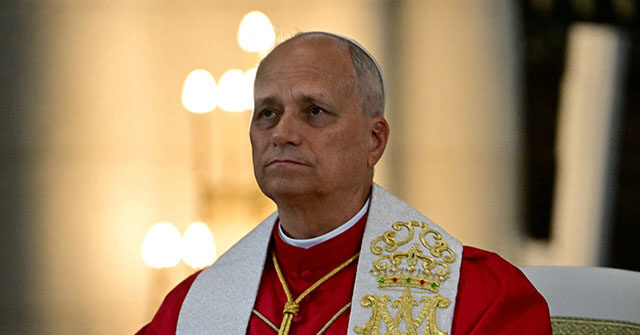
American-born Pope Leo XIV urged Spanish politicians to welcome economic migrants — but he also wants the Spanish government to help them stay in their home countries.
Migration “gives rise to a twofold demand for social justice: to offer safe and legal pathways, a respectful welcome and real opportunities for integration; and, at the same time, to promote the right to remain in one’s own land, ” Leo told the Spanish parliament on June 8.
Governments should welcome migrants and “ensure that no one has to leave their home due to a lack of peace, security or decent living conditions, including economic inequalities,” Leo added, without describing how the two contradictory goals might be reconciled.
In contrast, top GOP political leaders in the United States are prioritizing their own citizens while also promoting beneficial trade and development with people in poor countries.
The result of the Pope’s contradictory sympathies can be seen floating in the Atlantic and Mediterranean, where many migrants drown on their way to the welcome offered by the self-serving European elites. Those elites prefer importing migrants to the alternative of sending their capital to the migrants’ unstable, uneducated, corrupt, and usually backward home countries. But without capital and trade, the poor countries remain poor, so ensuring a continued chaotic flow of migrants outward.
And when migrants reach Europe, many spike crime — including many murders and many rapes — and they also shift local wealth from ordinary citizens up toward employers, investors, and the migrants.
The wealth shift is accelerated as European leaders import more migrants via so-called “legalized” routes. For example, European elites have announced plans to import more workers from India and North African countries, so showing their determination to demote and impoverish young European men and women.
The result of these pro-migration policies is that local elites gain power and wealth amid the additional chaos, crime, housing costs, and poverty. In Spain, for example, the socialist government has encouraged the illegal and legal inflow of migrants into the nation’s lower-productivity farm and tourist sectors, creating a desperate political fight between ordinary Spanish people and the elite-led alliance of pro-migration socialists and business interests. NPR reported on June 8:
The pope acknowledged the dilemma, even as he supported migration, saying:[Prime Minister Pedro] Sánchez’s Socialist Party has been hammered by a series of corruption scandals, though none have directly implicated him, with an investigation opened last month into a former Socialist Spanish prime minister for alleged influence peddling and other crimes tied to a government airline bailout. Separate probes have touched some of Sánchez’s closest confidants, as well as his wife and brother.
As they play out, many Spaniards find themselves in a country increasingly frayed by political polarization, and unable to agree on a common path forward. Sánchez’s leftist minority government has been unable to pass legislation, including a budget for the past three years.
The tragic drama of migration also challenges the conscience of nations and the ethical foundation of the international order today. Numerous men, women, and children are forced, by often dramatic circumstances, to leave their communities and leave behind loved ones, histories, and ties. This reality goes beyond any purely demographic or economic analysis: it constitutes an eminently moral and legal issue. Wherever people are discriminated against because of their national, ethnic, religious or linguistic origin, or because of their economic or social status, the universal principle of the equal dignity of all human beings is seriously violated.
The situation of migrants and refugees calls for a response that focuses on people, addresses the root causes that force them to leave, and goes beyond the mere management of migration flows. This gives rise to a twofold demand for social justice: to offer safe and legal pathways, a respectful welcome and real opportunities for integration; and, at the same time, to promote the right to remain in one’s own land, working to ensure that no one has to leave their home due to a lack of peace, security or decent living conditions, including economic inequalities and the effects of the climate crisis (cf. Magnifica Humanitas, 81).
He recognized the huge death toll of migration even as he also urged a welcome for migrants who choose to risk their lives:
In recent years, increasingly dangerous routes have highlighted the extremely high cost of this reality, so often hidden or ignored. Many people remain prey to traffickers and smugglers who take advantage of their desperation … Therefore, a coordinated, supportive, and effective response is indispensable, one capable of guaranteeing protection, welcome, and real opportunities for integration to those who migrate.
Leo also blended the church’s support for unborn humans, poor people, young and old, with his argument that nations must protect their ownb peopler, saying: “The moral greatness of a nation is manifested, above all, in its capacity to accompany, protect and love those lives that are most fragile.
In the United States, political leaders also face their political dilemma: Whether to aid ordinary people by cutting migration — while growing productivity and trade — or to expand elite wealth by extracting more migants from poor countries.
Some GOP political leaders in the United States are spotlighting the damage done by migration — both to the destination countries and to the migrants and the countries they cross. For example, Secretary of State Marco Rubio told a June 3 hearing that mass migration is bad for migrants and the people in the destination countries:
Mass migration is not good for any country that has to absorb it, and Europe is now facing the consequences of that … We do not have a mass migration event, and every country along that [migrant] route in Central America is grateful for it, because … they [do not] have to spend and less resources that are being taxed and less of a burden that they’re having to carry.
Vice President JD Vance has repeatedly spoken against the economic damage caused by migration and is now highlighting the civic damage:
Europe is at risk of engaging in civilization suicide. They are unable to, or unwilling to, many countries to control their borders … You see them starting to limit the free speech of their own citizens, even as those citizens are protesting against things like the border invasion that got Donald Trump and a number of European leaders elected.
“The economy exists to serve the people of the nation: The people of the nation do not exist to serve the economy,” Sen. Eric Schmitt (R-MO) told the Senate in June, adding:
For far too long, Washington inverted that principle. It built an economy for global capital instead of [for] American citizens. It opened the border in the name of an ideology that treats America like a labor market with a flag attached to it. That experiment, ladies and gentlemen, has failed. It failed the people we represent.
But this decline was chosen. What was chosen, though, can be reversed. We can secure the border, we can end mass migration, we can carry out more deportations, we can restore an economy that serves American citizens again.
This fight is about whether Americans can afford to live in the country their ancestors built. It’s about whether citizenship still carries a promise. It’s about whether this nation remains a home for its very own people, and whether we’re going to fight to make sure America remains a home for Americans, and now for the first time in a generation, we have a chance to choose something different, to secure the border, to carry out these deportations, to restore sanity to the labor market, to bring down housing demand, to put American taxpayers first, and to rebuild an economy that serves the American people once again.
“Defending your culture isn’t radical,” Vance told the White House press corps in June.