Fed Leaves Interest Rates Unchanged
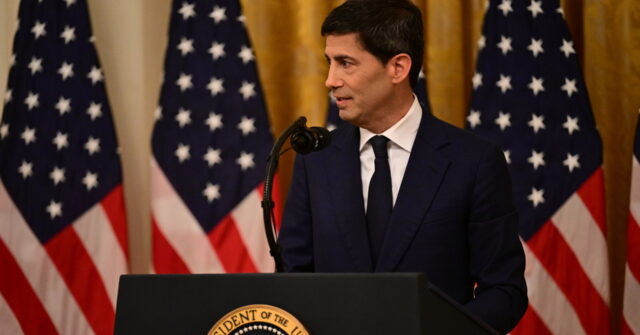
The Federal Reserve held its benchmark interest rate at 3.5 to 3.75 percent on Wednesday and, in Kevin Warsh’s first meeting as chairman, released a policy statement less than half the length of its predecessor, scrapping the forward-guidance language that had anchored Fed communication for more than a decade.
“It is shorter and simpler,” Warsh explained.
The decision was unanimous, 12 to 0. Powell’s final statement on April 29 drew four dissents: Miran wanted a quarter-point cut, while Hammack, Kashkari, and Logan backed the hold but objected to the easing bias the statement carried. Warsh’s statement carries no easing bias—no directional guidance of any kind—and the objections vanished with it.
The new statement runs three short paragraphs. It opens with the rate decision and a pledge to maintain ample reserves, then describes the economy, then addresses inflation. The April statement had buried the rate decision beneath two paragraphs of economic assessment.
Here is the statement in full:
The Committee decided to maintain the target range for the federal funds rate at 3-1/2 to 3-3/4 percent, in support of the Federal Reserve’s dual mandate. The Committee reaffirmed its policy of maintaining ample reserves in the banking system.
Economic activity is expanding at a solid pace despite elevated uncertainty that owes, in part, to the conflict in the Middle East. Productivity growth and capital investment are strong. Job gains have kept pace with the workforce, and the unemployment rate has changed little.
Inflation remains elevated relative to the Committee’s 2 percent goal, in part reflecting supply shocks that have driven price increases in certain sectors, including energy. The Committee will deliver price stability.
Warsh’s committee deleted the statement’s standing language that was widely interpreted as an indication that the Fed expected its next policy move would be an interest rate cut. No directional guidance replaced it, in keeping with Warsh’s view that the Fed should reduce the amount of forward guidance it provides.
The economic assessment was rewritten. The committee said productivity growth and capital investment are strong, language absent in April. It said job gains have kept pace with the workforce, dropping the prior characterization that gains had “remained low, on average.” It attributed elevated inflation to supply shocks in certain sectors, including energy, where the April statement had cited the recent rise in global energy prices.
The statement closed with a single line: “The Committee will deliver price stability.” Powell’s committee had said it was “strongly committed to supporting maximum employment and returning inflation to its 2 percent objective.”
The Summary of Economic Projections showed that nine of 19 officials, not all of whom have a vote on the rate-setting committee, projected that at least one rate increase by year’s end. When the Fed last released the summary, after its March meeting, no officials forecast a hike. Eight of the officials—represented by anonymous dots on the SEP’s famous “dot plot”—projected no change in rates through the end of the year. One official’s dot pointed to a cut this year, down from a dozen in March.
That left one dot missing. Warsh said at his press conference that he did not submit a projection, indicating that his was the missing dot. He said the Fed would be reviewing the usefulness of the projections and considering changes to the practice.