The Myth of Assimilation

Written by Alden Whitfeld and Arctotherium.
Jason Richwine coined the term “Irish Retort” to describe one of the most common tactics deployed in debates over immigration. Raise any concerns about mass immigration today and the response is automatic: “What about the Irish!”
When Irish immigrants arrived in America in the late nineteenth and early twentieth centuries, they were poor, Catholic (as opposed to Protestant) and heavily overrepresented in crime. Nativists panicked then too. Yet over time, the Irish assimilated, climbed up the social ladder, and became indistinguishable from the average American. The implication is clear, though usually left unstated: today’s immigrants will follow the same arc, and any claim to the contrary is just recycled bigotry.
It’s a neat story, rhetorically powerful and emotionally satisfying. The problem is what it leaves out. Careful studies using multi-generational data show that differences in social outcomes are much more persistent than is commonly assumed. What appears to be rapid convergence is often an artifact of looking too narrowly or too briefly. With this in mind, let’s examine how well the story of rapid European assimilation holds up.
To begin with, the story rests on a quiet omission: a very large share of European immigrants didn’t assimilate at all. They went home.
Between roughly 1850 and 1920, return migration was a defining feature of transatlantic mobility. The return rate of European immigrants during this period was 25–40%. In some decades it reached 60–75% (Bandiera et al., 2013). Italians are the canonical case: between 1890 and 1920, more than half returned to Italy (Klein, 1983). This return migration was negatively selected — the poorer and less successful immigrants were the most likely to leave (Abramitzky et al., 2019). What we now remember as “successful assimilation” is partly explained by survivorship bias. America did not lift entire populations into the middle class. It retained those who were already capable of doing well and quietly shed the rest.
This selection process radically alters how we interpret the observed convergence in outcomes. Abramitzky et al. (2014) show that most European immigrant groups that arrived in the early twentieth century, including the Irish, Italians and Russians, already had above-average incomes in the first generation. (There was often little difference between first- and second-generation outcomes.) It is not difficult to turn a group into a success story when many of its poorest members voluntarily leave.
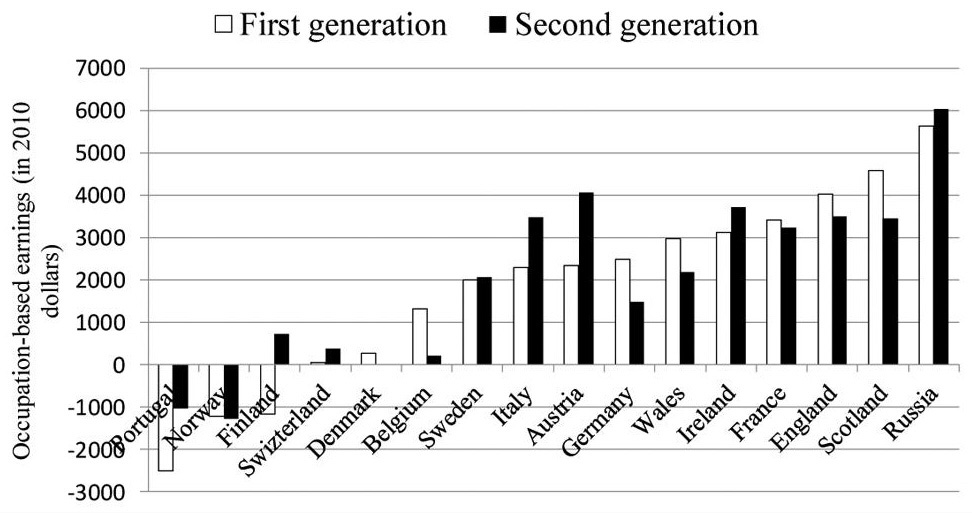 Average earnings relative to U.S. natives. Source.
Even after accounting for selection, European economic differences did not evaporate entirely. Using a unique three-generation dataset linking immigrant grandfathers in 1880 to their grandsons in 1940, Ward (2020) finds substantial persistence in occupational income across European ethnicities. As this is the first study to use linked grandparent-grandson data, it demonstrates that intergenerational correlations are stronger when measured properly. As Ward notes, his findings cut directly against the “melting pot” narrative in which ethnic differences fade within a generation or two. They don’t.
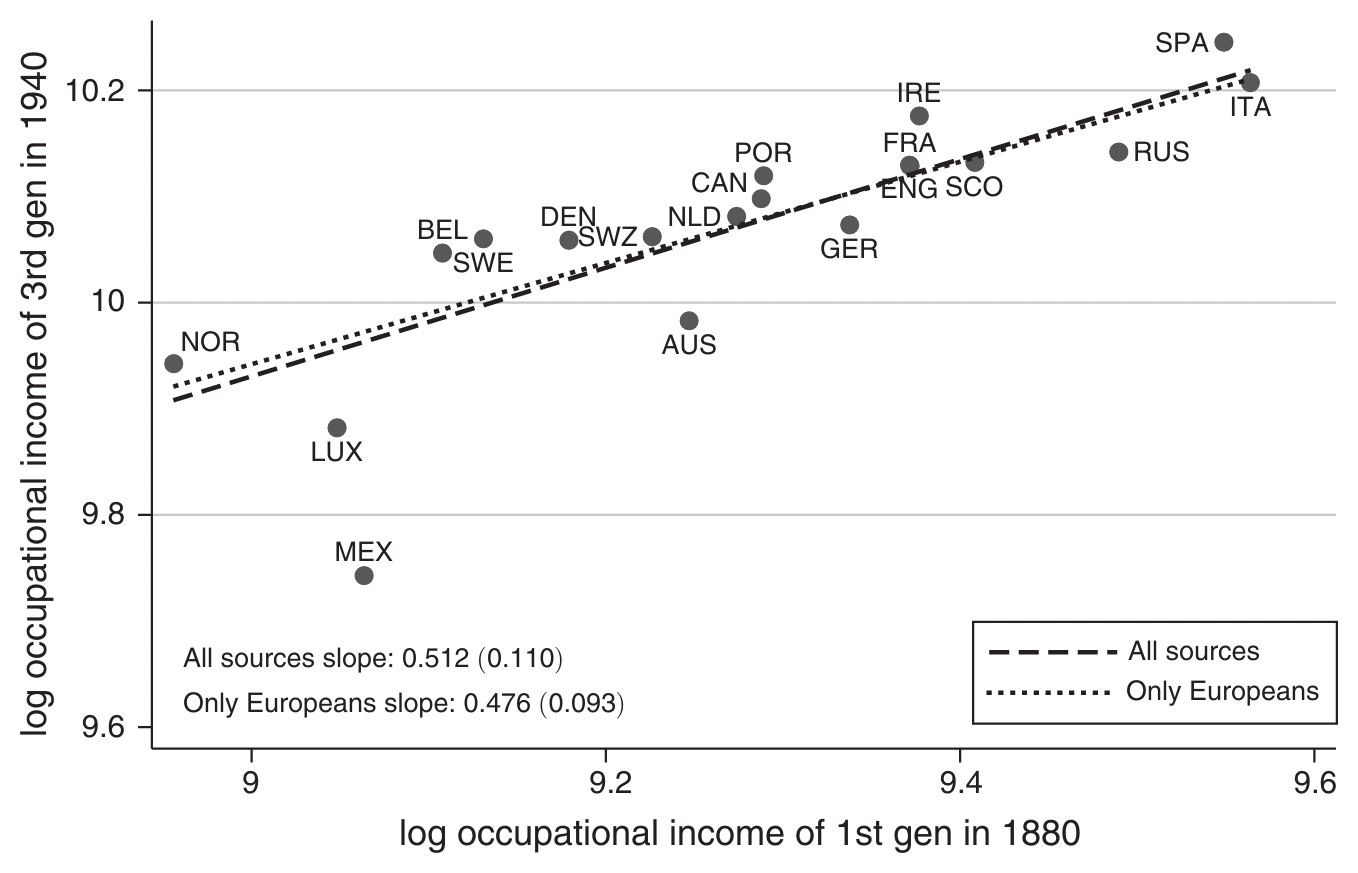 Persistence of incomes across European ethnicities. Source.
Nor did immigrants simply arrive as blank slates and then absorb American culture. They brought their values, habits and norms with them, and these left durable imprints on the places where they settled. We understand this intuitively when it comes to cuisine: Italians didn’t just eat pasta themselves; they taught Americans to eat pasta. But the same logic applies in other domains.
A growing literature shows that cultural behaviors persist across generations and shape economic outcomes (Giuliano & Tabellini, 2020; Simpser, 2020; Richwine, 2023; 2024). Fulford et al. (2018), using ancestry data for U.S. counties from 1850 to 2010, show that counties settled by immigrants from richer European countries are more productive today. A 1% increase in GDP per capita of the weighted average of the origin countries predicts roughly a 0.3% increase in the long-run GDP per capita of the county.
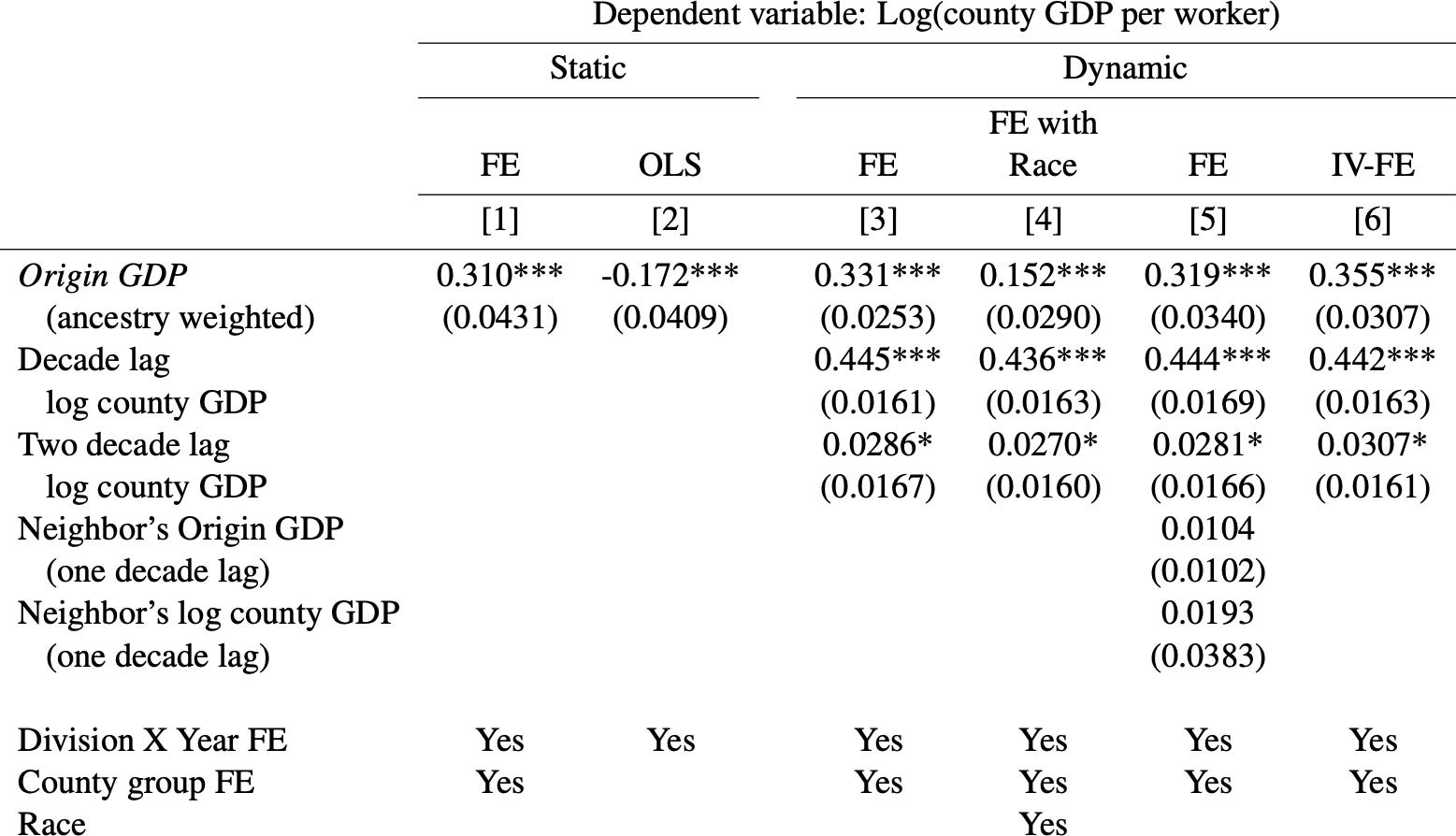 Effect of weighted GDP per capita in the origin countries on county GDP per capita today. Source.
And this effect is not simply driven by differences in education between immigrant groups. The researchers also find that once traits like historical state capacity (the length of time for which a nation has had an independent state), trust and cooperation are taken into account, formal education no longer predicts a group’s impact on county productivity. Berger & Engzell (2019) report similar results for inequality and mobility: differences across counties reflect the composition of the groups that settled them.
This brings us to another truth about the Ellis Islander wave of immigration that is rarely spoken: the nativists of the time were correct. Specifically, they were correct about the political impact these new arrivals would have.
The 1880–1924 Ellis Island immigrants entered a country with virtually no welfare state. But their descendants powered the New Deal and, more decisively, Lyndon Johnson’s Great Society, permanently shifting the American political spectrum leftward. Medicaid, Medicare, and the expansion of Social Security were not accidents; they were the predictable consequences of a transformed electorate (and are, incidentally, responsible for America’s fiscal woes). Any short-run cost-benefit analysis conducted in 1920 would have missed the point entirely.
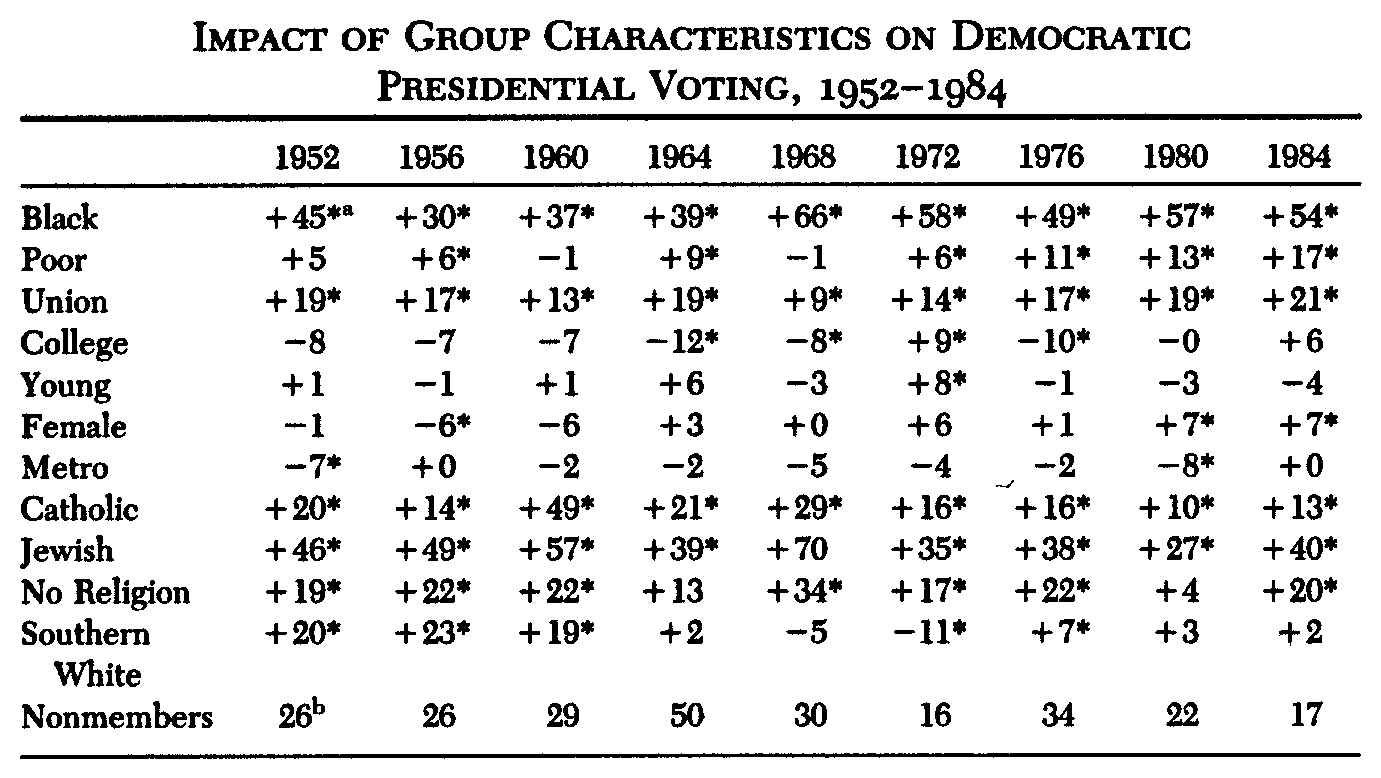 Asterisks denote statistical significance. Source.
The result was a durable “Europeanization” of American politics, replacing limited government and sectional coalitions with left-right ideological politics. As can be seen in the chart below, there is a strong correlation between the fraction of immigrants in a county between 1910–1930 and support for state welfare spending.
None of this was unforeseeable. Contemporary observers like Senator David Reed explicitly warned, in defence of the Immigration Act of 1924, that mass immigration from populations less accustomed to self-government would produce electorates more reliant on the state.
There has come about a general realization of the fact that the races of men who have been coming to us in recent years are wholly dissimilar to the native-born Americans, that they are untrained in self-government — a faculty that it has taken the Northwestern Europeans many centuries to acquire.
Thoughtful Americans have been despondent for the future of our country when the suffrage should be exercised by men whose inexperience in popular forms of government would lead them to demand too much of their Government, and to rely too heavily upon it, and too little upon their own initiative.
What could not be modelled precisely was the timing. Political integration takes decades, and as such, these effects only became electorally decisive in the late 1920s, with milestones such as Al Smith’s 1928 nomination. Had someone conducted a fiscal analysis of this immigration wave in 1920, they would have concluded it was beneficial. But immigration reshaped politics itself: once immigrants and their descendants gained political power, they used it, and this was predictable.
Studies of internal migration reveal that even regional differences within a country persist over time. Population movements change societies. While the Great Migration is usually discussed among historians insofar as it pertains to black Americans, numerically speaking, a larger number of white Southerners left the South. This movement measurably increased political conservatism, as measured by Republican vote shares, opposition to the Civil Rights Act, support for Reagan’s tax cuts, and opposition to the certification of the 2020 election (Bazzi et al., 2023a; 2023b).
Evidence from crime and literacy further undermines the lazy analogy between European immigration then and Hispanic immigration now. Moehling & Piehl (2009) show that, while some European immigrant groups were overrepresented in crime, such as the Irish, it was largely in minor offenses like public drunkenness. Differences in serious crime were generally small. While Italians were somewhat overrepresented in serious crime, they still committed far less than Mexicans, who were the clear exception.
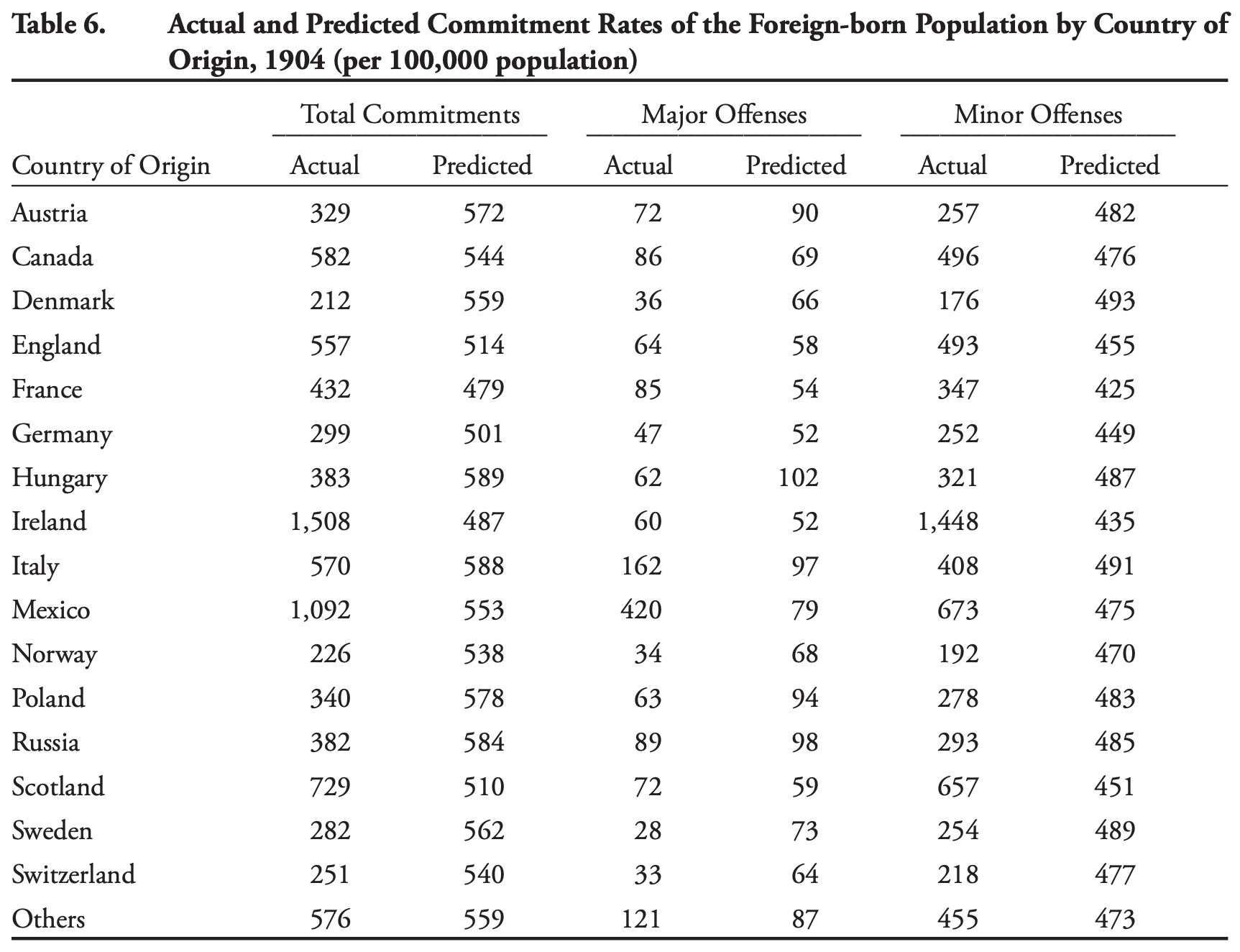 Predicted rates were calculated by applying the overall commitment rates to each group’s age structure. Source.
The paper also punctures the myth of European illiteracy. Literacy exceeded 85% for most European groups and large majorities spoke English. Again, Mexico stood apart, with substantially lower literacy and English proficiency.
The same pattern is seen in incarceration data from 1900–1930 (Abramitzky et al., 2024). Once again, Mexicans had much higher rates than native-born Americans, whereas all European groups were the same or lower.
Put differently: European differences were real but comparatively modest. That is not evidence of dramatic assimilation success; it is evidence that gaps were small to begin with. And the gap between whites and Hispanics, both historically and today, is far larger. Invoking the Irish or Italians as evidence for the power of assimilation is therefore not convincing. The Irish Retort doesn’t work.
This essay is adapted from a longer article published at Heretical Insights.
Alden Whitfeld is an independent writer who does research on immigration and politics. Arctotherium is an anonymous writer interested in demographics and the future of civilization.
Become a free or paid subscriber:
Like and comment below.