Who really speaks for Iran?
Seldom, if ever, in the history of war did the opening event eliminate the senior leadership of the opponent.
Advertisement
Victor Davis Hanson has just published a rather thorough description of the current structure of Iran’s government. Suffice it to say we are “negotiating” with an ambiguity. Should one want to find who’s most in charge, he’d need look no farther than the Islamic Revolutionary Gard Corps (IRGC) simply because they have the most guns.
Further inhibiting the progress of negotiations is the Persian cultural predisposition to deal with strangers in bad faith. Fortunately, this is fairly common knowledge, although unhinged critics of President Trump frequently spout out that Trump doesn’t know this. Of course, he does and thus the emphasis has to be placed on enforcement of an agreement and requiring observed compliance to occur before any concessions are made.
Advertisement
But what about the Iranian people? They’re the ones in harm’s way. Obviously, the “government” of Iran doesn’t include them in their calculations — hence the humanitarian component of American motives for initiating the conflict. Ever since WW2 (World War Eleven, if you’re a member of the Squad), aerial bombardment has been a mainstay of military conflict, with civilians taking much of the incoming. Though such efforts were mostly directed at rival combatants and infrastructure, innocent civilians still suffer under the imposed destruction.
It is expected by some that organized opposition by the Iranian people may serve to further weaken the remnants of the regime. Some skeptics ask why then are we not arming such groups...and I ask them, “How do you know we’re not doing that?” Perhaps the current relaxation of hostilities and promotion of deal-making is really a cover for such a possible outcome. Others point out that Trump is more inclined to pursue economic warfare than the kinetic kind, which draws focus on Iran’s enormous cash flow problem, which is being made much worse by the conflict.
Advertisement
Peripheral to the objectives of our military actions is the cumulative benefit of giving our military real battlefield experience. Training exercises are useful, but performing in the face of genuine hostility can often be hard to come by, making such activity particularly valuable. We’ve shown remarkable targeting precision and extremely useful intelligence-gathering. This after losing only a small handful of personnel in the process — which can also happen during routine training exercises. Also being demonstrated is the consolidation of the Sunni Arab neighbor states in the effort to suppress Iranian hostility beyond its borders. This might be called “Abraham Accord 2.0.”
Furthermore, when a country at war recognizes, after some time, that it can only lose, it may get irrational. A good example happened very close to home. Near the end of the American Civil War, Jefferson Davis sent some entreaties to President Lincoln. It was then arranged for three high-ranking members of the Confederate government to cross the war zone to meet with Lincoln. One was a former justice of the U.S. Supreme Court, another a former congressional representative, and the other was a former U.S. senator. They met, instead, with General Grant, and insisted that the peace they were seeking required the Confederacy to remain sovereign, along with maintaining the institution of slavery.
Advertisement
Thus ensued a convoluted back-and-forth disturbingly like today’s negotiations, which ultimately wound up at the Appomattox courthouse with the total defeat of the Confederacy.
Were today’s mullahs in anyway interested in history, they would have at least an inkling of what is in store for them. But they’re not modern people. They’re hopelessly trapped in the twelfth century.
Advertisement
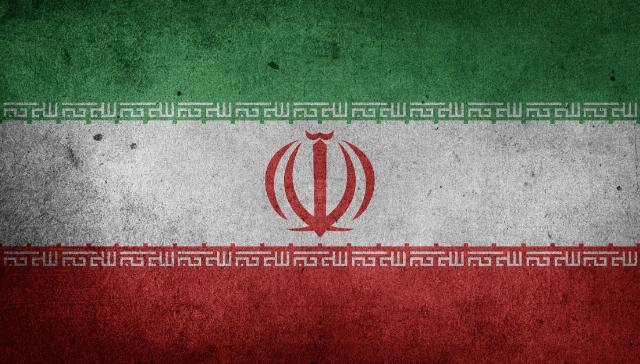
Image: Chickenonline via Pixabay, Pixabay License.
Advertisement