Is the US-Israel alliance in jeopardy?
As the U.S. reprimands Israel for the defensive steps the latter has taken against Hezb’allah, statesmen and the media are beginning to wonder if the tensions between them could signal a threat to the relationship. There is certainly reason to wonder about the exchanges between Trump and Netanyahu.
Advertisement
Here’s a rundown of what we know about their conversations and the current situation.
Most recently, Vice President J.D. Vance cautioned Israel that the U.S. is nearly the only powerful ally that Israel has:
Advertisement
“Donald J. Trump is the only head of state in the entire world who is sympathetic to the nation of Israel at this moment in time, and he happens to be the head of state of the world superpower,” Vance said. “If I was in the cabinet of the Israeli government, I might not be attacking the only powerful ally that I have anywhere left in the entire world.”
Depending on how you choose to describe Vance’s comment, you could call it a threat, condescending, or a true description of the situation.
Advertisement
It’s not surprising that at least a couple of Israeli Cabinet members pushed back on Vance’s remark:
“Trump’s agreement does not bind us. Israel is not subject to the United States, and we are an independent and sovereign nation!” Israeli Minister of National Security Itamar Ben-Gvir said, according to a translation X provided of a post on social media.
Advertisement
Finance Minister Bezalel Smotrich said the deal “is bad for Israel and for the entire free world,” adding, “we will have to continue the campaign to topple the regime ourselves and in creative ways, and ensure that Iran will never have nuclear weapons.”
Both of these Cabinet members are known well for their hawkish and aggressive views on attacking Hezb’allah, and they especially resent Trump’s willingness to appear to side with Iran’s expectation that the U.S. can control Israel’s military activity against the terrorist group.
Advertisement
Trump was especially angry that Israel had attacked Beirut, when he thought he was on the brink of a deal with Iran, and thought their military action put the deal in jeopardy. Whether Trump “has the right” to condemn Israel’s attacks on Hezb’allah in Lebanon raises questions about whether Trump is interfering with Israel’s sovereignty.
Some groups believe that these tensions between the U.S. and Israel have always existed and that they aren’t necessarily an indication of a breach in the relationship. Part of the problem is the different interests and measures of success of both countries:
Advertisement
The United States and Israel have complementary but not identical interests, and much of the difference can be explained by the adage, “where you stand depends on where you sit.” Both Trump and Netanyahu are under pressure to achieve a successful result in the war with Iran. For the ordinary American, success may boil down to lower gas prices and the elimination of the nuclear threat posed by Iran. But for an Israeli — or, for that matter, a citizen of the United Arab Emirates or Kuwait — success also means safety from Iranian and Hezbollah rockets, missiles and drones that pose little direct threat to the U.S.
To this point, both countries have worked well together, especially with Trump and Netanyahu in charge. But Trump needs to pay attention to his public criticisms of Israel and their effect, given the tensions at this time.
For example, Trump should avoid emphasizing his power to control Israel; Israel considers his comments insulting and demeaning. Second, scapegoating Israel for undesirable outcomes will not help either country; many blame Israel for forcing the U.S. into the war, but Trump has made it clear that the decision was his.
Finally, Trump should remember that Iran should have no say about military action between Israel and Hezb’allah. Lebanon has apparently given up its obligation to protect its own people from Hezb’allah, and Iran should have nothing to say about it.
And the closeness between the U.S. and Israel calls for those of us who are uncomfortable with their struggles to take a deep breath and understand that these conflicts go with the territory. They can be summed up this way:
Allies are frustrating, and the closer they are the greater the frustration can be. But as Winston Churchill astutely observed, the only thing worse than fighting with allies is fighting without them.
Let’s hope that the Memorandum of Understanding is fleshed out in a way that is beneficial to all of our countries.
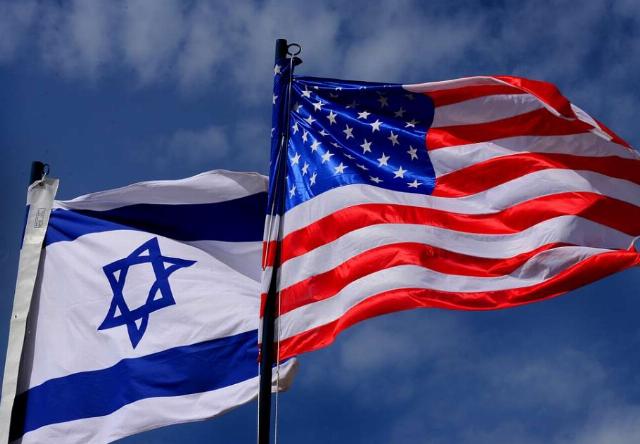
Image via Picryl.