How California Mandated Election Corruption
The right to vote is among our most cherished liberties, but equally important is the public’s confidence that every lawful vote -- and only lawful votes -- determines the outcome. Election integrity is not simply about preventing fraud; it is about preserving trust. An election that half the country believes was unfairly manipulated is an election that erodes trust in the republic and confidence in the system, regardless of who wins.
Advertisement
Such elections have become standard practice in California -- not by accident, but by intent. The state has embraced a philosophy that treats virtually every security measure as an obstacle to the apparent goal of maintaining one-party control. Each voter integrity safeguard, once considered common sense, has been systematically dismantled. Practices critics have long warned create opportunities for abuse have not merely been tolerated -- they have been written into state law.
Supporters insist these reforms are aimed innocently at expanding voter participation. But their effect has been to unnecessarily increase the opportunities for misconduct and make it more difficult for the public to verify that the elections were conducted honestly.
Advertisement
Perhaps no change illustrates this philosophy better than universal vote-by-mail. Every active registered voter automatically receives a ballot through the mail whether requested or not. Mailing millions of ballots inevitably means some are sent to outdated addresses, former residences, or individuals who have moved. The larger the distribution, the greater the opportunity for ballots to fall outside the intended recipient’s control. Election officials argue they accurately maintain voter rolls, but if that is so, why do they continue to resist a DoJ audit to verify the state’s voter database?
Once a ballot leaves the election office, another concern emerges: chain of custody. Voting at a polling place requires identification of the voter, a controlled environment, and immediate transfer of the ballot to election officials. A mail ballot can spend days traveling through mailboxes, kitchen tables, automobiles, apartment lobbies, or campaign offices before eventually reaching election authorities. Every additional handoff introduces another opportunity for error or abuse.
Advertisement
California compounds these concerns by broadly permitting ballot collection by third parties, commonly known as ballot harvesting. Campaign workers, political organizations, unions, advocacy groups, and volunteers may collect completed ballots from voters and deliver them to election officials.
Supporters defend the practice, saying this helps elderly, disabled, and rural voters. Critics ask a different question: why insert partisan intermediaries into a process that should remain as direct as possible? Whenever political operatives are permitted to collect hundreds or even thousands of ballots, the public loses visibility into what occurred between the voter and the ballot box. Verification becomes nearly impossible.
Advertisement
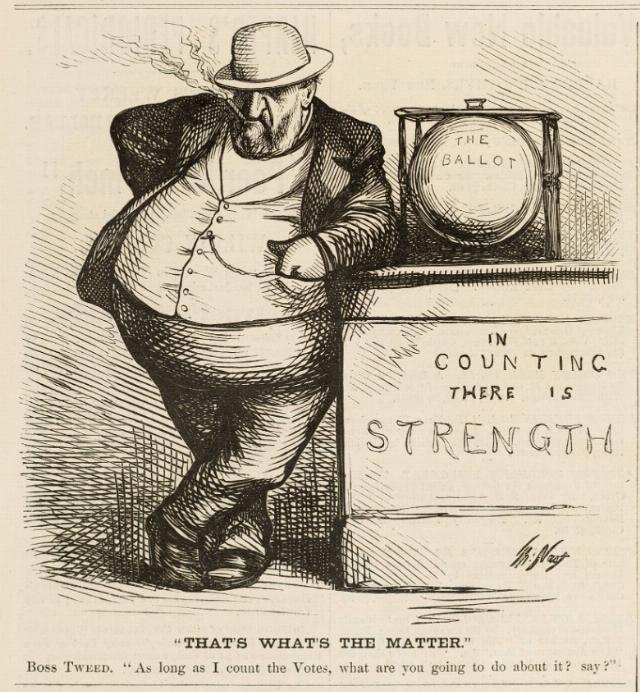 California has also dramatically expanded the use of unattended ballot drop boxes. While many drop boxes are monitored or secured, they nevertheless eliminate the direct interaction between voter and election official that once characterized the voting process. The more anonymous the chain of custody becomes, the more difficult it becomes to reassure skeptical citizens that every ballot remained secure from beginning to end.
Another controversial policy is California’s refusal to require photo identification before voting. Everyday Americans present identification to board airplanes, cash checks, purchase age-restricted products, enter many government buildings, or even rent a hotel room. Yet when selecting the nation’s leaders, California generally requires no comparable proof of identity.
Advertisement
Security measures exist not because misconduct has proven to be widespread but because they discourage misconduct before it occurs. Locks are not placed on front doors because every neighborhood is plagued by burglars. Reasonable safeguards exist precisely because they reduce opportunities for wrongdoing.
California has likewise embraced same-day voter registration under certain circumstances, allowing registration and voting to occur simultaneously during the election period. This measure reduces the amount of time available for election officials to verify eligibility before a ballot enters the counting process.
Advertisement
Election Day itself has become something of a misnomer in the state. Ballots may be cast weeks before the election, returned through numerous methods, and continue arriving after Election Day so long as they satisfy statutory deadlines. Final results often remain unknown for days or weeks. In California, election results are not certified until 38 days after voting.
Critics contend that prolonged counting periods invite shenanigans and greatly diminish public confidence. Elections once concluded in a single evening increasingly resemble extended administrative processes where outcomes slowly emerge over time.
Perhaps most troubling is the cumulative effect of these policies. Together, they produce an election system in which ballots are mailed automatically, collected by third parties, deposited in unattended drop boxes, cast without voter identification, registered close to Election Day, and counted over an extended period.
The opportunity and incentives for fraud are immense.
America’s constitutional system exists precisely because the Founders understood that power attracts temptation. Separation of powers, checks and balances, jury trials, warrants, due process, and federalism all reflect a profound understanding of human nature: institutions should be designed to discourage misconduct.
Election law should embrace the same philosophy.
When opportunities for abuse increase while transparency decreases, public confidence inevitably erodes. Citizens cannot observe what occurs inside sealed envelopes, private homes, campaign collection efforts, or prolonged counting operations. Trust gradually gives way to suspicion when verification becomes difficult, if not impossible.
California’s lawmakers hang their hats on the absence of widespread proven fraud. Yet this rationalization misses the larger principle. Security measures are preventative. We install smoke detectors before the fire, not afterward. The absence or undetectability of corruption is not proof that safeguards are unnecessary.
Citizens can enjoy generous opportunities to vote while still requiring secure identification, carefully maintained voter rolls, transparent chain-of-custody procedures, bipartisan observation, timely reporting of results, and post-election audits that reassure winners and losers alike.
An election does more than produce officeholders. It produces legitimacy.
Once confidence in that legitimacy is lost, restoring it becomes extraordinarily difficult. The true strength of an election is measured not merely by how many ballots are cast, but by how many citizens believe the outcome is honest and deserving of their trust. But sadly, that doesn’t seem to matter to California politicians, so long as a stranglehold on political power can be maintained.
Jim Cardoza is the author of The Moral Superiority of Liberty and the founder of LibertyPen.com. Read more of his essays there.
Image: Thomas Nast