‘Mental Health’ or ‘Evil’?
With the arrest of Nick Reiner for the alleged murder of his parents, Rob Reiner and Michelle Singer, commentators have taken to simultaneously pitying the accused for his mental illness while condemning him for his evil actions.
This is logically contradictory.
On the one hand, if it is illness that explains why Nick Reiner committed a crime, then he cannot be held morally responsible for his actions. It is just to hold him morally responsible for his actions only if he could have chosen, on the basis of reasons, not impulses or compulsions, to have done other than what he allegedly did.
If, on the other hand, we insist upon blaming Reiner for having committed an evil deed, then it is just as irrelevant to appeal to mental illnesses from which he may have been suffering as it would be irrelevant to appeal to whatever physical diseases may have afflicted him.
The vocabularies of illness and evil aren’t just two logically incompatible modes of discourse. They embody distinct, incompatible worldviews.
Every worldview is constituted by a metaphysic, an epistemology, and an ethic.
Metaphysics is that branch of philosophy that speaks to what is ultimately real. We know what appears to be real. A metaphysic makes a claim as to what’s really real.
Epistemology is the philosophy of knowledge: Can we know what’s ultimately real, and if so, how?
Ethics offers a theory as to what it means to be a human being within the worldview.
To put it bluntly, the dominant mental health paradigm expresses a worldview that allows no space for the concept of evil. Evil is possible only within a worldview predicated upon metaphysical, epistemological, and ethical presuppositions radically at odds with those undergirding the mental health paradigm.
The mental health paradigm presupposes a materialist metaphysic and an empiricist epistemology.
Materialism: This is the position according to which all apparently immaterial phenomena — thoughts, emotions, free will, self-consciousness — are ultimately reduced to being nothing more and nothing less than matter in motion. Mind is really just brain. And since brain is just another physical thing in the universe, it is subject to the same causal laws as every other physical thing.
Empiricism: Empiricism insists that knowledge is derived from experience: We know and can know only what we either experience or are capable of experiencing. Since, according to materialism, there are only bodies and the causal relations among them, and since bodies are, at least in principle, observable, it follows that knowledge is to be had from observation.
These metaphysical and epistemological theories are never explicitly stated, much less argued. They are presupposed.
Now, as for an ethical theory, this is where the incoherence in the worldview of the mental health field reveals itself most acutely.
Given the default assumption of materialism, human beings are no less causally determined than are all other material entities in the world. The human being is matter in motion. Mental illness, notice, is depicted as an event that happens to people and that compels actions. Yet if “event-causation” is true, then moral responsibility is a fiction, for moral responsibility requires agency, or what some philosophers have referred to as “agent-causation.” Only if human beings are agents with the freedom to deliberate upon and choose reasons for their decisions can they be held morally accountable for what they do.
The mental health paradigm is inconsistent with itself, for despite the materialist-determinist metaphysic tacitly underpinning it, its proponents continue to assume normativity — even while either denying that they are doing any such thing or remaining oblivious to the fact that normativity contradicts their theoretical commitment to materialism and determinism.
It’s one thing to describe behavior. It’s another entirely to prescribe how people ought to behave.
Consider that the Diagnostic and Statistical Manual of Disorders (DSM), the “bible” of the American Psychiatric Association, presupposes criteria for distinguishing behavior that is functioning from that which is not; rationality from irrationality; emotional regulation from dysregulation; impulse control from impulsiveness. Moreover, these “disorders” are “diagnosed” not in some timeless, ahistorical vacuum, but rather against the backdrop of very historically and culturally specific social, moral, and political norms. (For instance, up until as recently as 1973, the APA listed homosexuality in its list of disorders. By this time, though, the gay rights movement had picked up sufficient steam to pressure the APA into dropping it from the DSM.)
Psychiatry regularly refers to “impairment in functioning” and “maladaptive behavior,” yet these are most emphatically not value-neutral empirical facts. They are value judgments, as “functioning” can be “impaired” only if there’s a standard of human flourishing that it fails to realize, and behavior can be “maladaptive” only if human behavior has a purpose that it is expected to fulfill.
Psychiatry itself exists, ostensibly, for the sake of helping people maximize their autonomy, improve their personal relationships, become more productive, and otherwise manage the challenges of life. Yet these are all moral and social norms — not bare facts revealed through impartial, disinterested observation.
People are said to have an obligation to pursue treatment for their illnesses. They ought to pursue treatment. However, not unlike every other foregoing norm, the mental health paradigm itself is incapable of supporting this one, the very justification for the profession itself.
Did Nick Reiner commit an evil action or not in (allegedly) murdering his parents? If so, then, he deserves to be blamed, condemned, and punished accordingly.
If, though, it was his mental illness that led him to (allegedly) murder his parents, then he should be pitied, sympathized with, and provided with the care that a compassionate society would extend to anyone who is compelled by a sickness to behave in ways not of his choosing.
We must choose.
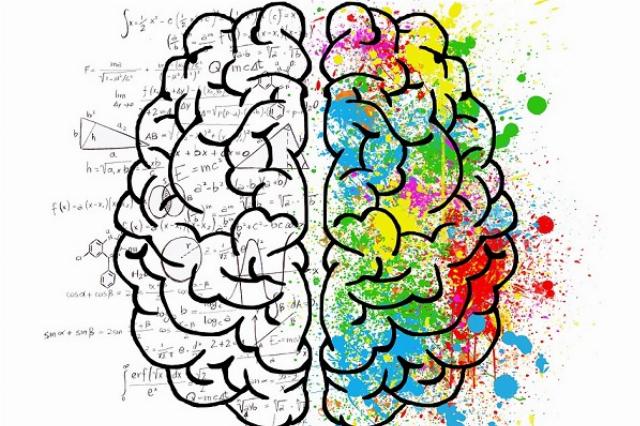
Image: ElisaRiva via Pixabay, Pixabay License.