Self-Defense and the Body
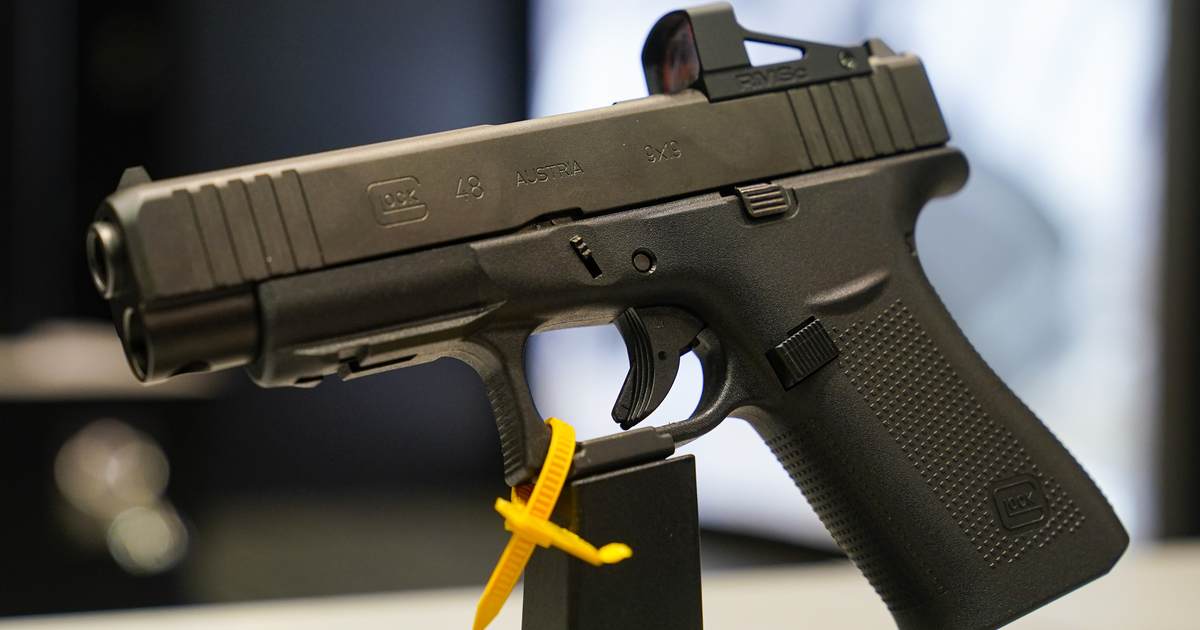
America, constitutionally and historically, emphatically supports the right of citizens to defend themselves against aggressors, whether those aggressors are private actors or government agents. The Second Amendment, guaranteeing “the right to bear arms,” is proof of this.
Advertisement
While many, including the most vocal and visible of gun rights enthusiasts, are too squeamish about saying as much, logically speaking, both the right to bear arms as well as the more fundamental principle of the right to self-protection to which the Second Amendment gives expression, amount to the right to, if need be, kill those who threaten oneself and/or other innocents whose lives are imminently imperiled.
The Second Amendment affirms, then, the individual’s right to use deadly force, whether by way of a gun or by whatever other legitimate means, if such force is necessary, or reasonably deemed necessary, to stop a violent attack on innocent life.
Unfortunately, far too often, supporters of the Second Amendment make the same error made by those who tirelessly seek to undermine it by personifying the gun. The latter, it is crucial to remember, is just a tool. Certainly, it is the most effective means for those at great physical disadvantage to equalize the odds against their attackers. However, ultimately, the gun is not a magic wand. It is not the gun, but the person, the agent who wields it, that will be decisive or not in protecting his or her well-being against bipedal predators.
That political partisans from across the spectrum tend to think of the Second Amendment in terms, first and foremost, of an inanimate object, and, specifically, the gun, is not a coincidence. Although there are opportunistic political reasons for this convergence of thought, there is also a philosophical one that is scarcely, if ever, touched upon.
RecommendedAdvertisement
The modern world, due to its compartmentalization and fragmentation of life, defaults to an implicit dualism in how it regards its inhabitants. In other words, while the premodern era recognized the inescapability and vital importance to human life of tradition, of embodied existence, with the rise of modernity, tradition became an adversarial concept to be discarded in favor of procedure, a rule or method. The Father of modern philosophy, the 17th-century French thinker René Descartes, exemplified this transition.
Tradition is a concrete, historically and culturally specific phenomenon. It consists of nuances and contours, the nit and the grit of the interactions between countless nameless and faceless people extending over a span of centuries and millennia. Significant portions of it are lived, known experientially, and, thus, not readily susceptible to explicit articulation.
Rules, on the other hand, are abstract. They purport to be universal, maybe even timeless.
Descartes’ project was an ambitious one. He resolved to construct an entirely new system of knowledge, of deductively derived certainties, that would owe nothing to the past. And he sought to do this by employing a method that, he insisted, anyone, in principle, could utilize to achieve the “clear” and “distinct” ideas constitutive of genuine knowledge (as opposed to belief or opinion). Descartes’ epistemology, his philosophy of knowledge, rationalism, informed his ontology of the human person: dualism. Human beings, Descartes concluded, were souls or minds encapsulated in bodies.
Advertisement
Descartes’ opponents as well as his supporters, from his day to the present, tend to ascribe primacy to rules over tradition, and mind over matter—as if human beings were the “ghosts in the machine” that he depicted them as. This default dualism, along with this procedure, or rules-based epistemology, has become ensconced within the institutional arrangements of modern Western societies.
To put this another way, the embodied or incarnational nature of the human being has been, and remains, systemically neglected.
Knowledge is treated as propositional. Rules, principles, procedures, methods—comprehensively, propositions—are purportedly universal, timeless, abstract, and capable of being expressly excogitated. They are consciously apprehended. But when knowledge is conceived as such, the knower is treated at least as if he or she were a disembodied mind.
This tacit dualism is ensconced everywhere—including within most contemporary martial arts systems. The vast majority of martial arts systems are technique-based. Students are taught specific techniques, and combinations of techniques, that they can execute within various scenarios (which also explains why the martial arts today tend to be focused on scenario- training). The technique, however, is a method or rule of action. As such, it purports to be universal in its scope and application.
In other words, technique-first martial arts, like technique or rule-based moral and other philosophies, abstract from the distinctiveness of the body type of the practitioner and the uniqueness of his or her individual body. Consequently, the technique becomes, effectively, disembodied, as it is detached from the contingencies and idiosyncrasies of the agent.
Advertisement
The gun, too, is conceived as a virtually infallible method, a universal guarantee, for dispatching bad guys.
The reality, though, is that while rules or methods are certainly of value, in origin they do not precede practice. They derive from practice, from tradition. Rules are summaries of vastly more complex traditions. They are the abridged versions, so to speak, of embodied ways of life that are more intricate and nuanced than anything that can ever be encapsulated within a proposition.
There are philosophers and other theorists who have long critiqued modernity for putting the cart before the horse. And there are martial artists who have done so as well.
In contrast to the dominant technique-first paradigm of the martial arts, there are movement- first systems. Warrior Flow Combatives is one such system. Founded by USMC Lieutenant Colonel Al Ridenhour, the veteran of multiple tours of duty and dozens of combat missions in Afghanistan and Iraq, the system is designed not to effectively graft techniques onto bodies that are “blank slates,” but to meet the student exactly where they are in their unique bodies. Ridenhour’s experience under the dynamic conditions of war, as well as his 40-plus years as a martial artist, has instilled in him an appreciation for a foundational truth lost upon far too many others: Body mastery, not technique, is of central importance for victory in combat.
The body is not like Locke’s blank slate. It is a block of marble, and each person’s body, regardless of the various fundamental respects in which it is similar to other blocks of marble, has its own unique set of crevices and veins. The objective is to chisel away the excessive motion so that students can ultimately move with maximal efficiency and smoothness within their own bodies for the purpose of prevailing against the wicked who would target them for harm.
Advertisement
Technique is a function of movement. The more one understands and appreciates one’s own embodiment, the better one will move. And the better one moves under duress, in a violent encounter, the more possibilities for meeting violence with violence emerge.
The gun, too, is an extension of oneself. Once this insight is grasped, once more people realize that, in the final analysis, it is not the artificial weapon, but one’s own embodied cognition that is decisive, the more serious this discussion of self-defense will become.
Editor’s Note: Do you enjoy Townhall’s conservative reporting that takes on the radical Left and woke media? Support our work so that we can continue to bring you the truth.
Join Townhall VIP and use promo code FIGHT to receive 60% off your membership.