Emergency Evacuation Plan: How to Leave Home Quickly and Safely


 At a Glance
On Day 3 of flooding after Hurricane Harvey, I told my kids to get their emergency kits ready by the back door. The rescue-by-boat announcement the night before had been for people just a half-mile away, and reality hit fast. That experience is exactly why I put together this five-step evacuation plan, because when the moment comes there’s no time to think, only to execute. This covers animals, personal necessities, securing the house, documents, and the vehicle, plus step by step, how to run an actual timed drill with your family before you ever need it for real.
An emergency evacuation might be the most terrifying thing you and your family will ever experience. You feel the rush of adrenaline; there are so many decisions to make, and the kids are panicking. What should you pack? Where should you go? What about the pets? In this guide, you’ll learn the answers to those questions and have the knowledge to create your own evacuation plan, should you ever need it.

It was Day 3 of the flooding following Hurricane Harvey that I finally told my kids, “Get your emergency kits ready to go by the back door. We may have to leave if the flooding gets any closer.”
Day by day, hour by hour, floodwaters had crept closer to our neighborhood. One street at a time was reporting flooded cars and homes, and I was starting to think we would be next. After all, just the night before, we had heard the radio announcement, “Residents, get on your rooftops, wave something white, and wait to be rescued by boat.” That announcement was for people just a half-mile away, and reality hit me hard. We could easily be next.
Some of the links in this post may contain affiliate links for your convenience. As an Amazon Associate, I may earn a small commission from qualifying purchases without any increase in price to you.
In this article Why Every Family Needs an Evacuation PlanI lived in Phoenix for most of my life where rainfall is rare, earthquakes never happen, and a tornado only occasionally. But when a household project went very, very wrong with toxic fumes making it hard to breathe, we suddenly had to grab the kids and dogs and run.
Planning for an emergency evacuation never crossed my mind, and we were totally unprepared. Now, living in hurricane country, I’m very familiar with the concept! The fact is, there are numerous reasons why you might suddenly have to temporarily abandon your home. Severe weather and natural disasters can endanger your home and family, but there are other events that can force you out faster than you’d expect. Chemical spills on nearby highways, wildfires, long power outages that endanger the health of your loved ones, gas leaks, or even civil unrest can all create a scenario where home is no longer the safest place.
1. Start With a Family Planning MeetingSit down together (include all ages, even younger kids) and explain why this matters without scaring them. One way to do this is with a recent or current scenario like a hurricane in the news, and ask, “What if our family suddenly needed to get to a safer place?”
Older kids will understand immediately, and then it’s very age-appropriate to talk about the most likely scenarios for an evacuation. No need to bring up anything apocalyptic or completely in the land of fiction. This planning needs to be rooted in reality because that’s what you’ll be dealing with — a river that keeps rising, smoke coming from a fire in the oven, a chemical spill on the highway or a winter-time power outage where the temperature inside is close to reaching a danger zone.
2. Identify What Could Force You to Evacuate Identify Triggers: When Will You Leave?This is always a sticky point because it can take time to get everything loaded in the car and the house locked down, and most people aren’t eager to do that if the emergency fizzles out and they have to turn around and unpack everything. And yet, this is a critical piece of your plan.
Decide ahead of time the clear “go” signals so there’s no debate in the moment. When the floodwaters from Hurricane Harvey reached a neighborhood not even half mile away, that was our trigger — have the bug out bags ready to go, make sure the dogs crates are handy, and so on.
Your own “go” signals might be mandatory evacuation order from local officials, rising floodwaters near your neighborhood, loss of power with more storms and bad weather on the way or indoor temperatures reaching dangerous highs or lows, depending on the season.
Set a “72-hour rule” or similar. For example, if the utilities (power and/or water) are out and weather forecasts aren’t improving within the next 72 hours (3 days), you leave.
3. Choose Primary and Backup DestinationsHaving a list of several safe destinations will help your evacuation Frantically trying to find a place to stay when everyone is hungry, fearful, and needs a bathroom is not the best way to do an emergency evacuation! Here is a plan to help you identify safe place
Primary: Out-of-area family/friends. This is, by far, the easiest way to go. Other than helping with groceries and maybe a thank-you gift, it will be cheapest and being around family and close friends is a great stress reliever. Do check to see where these homes are along your route. If one is closer to the coast and a hurricane is coming in, for example, then have other locations in mind.
Backup 1: Hotels are a great option, especially if they have a pool and free breakfast. They can book up fast, however, so make your reservations quickly but also note their cancellation policy.
Backup 2: If you have camping equipment and everyone loves the great outdoors, this can be a good option. It will be cheap and less likely to fill up if thousands of other people are also evacuating. Have a list of possible campsites along different route directions and a list of their websites to make advance registrations.
This list of possible, last-ditch evacuation locations will give you some creative ideas you may not have thought of.
4. Map Multiple Evacuation RoutesUse Google Maps or a paper map to plot routes moving away from your home, going in different directions — north, south, east, and west. If a wildfire is approaching from the north, you want routes heading away from it. Same process for hurricanes or if winter storms typically approach from one direction or another.
Establish a primary route first. This will be the easiest and most convenient one, such as getting on the nearest freeway. Of course, this will be the same route everyone else will be on and highway gridlock is miserable. That’s when having additional routes planned is vital.
To figure out your secondary routes, check local or state emergency management websites, FEMA, or Red Cross for designated evacuation routes. That will quickly give you some options other than major freeways. If they’re more rural, obscure routes, make sure you’ll have access to gas stations, food, hotels, and so on.
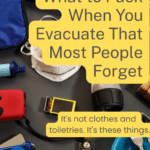
5. Assemble and Maintain Go-Bags (Bug-Out Bags)Once packed, this is one prep you can set and forget because most of its contents are items that don’t expire or need much attention. You don’t really need to check up on a Swiss army knife, portable water filter, or a collapsible drinking cup!
Just check and rotate the food, medications, and batteries every six months (or when daylight saving time changes) and you’re good to go. When you think an evacuation is imminent, have each person add some clothing to their bags — 2-3 days of clothing changes and an extra pair of sturdy shoes. For adults, this isn’t as important as it is for growing kids.
Designate an out-of-state contact person everyone calls/texts first. This alleviates stress from missed calls and wondering where everyone is.
Use apps like Life360, Zello, or pre-set group texts. A complete family emergency communication plan utilizes both high-tech and low-tech to give you lots of layers and options to ensure everyone stays in touch.
7. Plan For Pets Ahead Of TimeThere are so many unnecessary tragedies that involve beloved pets in the aftermath disasters, and if they’re part of your family, this needs to be part of your planning.
Bugging out is difficult enough for human family members, but the excitement, fear, and flurry of activity will be highly stressful for your animals. You don’t need them underfoot or terrified they’ll escape your home or backyard as you rush around, so a first step will be to put them in crates or carriers.
One or two people in the family needs to be assigned the step of packing up each pet and their supplies and transporting them to your vehicle. This is ideal for capable, younger children as it gives them something to focus on, alleviating their own anxiety for a time, and takes care of an important task.
Each crate or carrier should be packed with enough pet food to last at least 3-4 days, a food/water bowl, something soft that smells familiar like a small blanket, a leash, ID tags, and anything else your pet requires, like a loved toy. Add a few treats or something to chew on, and your pet evacuation kit is ready. Here’s a plan for a pet emergency kit you can assemble now and always have at the ready.
Be sure to practice getting your pets into their carriers several times so this is familiar. Give them a treat each time so it’s something they look forward to!
If you’re the proud owner of fish, reptiles, rodents, and/or farm animals, consider whether or not you’ll take them along, leave them on their own with a plentiful supply of food and water, or transport them to another location. Have a Plan B for their care in case circumstances suddenly change. For more specific tips about evacuating “the big guys”, read this article written by one of our vet authors.
One final, vital step is to research pet-friendly hotels, campgrounds, and other potential destinations. The LaQuinta hotel chain has long been pet-friendly, but check the website of specific hotels along your evacuation route.
Other hotel chains that aren’t usually pet-friendly might make an exception in the case of widespread disaster. We discovered that a few years ago when our home’s flooring was being replaced. The Marriott Courtyard where we were staying suddenly had lots of dogs and cats wandering around (with their owners!), and when I asked about it, a very relieved dog-mom explained the hotel was making an exception due to a major flood a few miles away.
8. Have Your Transportation and Fuel Preps ReadyHopefully, you’ve been keeping an eye on weather and news reports and have ensured your vehicle’s gas tank is full. In addition to that simple, obvious step, here are a few more.
As soon as you’ve made the decision to evacuate, have someone quickly go through the car and remove anything that takes up space and you won’t be using. You’re going to need as much car interior space as possible for this evacuation.
9. Prepare the HouseAs you drive away from your home, no doubt you’ll have feelings of sadness and, perhaps, loss. A written plan to protect your home will increase the chances of having a home to come home to. Here is a checklist I’ve used.
You might not live in hurricane country, but June 1, is the official start of hurricane season, and it’s also a good date for your emergency evacuation dry run as well as a review of your plans. It’s the start of storm season with tornadoes, derechos, overloading of the power grid, and heat waves that all come with their own threats. It also gives you a few months before severe winter sets in if you live in cold country.
Before the practice evacuation, survey each room. What, if anything, should be included in an emergency evacuation? Family photos? A wedding album? The kids’ schoolbooks? If you determine ahead of time that nothing in a certain room is worth packing, you won’t waste valuable time searching through drawers or shelves and trying to make on-the-spot decisions under duress
For the dry run, don’t worry about grabbing those things this time around, but do add them to a Last Minute Packing List, and then keep that list in your Grab-and-Go Binder, bug out bag, or anywhere you’ll remember it. This will include things like prescription medications, medical equipment like a CPAP machine, firearms, and cash.
Once you start that dry run, time how long it takes everyone to grab bags and get in the car. Update the plan after any family changes (new pet, new medication, kids’ ages).
Here’s a suggested step-by-step plan for your practice evacuation Finally, Review The Evacuation Dry Run
Here’s where you’ll know whether or not your emergency evacuation plan has any holes or is ready for a worst-case scenario.
GET OUT! In a dangerous and imminent emergency, your life and the lives of your loved ones come first. Just get out! In the aftermath, there will almost certainly be help and support from friends, family, churches, aid organizations, and similar organizations who will provide you with food and clothing and help you get back on your feet. Other than that, have those emergency kits packed and ready to grab on your way out.
We don’t have a bug-out location or nearby relatives, so I have no idea where we would go! Do you have any suggestions?Yes! You have many more alternatives than you might think. I’ve made a list of them in this article, and it includes options like state parks and campgrounds (be sure to have camping gear with you), youth hostels, and even timeshare resorts if you own a timeshare. Here’s the link to the complete list, which is also in my book, Emergency Evacuations.
In Summary, The More Options The BetterWhen your vehicle is fully ready with extra fuel and equipped for vehicle-related emergencies and you’ve followed these instructions, you now have lots of options. You can travel more quickly and further ahead because you won’t need to constantly stop for food, water, a hotel, or to fill up the tank. While everyone else is queuing up for gas and food and fighting over hotel rooms, you’ll be sailing right on by!
Being prepped for an emergency evacuation gives you more options. You can stop to get a meal, or not. You have food in the car and maybe even a hot meal in your HotLogic cooker! If you have to make a bathroom stop, you can do that by pulling over to the side of the road, using the portable toilet, and quickly moving on. The key is to pack up quickly, do it in an orderly fashion, and then get on the road.
An evacuation is an extremely tense and fearful experience. Just ask anyone who has had to run for their lives from an oncoming flood or firestorm. Preparedness helps take some of the panic out of the process, and when the whole family is informed and is involved with the planning, you can count on getting out quickly and efficiently.
When everyone has designated jobs and knows exactly what to do, your family can be packed and out of town before most other families grab their toothbrushes. Your family needs to organize an emergency evacuation plan to make this happen and avoid hysteria, chaos, and needless tears. Bugging out can be better streamlined and less traumatic than you might think.
Want More Useful Info Like This From Survival Mom? #drip-ef-3831622-compact { font: .875rem/1.5rem sans-serif; width: 100%; } #drip-ef-3831622-compact h3 { font-size: 1rem; margin: 0 0 .25rem; color: #5b4841; } #drip-ef-3831622-compact p { font-size: .875rem; margin: 0 0 .75rem; color: #5b4841; } #drip-ef-3831622-compact .drip-inline-fields { display: flex; gap: .5rem; flex-wrap: wrap; align-items: flex-end; } #drip-ef-3831622-compact .drip-inline-fields > div { flex: 1; min-width: 140px; } #drip-ef-3831622-compact label { font-size: .75rem; display: block; margin-bottom: .2rem; color: #5b4841; } #drip-ef-3831622-compact input[type="email"], #drip-ef-3831622-compact input[type="text"] { margin: 0; padding: .375rem .5625rem; width: 100%; box-sizing: border-box; border: 1px solid #5b4841; border-radius: 4px; font-size: .875rem; } #drip-ef-3831622-compact input[type="submit"] { padding: .375rem 1rem; background-color: #5b4841; color: #f7d6cf; border: none; border-radius: 4px; cursor: pointer; font-size: .875rem; white-space: nowrap; width: 100%; margin-top: .5rem; } #drip-ef-3831622-compact input[type="submit"]:hover { background-color: #f68263; color: #fff; } shares