LDS Preparedness Manual: What It Is, Who Compiled It, and Is It Still Relevant? - LDS prepardness manual

 At a Glance
The LDS Preparedness Manual is a free, unofficial 500-page preparedness compilation put together in 2012 by Christopher M. Parrett, not an official publication of the Church of Jesus Christ of Latter-day Saints. Its food storage and mindset guidance still holds up well, but coverage of technology, energy, and pandemic planning reflects a pre-2020 world. Best treated as a foundational reference to pair with current sources, not a standalone 2026 preparedness plan. Here’s what’s worth paying attention to in this manual and how to rethink some of its dated advice.
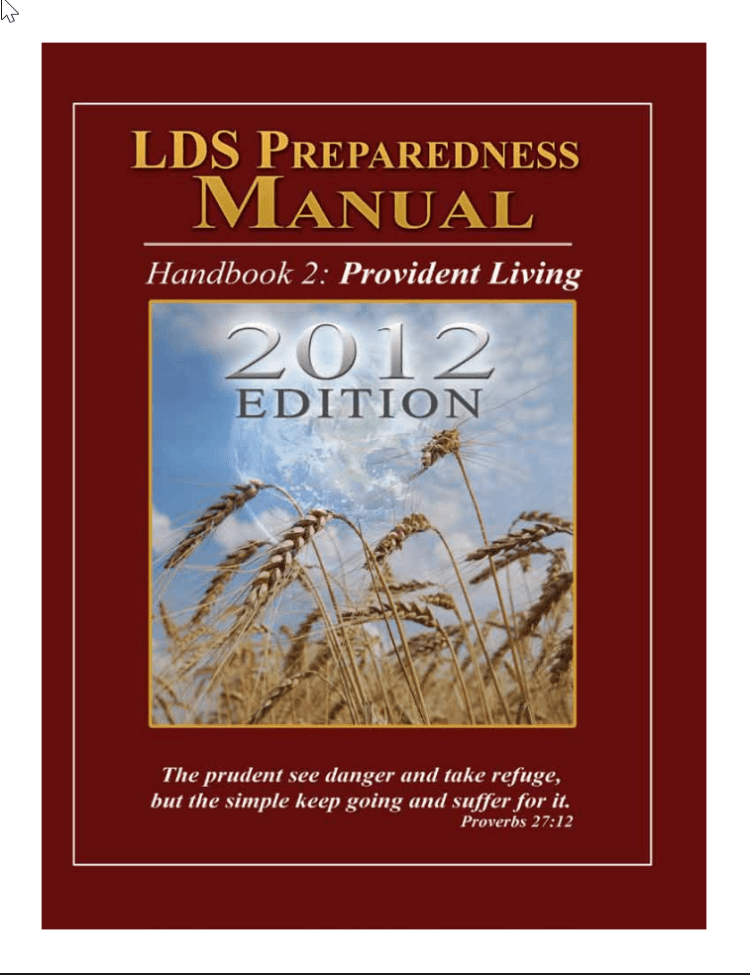
The LDS Preparedness Manual has been floating around prepper circles for years. If you’ve spent any time researching food storage, you’ve almost certainly seen it recommended, usually as a free PDF, usually with an enthusiastic “you have to read this.”
I get asked about it constantly — what it is, whether the church put it out officially, whether it’s still worth your time. I’m not LDS, but I’ve been writing about family preparedness for over 15 years, and I’ve been through this manual more than once. Here’s what I actually think, before you spend an afternoon downloading 500+ pages.
This article has been completely rewritten with new recommendations, July, 2026.
In this article What Is the LDS Preparedness Manual?Christopher M. Parrett put this together in 2012. It’s not an official church publication. It’s just one man’s attempt to pull decades of preparedness wisdom into a single document. He clearly wasn’t thinking small at 500-plus pages.
Because it’s a compilation of articles from different authors written at different times, the tone shifts as you move through it. Some sections are polished. Others feel like they were written for a different decade, because they were.
What it covers is broad, pretty much everything in the prepper world — food storage, 72-hour kits, medical readiness, financial prep, even the emotional side of getting through a crisis. It reads less like a book and more like an entire reference shelf someone compressed into one PDF.
Is the LDS Preparedness Manual an Official Church Publication?No. The church didn’t write it, endorse it, or publish it. Parrett compiled it on his own, pulling from preparedness principles that run deep in LDS culture: food storage, financial prudence, self-reliance. It’s his work, not theirs.
You’ll run into faith-based references throughout. If that’s not your background, some sections may feel like they weren’t written with you in mind. Set those parts aside; the practical content underneath is still mostly applicable today.
Is the LDS Preparedness Manual Still Relevant in 2026?Short answer: partly.
The manual has earned its reputation as a volume of useful information. For over a decade it’s been one of the most shared resources in the preparedness world, and the expanse of information is real — food storage, checklists, financial planning, emergency response, all under one roof.
But 2012 was a while ago. We’ve lived through a pandemic, supply chain failures, and inflation that hit household budgets hard. What “being prepared” means to most people has shifted since then. The manual was written for a world that’s moved on in some real ways.
So what still holds up, what doesn’t, and how do you use this thing without letting the dated parts steer you wrong?
What Still Holds Up WellQuite a bit, actually.
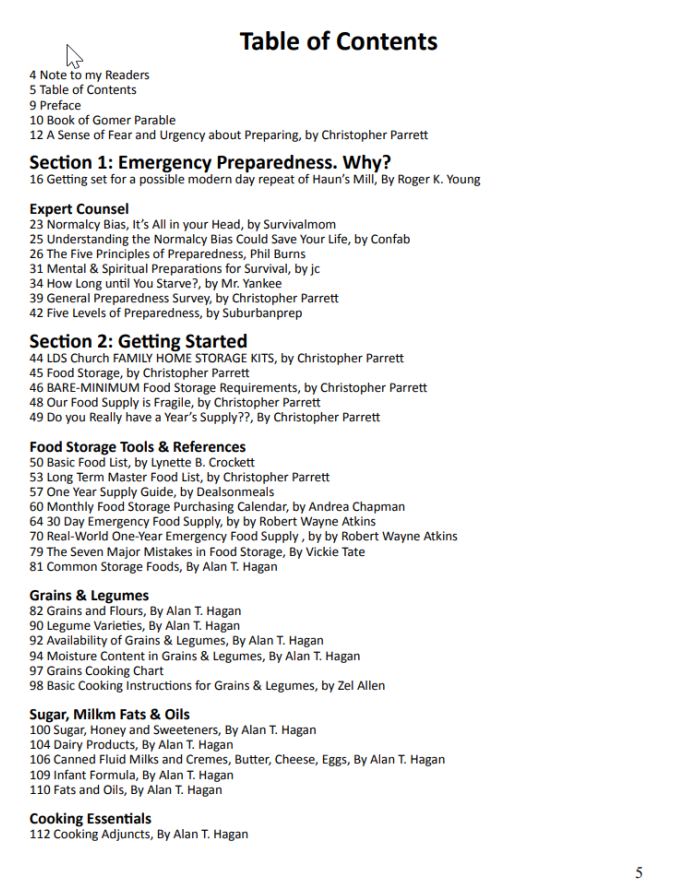
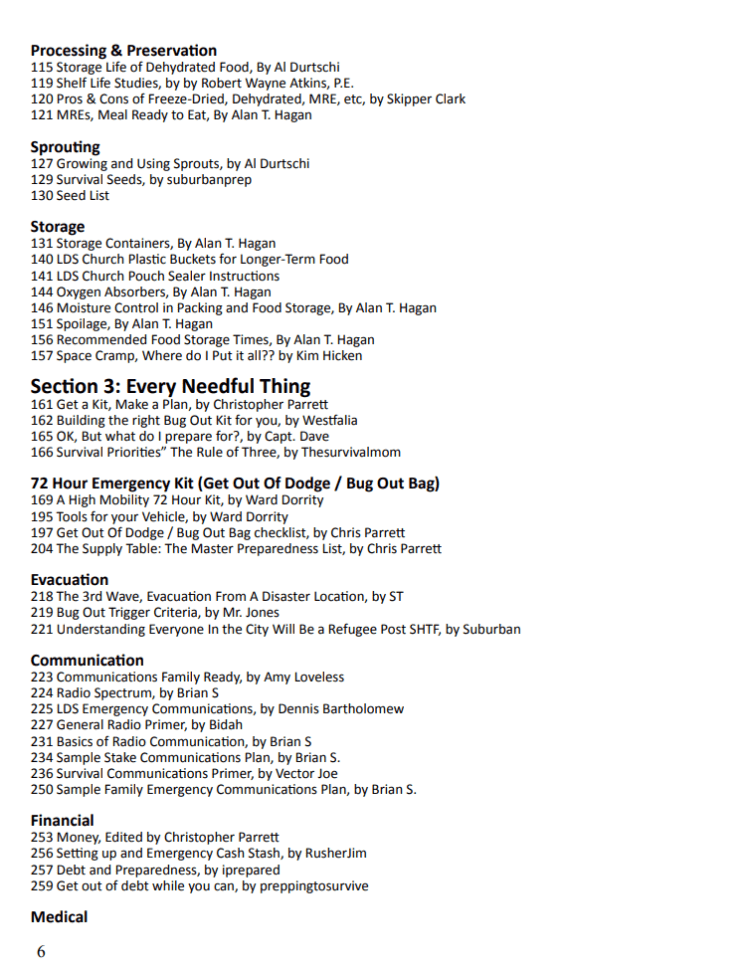
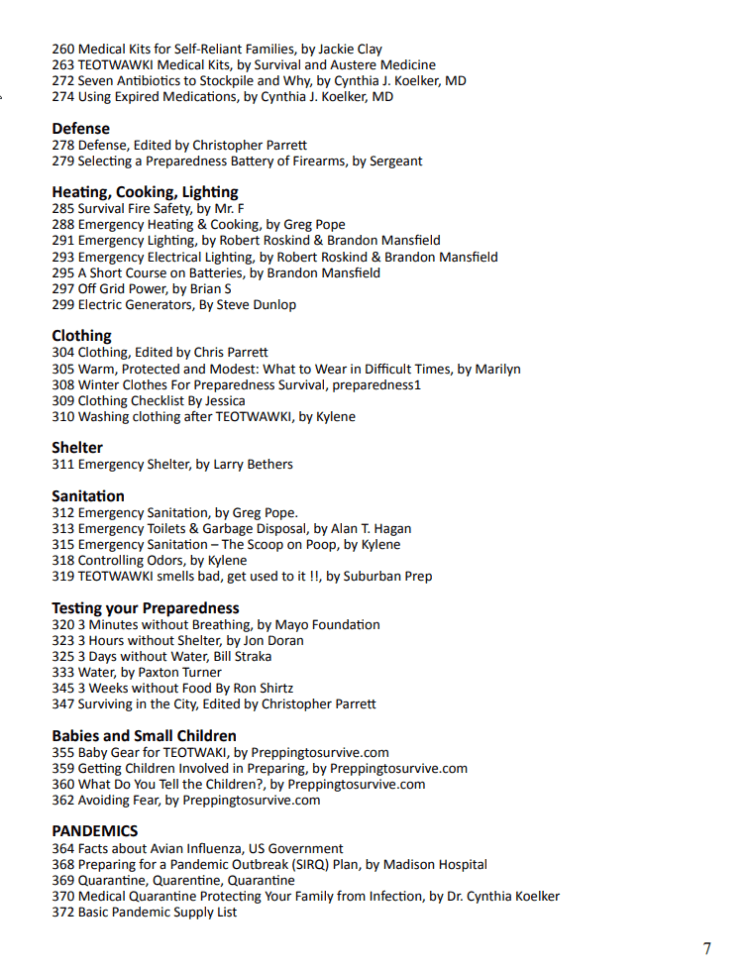
Five hundred pages covers a lot of ground. Open the table of contents and you’ll find food storage, financial planning, emergency response, medical readiness, water, energy, gardening, communication. It reads less like a manual and more like an attempt to answer every preparedness question a family could ask, in one place.
 What Has Changed Since 2012?
Think about where we were in 2012. The iPhone had just arrived. Most people still had flip phones. Apps were a novelty. Freeze-dried food was expensive and not well-known among the general population. Solar generators existed, but barely. A worldwide pandemic was the stuff of thriller novels, not lived experience.
These changes don’t make the manual irrelevant, but they do mean that you should be aware of it, and look for updated information.
How to Use This Manual Wisely TodayTreat it as a foundation, not a finish line, nor the “gospel truth” and blindly follow every bit of advice.
The checklists, planning worksheets, and core storage principles hold up. But layer modern information on top: swap out the communication section for current tools, replace the energy chapter with research on modern power stations, and when you hit the digital or pandemic sections, read them as a time capsule rather than a strategy.
It’s a bit like an old cookbook passed down in the family. The techniques still work, the final result may be a family favorite, but a few ingredients have better substitutes now. And some recipes just don’t reflect how anyone eats anymore. You don’t throw the book out. You just cook with some judgment.
Not everyone, honestly. But let me break down who will actually get value from it.
Is it for beginners?I’ll push back on the usual advice here. I don’t think this is where someone new to preparedness should start. Five hundred pages is a lot to hand someone who’s still figuring out where the pantry should even go. Information overload doesn’t tend to motivate people in my experience. It stalls them out.
Readers Who Prefer a Printable ReferenceIf you like something in hand rather than a PDF on a screen, this manual’s structure works for that with all the sections, charts, and checklist-style content that translates well to print. Fair warning: printing 500-plus pages isn’t cheap. If you go that route, ask your print shop to 3-hole punch it too, so it drops straight into a binder with dividers.
Those Comfortable with Faith-Based FramingI’m not LDS, but I’m a Christian, so Bible scripture woven into everyday content doesn’t throw me. This manual carries its LDS roots throughout, and if you’re outside that tradition or prefer strictly secular material, read with a filter on. The practical content is still there underneath.
People Looking for a Foundational Reference, Not a Modern Tech GuideThis is where it shines. If you want deep roots — traditional food storage, self-reliance philosophy, long-term planning frameworks — that’s what you’ll get. What you won’t find: portable power stations, satellite communicators, or anything reflecting how prepping has changed since 2012. Go in knowing that and you won’t be let down.
Pros and Limitations of the LDS Preparedness ManualEvery resource has trade-offs. Here’s my honest assessment.
StrengthsThe scope is impressive, and honestly, few preparedness documents try to cover this much ground in one place: food storage, water, 72-hour kits, medical planning, financial readiness, communication, mindset. For someone who wants one reference to keep coming back to, that’s real value.
The self-reliance thread running through it all is inspiring. Personal responsibility, family readiness, thinking long-term — that philosophy doesn’t go stale. It was good advice in 2012 and it still is.
The checklists and worksheets are practical. Not flashy, but useful if you need a structured starting point instead of a blank page.
And it’s free. That still counts for something.
LimitationsThe 2012 timestamp is the obvious problem. Portable power, satellite communication, modern solar, post-pandemic supply chain thinking — the manual hasn’t kept pace with any of it. That’s not a knock on Parrett, just the reality of a document that’s over a decade old and some articles older than that.
The inconsistency is real too. Because so many authors contributed, quality shifts as you move through it. Some sections are detailed and practical. Others feel thin. There’s no single voice tying it together.
And if faith-based framing isn’t familiar territory for you, you’ll hit moments that clearly weren’t written with you in mind. The practical content is still there. You’ll just do some filtering as you go.
If I Were Starting Preparedness TodayThis manual is huge, and even its “Getting Started” section isn’t where most people should begin. “Has enough ammo to last a generation” isn’t a goal most families relate to.
If I were starting from zero, here’s where I’d put my energy:
Keep it simple and then build on this foundation.
Where Can You Download the LDS Preparedness Manual?It’s available as a free PDF and has circulated in preparedness communities for years.
Download the LDS Preparedness Manual (PDF)
Most people save it to a device and dip in and out as needed, which makes more sense than printing 500 pages in one go. If you do want a hard copy, be selective. Print what’s relevant to where you are right now, not the whole thing.
Updated Preparedness Resources for 2026The LDS Manual packs a lot of info in 500+ pages, but to that, add updated information to ensure you and your family prepared for 2026 and beyond.
Frequently Asked Questions Is the LDS Preparedness Manual official?No. The Church of Jesus Christ of Latter-day Saints has no official tie to it. Parrett put it together on his own.
What year was it written?The 2012 edition is a compilation of articles written over many years by different authors, so a lot of the content actually dates back further, some of it to the early 2000s.
Is it still updated?No, which is why I recommend looking for more recent information and using the manual for basic information.
Does the LDS Church still recommend food storage?Yes. Decades ago, members were encouraged to build a full year’s supply. More recently, official guidance has shifted toward something more gradual, closer to three months. But keeping a basic food supply on hand is still a core part of LDS teaching.
Where can I download the LDS Preparedness Manual?You can download the LDS Preparedness Manual as a free PDF from this page: Download the LDS Preparedness Manual (PDF)
The version available here, labeled Version 8.0, published June 1, 2012, is the most current edition.
Because the manual is a large file (over 500 pages), many readers choose to save it to a device for reference or print only the sections they need.
Is it appropriate for non-LDS readers?Yes. Parrett is LDS and some LDS-specific references show up throughout, but most of the content is practical enough for anyone to use.
shares