Nolan's Odyssey Robs A Great Hero Of His Masculinity
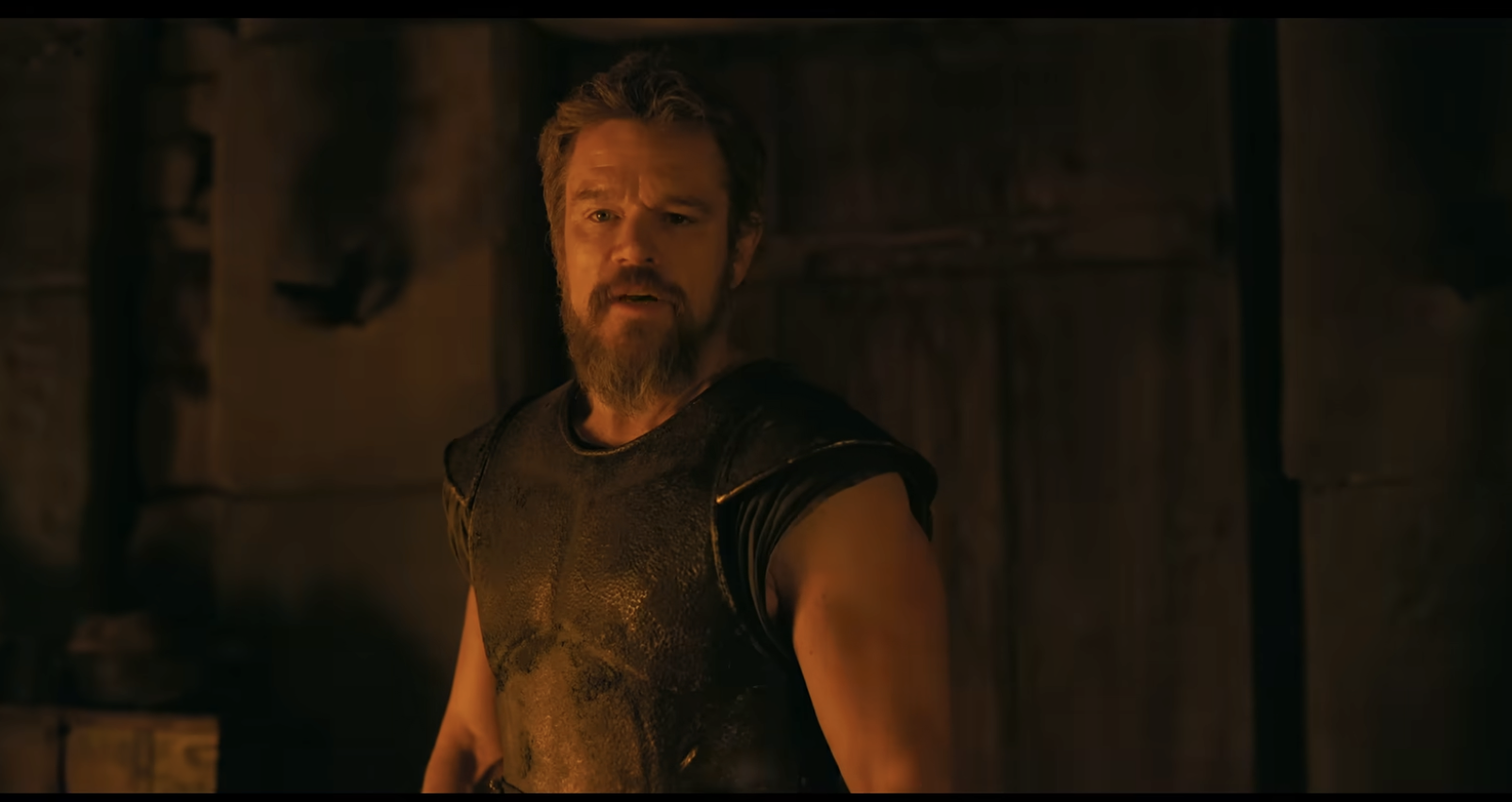
The newly released Odyssey film is stunning and another testament to writer-director Christopher Nolan’s artistic sensibilities. It uses minimal CGI, focusing instead on practical effects such as the puppeted Cyclops. The movie looks and feels like the high-end, polished blockbuster rarely found in cinemas anymore. Despite sparking numerous controversies from casting to costuming, the film is spectacularly entertaining and lays out an interesting story over its three-hour run time.
However, the fundamental problem with Nolan’s Odyssey is that it is an analysis of modern failings rather than a retelling of an ageless classic.
In multiple interviews, Nolan explicitly singled out Emily Wilson’s 2017 translation of Homer’s Odyssey as his inspiration for the film. Wilson’s translation of the famous opening line refers to the titular character, Odysseus, as “A complicated man.” Historically, other translations referred to Odysseus as a “resourceful man” or a “cunning hero.” This change indicates Wilson’s attempt to reframe Odysseus as flawed and self-interested rather than as a complex hero.
Rather than honoring her subject material with a textually faithful translation, Wilson also claimed “the silencing of female voices” was one of several “central problems in the poem.” She complained that Penelope, Odysseus’s faithful wife, is “a woman who experiences her attachment to her husband as the destruction of herself.” Wilson’s translation intended to fix these “flawed” areas and modernize the poem. In the same manner, Nolan’s film reframes the ancient story for a modern audience.
The concept of “Zeus’ Law” underpins the movie’s message of morality, advising a mutual respect between guests and hosts. In modern terms, this boils down to something like the golden rule: Treat others the way you wish to be treated.
In the opening scenes of Nolan’s adaptation, Odysseus hatches a scheme to win the Trojan War: his infamous Trojan horse. The movie portrays Odysseus’ cunning plot as inherently bad because it violated “Zeus’ Law” and the rules of war. As a result, he spends the rest of the film plagued by guilt.
His journey back to his homeland, Ithaca, is contextualized as a self-inflicted punishment rather than an arduous journey back to his home, wife, and son. In the spirit of Wilson’s translation, this framing of Odysseus is shaded by modernity. Rather than being proud of using his skills to defeat his enemies, he blames himself for throwing off the delicate balance of “Zeus’ Law.”
Throughout Odysseus’ journey back to Ithaca, we see him carry the guilt of the Trojan horse, which feels like an attempt to strip away his masculinity. While we see moments of strength from Odysseus, his interactions with female goddesses Circe and Calypso suggest their femininity is greater and more just than his masculinity. For example, when Circe turns Odysseus’ crew into pigs, the film insinuates the men were inherently gluttonous and dangerous, simply by virtue of being male.
The movie culminates in Odysseus’ return to Ithaca, where he must fight off the ravenous male suitors who endlessly usurped the hospitality of Penelope and their son, Telemachus. Odysseus proves his skill with bow and arrow and kills the deviant Polybus, as well as other disloyal servants who took advantage of his absence. Ultimately, in a final plot twist completely different from the source material, Odysseus abdicates his throne to his son, leaves the home he struggled to return to for 20 years with his wife, and exiles himself to honor the dead.
In the original story, Odysseus does not abdicate his throne but stays in Ithaca to defend it. Nolan’s iteration ends by punishing Odysseus for violating “Zeus’ Law” instead of showing him as the noble patriarch of the land he loves. The movie’s ending implies Odysseus has a greater duty to strangers than to his own country and family.
This is a very modern predicament; one that parallels the ongoing immigration crisis in America. We wrestle with the question of what it means to be a country and what it means to build a family. Nolan’s Odyssey seems tosuggest that the duty to defend one’s house and home is less valuable than an alleged duty to an infinite number of foreigners.
Odysseus’ masculine wit, which allowed him to find success in the Trojan War and is a key element of the historic epic, ends up being punished for the duration of the film. This is a way for Nolan to inject modern morals into an ancient story about strength, virtue, and duty. While these themes are subtle, hiding behind beautiful cinematography and solid acting performances, it is certainly not the poem Homer asked the Muses to sing.
Brooke Brandtjen is a writer and journalist from Wisconsin who focuses primarily on culture, politics, and religion. She is extremely passionate about the arts and history, and is honored to write for a variety of distinguished publications.