Here Are The Key Takeaways From SCOTUS' Monday Decisions
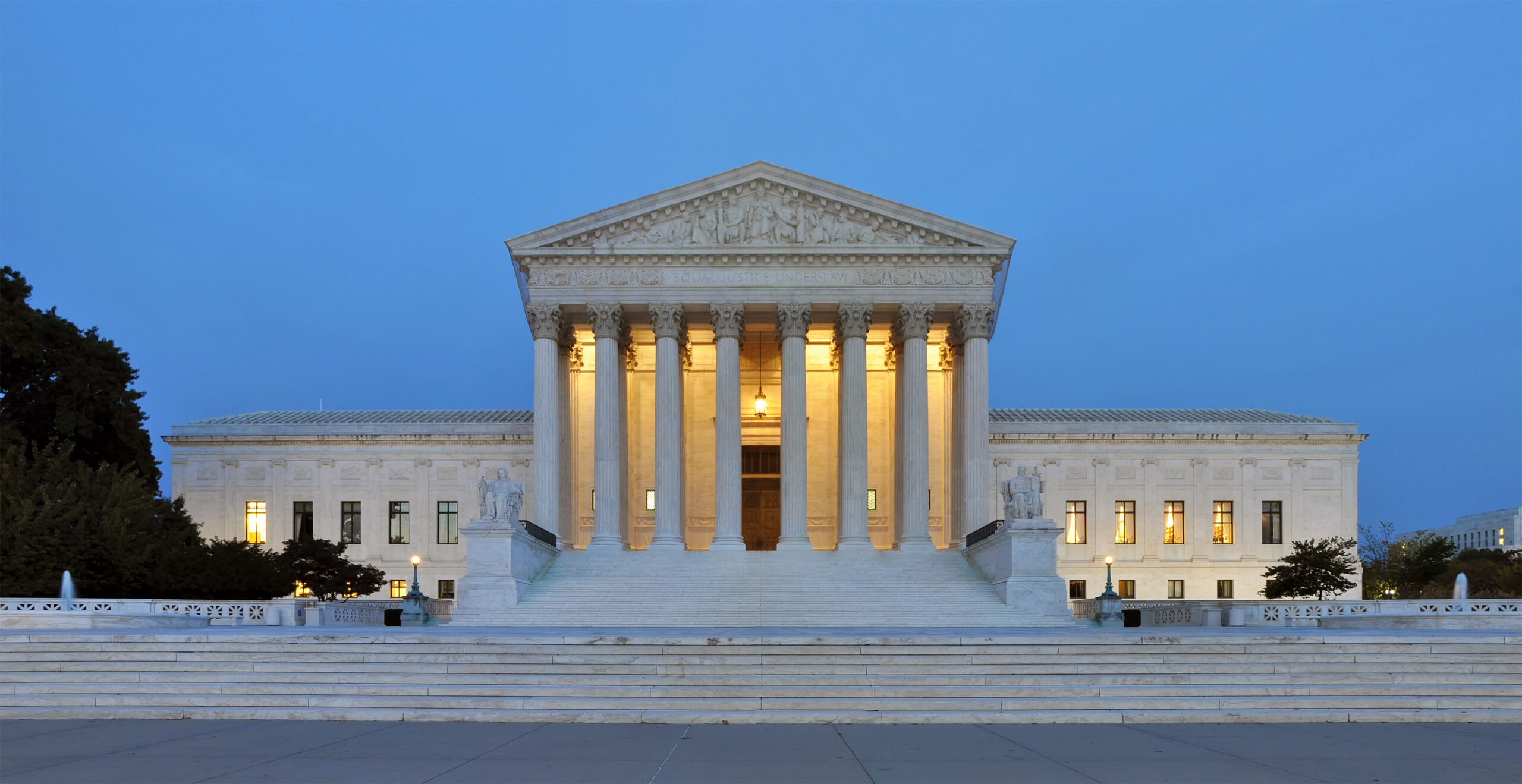
On Monday, the United States Supreme Court issued four decisions which, along with the opinions being released Tuesday, will wrap up the Court’s 2025-26 term. While on paper it looked like a bad day for Trump, the Administration’s win in the Slaughter case — wherein the Supreme Court held the president held absolute removal authority over agencies that exercise executive powers — far surpasses the narrow setbacks in the other cases.
Here are the key holdings and ramifications from the three politically tinged cases, beginning first with Trump’s huge victory.
In Trump v. Slaughter, the Supreme Court addressed the constitutionality of Congress’ “for cause” removal statute for members of the Federal Trade Commission. Former FTC Commissioner Rebecca Slaughter had sued President Trump after he removed her from the FTC even though her five-year appointment was not due to expire until 2029. Slaughter argued that Trump lacked the authority to remove her from the FTC because Congress provided that commissioners could only be removed for “inefficiency, neglect of duty, or malfeasance in office,” and Trump instead removed her because he believed her “continued service on the FTC” was inconsistent with his administration’s priorities.
The Supreme Court in Slaughter held that the congressionally created for-cause “protection from removal is contrary to the separation of powers enshrined in the Constitution.” Specifically, the majority held that the “text, history, and structure” of the Constitution establish that by vesting “the Executive power” in “a President” of the United States, the Constitution grants the president the power to “remove his subordinates at will.”
In reaching this conclusion, the high court expressly overruled Humphrey’s Executor, which was a Supreme Court case from 1935, wherein the justices held the then-president lacked authority to fire FTC Commissioners at-will. The Court in Humphrey’s Executor had reasoned that because FTC Commissioners “occup[y] no place in the executive department and … exercise[] no part of the executive power vested by the Constitution in the President,” Congress could limit their removal to “for-cause.”
After noting that Humphrey’s Executor “has not withstood the test of time,” the Supreme Court made clear that “[i]If anything more is left of Humphrey’s, we overrule it.”
Slaughter’s holding, reasoning, and its express overruling of Humphrey’s Executor have widespread ramifications, for there is no longer a headless fourth branch of government. Instead, the president is the head of agencies created by Congress to perform executive functions. And as the head of the agency, the president holds the authority to fire subordinates who fail to exercise his policy preferences. No longer, then, can bureaucrats — great or petty — thwart the president’s agenda.
This consequence may well lead to a further contracting of federal agencies as Congress, motivated by fear of a president — or of this president — may respond by either shuttering some federal agencies wholesale, or by greatly restricting their functions.
The Supreme Court’s decision in Slaughter thus promises significant changes to the administrative state, whether Congress shrinks federal agencies size and power or President Trump more forcefully directs the agencies to execute his policy choices.
Unlike Slaughter, which holds huge potential to restrain the administrative state and render presidents more responsive when negative consequences flow from the decisions of executive agencies, the Supreme Court’s holding in Trump v. Cook has limited ramifications. In that case, the Supreme Court held that the president could not fire Lisa Cook, a member of the Board of Governors of the Federal Reserve System, without providing her notice “of the charges made against [her]” and “an opportunity to be heard in [her] defense.”
The Supreme Court’s decision in Cook was limited to members of the Board of Governors of the Federal Reserve System, and its rationale — which was based on the uniqueness of Federal Reserve and its control over the monetary system — does not translate to other federal agencies. Thus, Cook lacks the impact of Slaughter.
Further, in Cook, the Supreme Court made clear that “cause” may exist to justify the president’s removal of Cook. So, after Trump provides Cook with notice of his reasons for removing her from the Federal Reserve and she has an opportunity be respond, his decision to remove Cook could well be upheld. Given that Trump’s reason for removing Cook was her alleged mortgage fraud, that outcome seems highly likely.
While not an ideal situation for President Trump who seeks to exercise more control over the federal reserve, the precedential value of the case is extremely limited. Likewise, the federal reserve lacks the power to broadly interfere in Trump’s policy preferences.
The third case from yesterday holding a political angle was Watson v. Republican National Committee. Like Cook, that decision has a much narrower reach than the ramifications flowing from Slaughter.
In Watson, the Supreme Court considered whether Mississippi’s election law which allows for the counting of ballots postmarked by Election Day, but received up to five days later, violates the federal election-day statutes. A majority of the Court upheld the Mississippi statute, concluding that the federal “election-day statutes do not set a deadline for ballot receipt.” And the word “election” for purposes of the federal statutes that set the Tuesday after the first Monday in November as “election” day, means the day voters choose their candidate, the Court held. Accordingly, because under Mississippi law, voters must postmark their ballots by Election Day, the Supreme Court reasoned that the state law conformed with the federal election-day statute.
Trump was not happy with the high court’s ruling in Watson, but his response, namely calling for Congress to pass the SAVE America Act, illustrate why Watson has limited reach: The Supreme Court’s decision in Watson merely interpreted the current federal statutes and whether they allowed for ballots postmarked by Election Day but received after Election Day to be counted. The majority concluded Congress had not specified any date by which the ballots must be received, so if Congress were to do so, that would trump Mississippi and other states’ laws to the contrary.
The Watson decision was also limited to situations where the ballots were postmarked by Election Day. The opinion thus does not reach the question of whether ballots delivered after Election Day in bulk by an organization or a ballot harvester would satisfy the federal election-day statutes.
However, rather than wait for some bright blue state to further destroy the sanctity of our elections by allowing such late-arriving ballots of questionable authenticity to decide our elections, Congress should move now to establish a clear deadline for both the dispatch and the receipt of ballot — namely Election Day. Doing so would render Watson a nullity.
Congress, however, can do nothing to sidestep Slaughter because the Supreme Court’s decision in that case rested on the Constitution’s separation of powers. And while Congress may “establish independent agencies to assist it with its functions,” “it may not foist those agencies upon the President, and thus deprive him of ‘the executive power vest [in him] by the Constitution.”
In the final analysis, then, Slaughter alone matters in the long term.
Margot Cleveland is an investigative journalist and legal analyst and serves as The Federalist’s senior legal correspondent. Margot’s work has been published at The Wall Street Journal, The American Spectator, the New Criterion, National Review Online, Townhall.com, the Daily Signal, USA Today, and the Detroit Free Press. She is also a regular guest on nationally syndicated radio programs and on Fox News, Fox Business, and Newsmax. Cleveland is a lawyer and a graduate of the Notre Dame Law School, where she earned the Hoynes Prize—the law school’s highest honor. She later served for nearly 25 years as a permanent law clerk for a federal appellate judge on the Seventh Circuit Court of Appeals. Cleveland is a former full-time university faculty member and now teaches as an adjunct from time to time. Cleveland is also of counsel for the New Civil Liberties Alliance. Cleveland is on Twitter at @ProfMJCleveland where you can read more about her greatest accomplishments—her dear husband and dear son. The views expressed here are those of Cleveland in her private capacity.