The Iran War: Fasten Seat Belts – The American Spectator | USA News and Politics
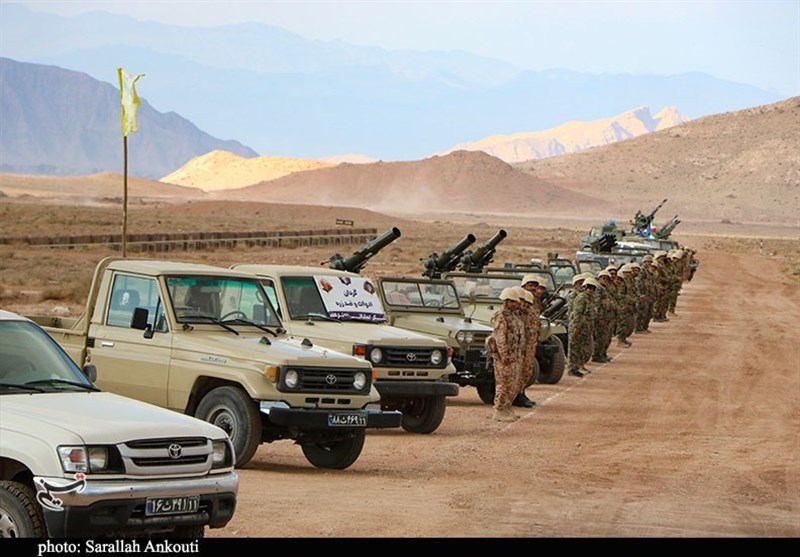
What can you say about a country that was decimated? That it loved martyrdom?
Iran has certainly been defeated on the battlefield, but by not yet losing the war, it has gained stature in geopolitical influence with its chokehold on the Strait of Hormuz, and some sympathy in the typically anti-West Global South — for standing up to the combined kinetic fury unleased by President Trump and Prime Minister Netanyahu of Israel, and continuing the fight, unbowed. The Iranian center of raw power currently lies with the Islamic Revolutionary Guard Corps (IRGC), more than the mullahs who provide doctrinal support.
With its grip on the Strait and array of missiles and other asymmetric weapons, the Iranian regime is still a problem. They will bob, weave, and go on the bicycle and create a mess of indefinite uncertainties to torment the United States and demonstrate their global leverage, even as they are militarily weak. They will tweak us on the nose, fire an occasional barrage of missiles, and maintain the objective of a nuclear weapon — even a backpack nuke would suffice.
Our foreign policy establishment needs to understand that the Islamic Revolutionary Guard Corps will never think like us, and we cannot make them be like us or behave like us.
In dealing with Iran, our foreign policy establishment needs to understand that the Islamic Revolutionary Guard Corps will never think like us, and we cannot make them be like us or behave like us. They can gun down tens of thousands of their own citizens and, in a death cult, encourage their proxies, young men and women, to die for them by detonating suicide vests packed with ball bearings and nails for maximum casualties. Iran is doubtless a thugocracy, parading under the diadem of Islam, with a fanatical ideology transmitted to people in the street. The hatred of the West is more than about pangs of anger over the loss of their oil franchise to the British in the early 2th century, and the 1953 coup d’état organized by the CIA and MI6 to oust Prime Minister Mohammad Mosaddegh in Operation Ajax.
It is about their perceived decadence of a godless Western culture, which they believe has over the decades inflicted itself into the mainstream of Iran — alcohol, perfume, short skirts, cinema, LGBTQ, interest on loans, multinational retailers, and other trappings of the West that motivates them.
In the circles of D.C. groupthink, it is easy to intellectualize about nation-building and human rights and responsibly integrating Iran into the world of trade and investment to benefit its people. The IRGC does not think like this: They crave raw power, offshore capital, and self-preservation. All they understand is an iron fist in an iron glove, to twist Napoleon Bonaparte’s famous saying. Through concessions and diplomatic initiatives, we cannot turn the IRGC into latte-sipping Ivy League MBAs, debating fixed versus floating exchange rates. Members of the IRGC are not dealmakers — they are widow makers.
The Memorandum of Understanding (MOU) is dead, and combat, which ceased for only an interlude, has recommenced in earnest. Of course, the regime set up the United States for failure of the MOU. It was not realistic from the outset, since the first point of the MOU requires the cessation of military operations by the United States and Iran everywhere, including the Israeli operation in Lebanon, “ensuring the territorial integrity and sovereignty of Lebanon.” Without Israel being a party to the document, the burden of managing Israel rested upon the United States against continuing provocations by Hezbollah, a separate entity from the Islamic Republic of Iran, over which it denies control. (RELATED: Iran: Crippled but Still Dangerous)
Until Israel is inside the tent, and an agreement among the three parties is achieved, an MOU would be ineffective and dead, not quite on arrival, but soon thereafter.
As I wrote in The American Spectator in mid-March, the United States should prepare for a long, direct war with Iran. We may be able to negotiate some stopgap measures to ease traffic in the Strait and to exact promises with regard to abandonment of nuclear aspirations — but we cannot trust the IRGC. Only regime change and, ideally, development of a secular nation will provide the necessary comfort level for compliance and trust. (RELATED: America Needs to Prepare for a Long Iran War)
A moderate Islamist government could be a second choice, but there could be continuing skepticism over intent. The U.S. will be wise to maintain good relations with Israel, because of its intelligence capability on the ground, which has demonstrated amazing effectiveness with regard to the decapitation attack and earlier covert actions. Finding and recruiting contacts in the opposition and dissidents in the government, IRGC, and regular army (Artesh) will take time. As I have also written in these pages, in the wings are about 200,000 well-trained, well-armed, and pro-American Kurdish Peshmerga who helped the U.S. get rid of ISIS in Syria. Their engagement would be a wild card that risks a wide ground war, opposition from Turkey, and the potential breakup of Iran’s territory. Their operational support may become yet another less unacceptable option, but an option to keep open.
In the meantime, we must fasten our seat belts. Given Iran’s antipathy for Britain and the U.S. and its well-known penchant for French culture, we should say, “Attachez vos ceintures.”
READ MORE from Frank Schell:
The New York Times Declares Victory for Tehran
Iran: Crippled but Still Dangerous
Frank Schell is a former senior vice president of the First National Bank of Chicago and was later a management consultant. He was a lecturer at the Harris School of Public Policy, University of Chicago, and is a contributor of opinion pieces to various journals.
Image licensed under Creative Commons Attribution 4.0 International.