Hollywoke’s War on Heroes – The American Spectator | USA News and Politics
I was at a loss on what to write about this week. The news has been in a state of stasis all summer with the same two headlines every day: the on again – off again war on Iran, and the communists taking over the Democratic Party. There is a new Prime Minister in the UK, but Andy Burnham is considered even more left-wing than the extreme Keir Starmer. That’s good news for my new political thriller novel, The Camelot Trail, involving a potential war between repressive Britain and pro-freedom America, but bad news for England and the world.
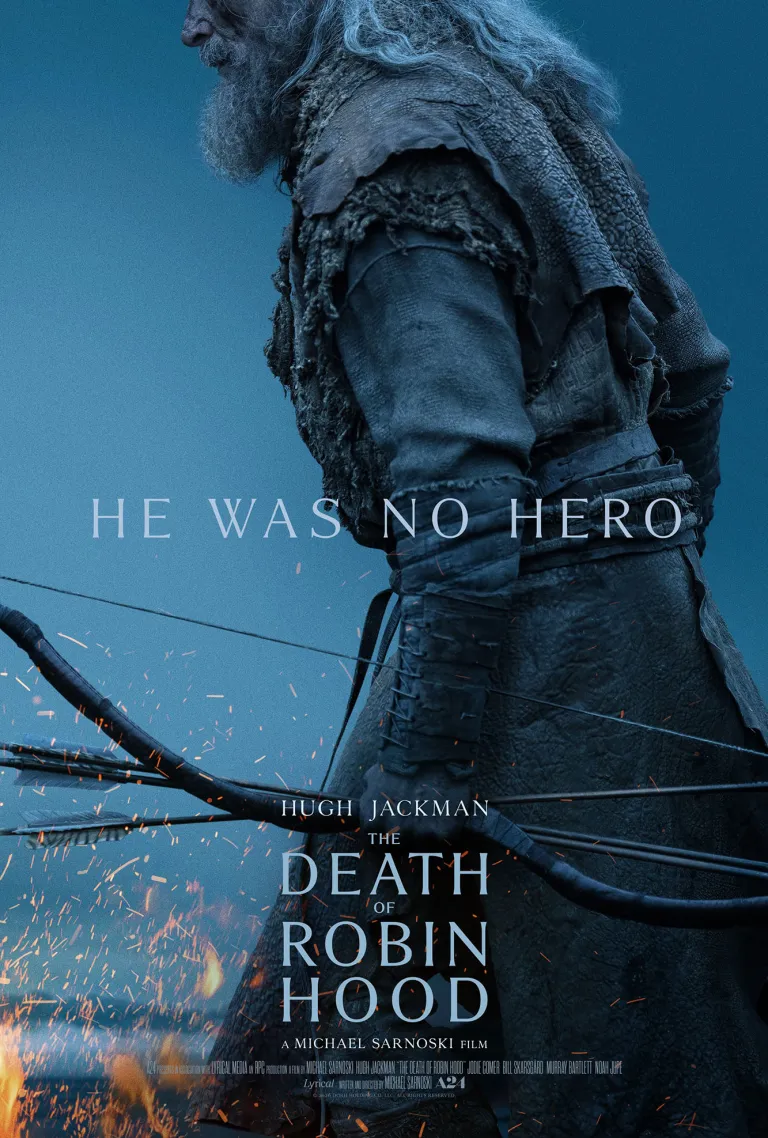
The dark gray poster depicts an old white-bearded man looking despondent with the tagline, “HE WAS NO HERO.” Just the selling point and attitude to entice crowds.
Then I got a catch-up call from one of my few remaining friends in Hollywood — most of them having shunned me for my Trump support — Wiliam Katt, best known as The Greatest American Hero. Bill was partly responsible for my 12-year-long working screenwriter career. While in college, I’d written my first script for his show which one of the producers liked. I told Bill about it years later, when I interviewed him as a USA Today reporter. He kindly asked me to send him the script even though the series had ended five years before. Bill wrote to tell me he loved it, and to act on my inclination to move to LA for a shot at the big time. And I went.
I never got the chance to write for a network series, though I did get hired for an episode of Walker, Texas Ranger, just before the show got prematurely canceled in 2001. By then, especially after 9/11, the screen art had begun to change — for the worse. Most significantly, masculine heroes like Walker and Nash Bridges were out and anti-heroes — The Sopranos, Breaking Bad, Dexter, The Shield, etcetera — were in.
I couldn’t write for those. I wanted to depict the kind of male icon that I, and millions of men and women loved, like a Captain Kirk, Columbo, Jim Rockford, Sonny Crockett, and Ralph Hinkley, Bill’s character in The Greatest American Hero. Hollywood had a darker idea.
My last chance for a major studio production came in 2008, when a script I wrote about the cross-political romance of two Washington Post “copy-aides” (interns) — a macho conservative and a feminist beauty — got hot at ICM, one of the big three agencies. I met with almost every studio development executive in town. Several raved about my screenplay, Paper Tigers, as a smart satire, believing the traditionalist boy, based on my younger self, to be a parody. And because I’d made the liberal girl clever and attractive, like my real then girlfriend — virtues progressive writers would never give an ideologically opposite character.
But I knew my script was doomed by late August, in a meeting with a female development head at Columbia Studios. She complimented Paper Tigers like the others, leading up to a, for her, weighty question. “Your script is so sharp and relevant,” she said. “Clearly, you’re up on political matters. Tell me … Do you think there’s a chance McCain might win?” She asked this with such dread, I was smart enough not to say, “I sure hope so.”
Obama won, and the very notion of a dashing, witty conservative white male protagonist — even a “satirical” one — became inconceivable. Hollywood wasn’t Hollywoke when Obama came in, but it was when he went out in 2016. By then I’d returned to journalism and begun writing novels. My second book, Paper Tigers, got excellent reviews, decent sales, and, ironically, independent producer interest. While Hollywood descended into a no man’s feminist swamp. From where not even the box-office success of Christopher Nolan’s castrated Odysseus in The Odyssey can extricate it.
In Homer’s epic, Odysseus orders the execution of the disloyal female servants. This act of brutal Ancient Greek justice proved too much for the sensitive director, along with actually sexy women in the story (READ MORE: Hollywoke’s Assault on Beauty). Nolan told Time magazine, “Talking about choices of adaptation, the end of the poem is so grim and so misogynistic, I had to exclude some of that material.” Nolan has Penelope shove one colluding servant girl into her husband’s slaughter of the suitors. Thus, he suggests women have more testicles than the guilt-ridden — for devising the tricky victory-achieving Trojan Horse — quasi hero.
Odysseus had better box-office luck than his fellow legendary hero, Robin Hood. Most people don’t even know that a major Robin Hood movie also came out this summer, headed by a popular A-list actor. Why the audience for The Death of Robin Hood starring Hugh Jackman didn’t materialize is a mystery only to the geniuses in Hollywoke.
The dark gray poster depicts an old white-bearded man looking despondent with the tagline, “HE WAS NO HERO.” Just the selling point and attitude to entice crowds to a film about the most famous swashbuckler of all time. That the aging Robin theme was already covered in Richard Lester’s somber yet still fun 1976 picture Robin and Marian meant nothing to the producers. Neither did the idea that Jackman could have made a dashing Errol Flynn-like Robin Hood.
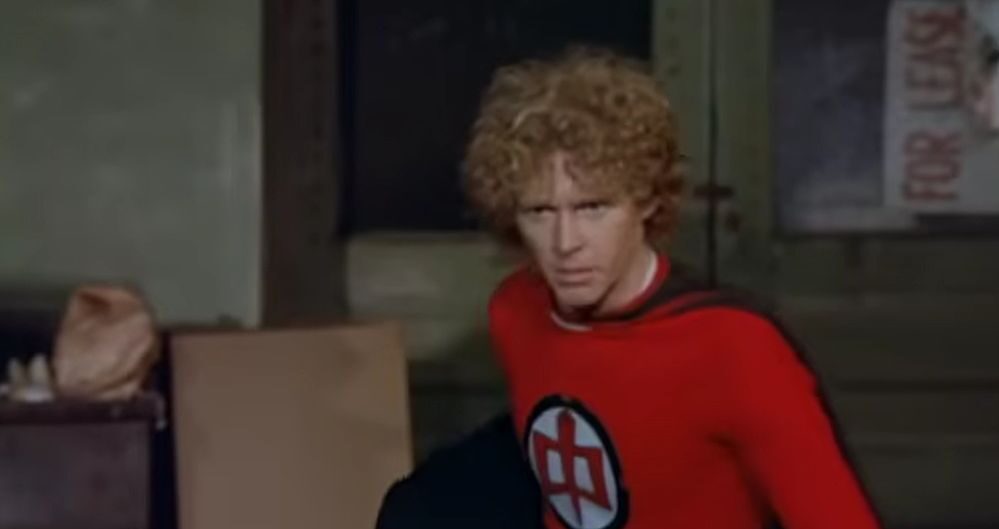
In my phone chat with Bill Katt, he told me of the overwhelming love for his old show, and him, that the crowd exhibited at the Comic-Con 2026 in San Diego. Bill was there promoting a new comic-book version of The Greatest American Hero. I reminded him of when I became a fan during a wonderful scene in the series pilot, written by the late great Stephen J. Cannel (The Rockford Files, The A-Team).
In the scene, high school teacher Ralph Hinkley is late to a hearing to determine custody of his son. Ralph knows he won’t make it driving to the courthouse. Desperate, he puts on for the first time a silly-looking red superhero suit left to him by aliens. He feels like a fool trying to fly off in it, and keeps failing. Until a little boy who’d been watching him says, “You’re not doing it right. You have to jump like three steps, and jump with your hands out in front of you.” Ralph tries it his way and takes off.
That scene would never be written or filmed today. This is what would. A snickering girl mocks Ralph as an ignorant male, and explains he has to initiate an aerodynamic motion to achieve flight. When Ralph finally does, the girl walks off musing on why a woman didn’t get the suit. Which, in Hollywoke, one probably would. And she’d get the same audience response Supergirl did.
READ MORE from Lou Aguilar:
The Anti-Communist Counterattack Begins on Screen
Another Nail in the Hollywood Coffin: George Washington Beats ‘Supergirl’