Silicon Valley found AI and started looking for God
Published Jun. 9, 2026at6:00am
Benjamin Tu was burned out on soulless coffee shops and WeWork and was struggling to find a community of people who shared his beliefs. So he started building Centerpoint Spaces, (opens in new tab) a South Bay coworking and coffee hub for Christian and Christian-curious techies.
Tu, a managing partner at the startup consultancy Vectis Forge, dreams of a place where conversations about business and religion can intermingle. While he secures a permanent location, he runs monthly breakfast pop-ups in rented conference rooms, where attendees explore topics like “Faith + work: Can they coexist?” over bagels. A similar faith-friendly coworking group in San Jose, KingdomHaus (opens in new tab), is closer to opening its own space, with plans for a VC-in-residence and a $3,600 annual membership.
“There’s been a shift,” said Tu, 43. “There’s a lot of people out there who are being more bold in their faith.”
Welcome to Christianity’s main-character era in Silicon Valley. What began with marquee names like Peter Thiel and Y Combinator’s Garry Tan being public about their faith has started bleeding into other areas of the tech industry. Silicon Valley’s rank and file are embracing Christianity, searching for community, networking opportunities, and answers to questions that have been raised by AI. In typical SV fashion, they’re doing it via meetups and events.
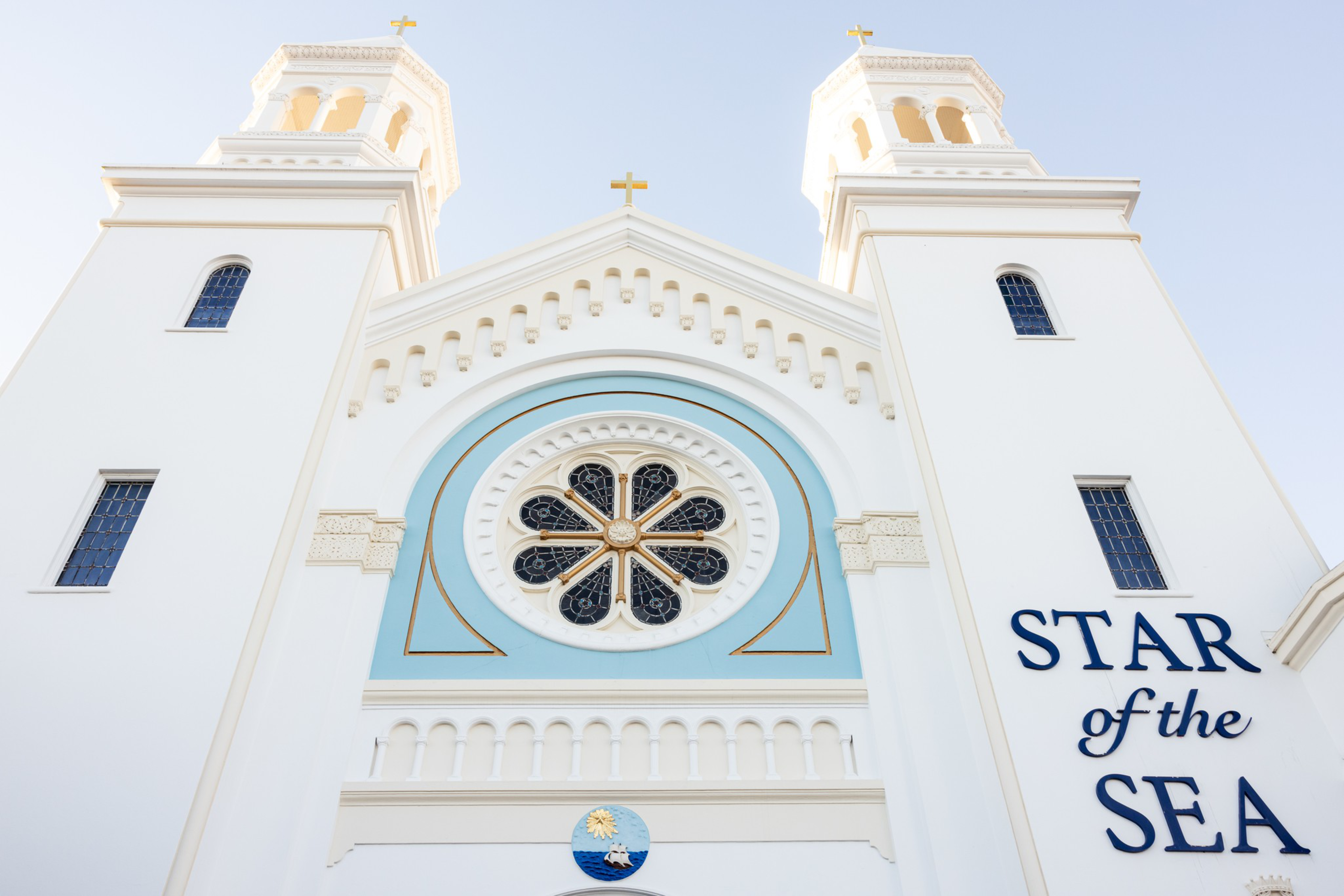 Star of the Sea in the Outer Richmond has a number of tech workers in its congregation. | Source: Jason Henry for The Standard
There have been six-week courses on “How to engage with AI as a Christian,” a Catholic line-dancing crew run by a Tesla engineer, an Anthropic summit on God and AI, and a “Christians in Tech” mixer at Salesforce Park.
Some clergy members, believers, and academics credit the AI boom for a renewed interest in faith. Experts say that as large language models get more powerful, the search for deeper meaning intensifies. “People are going back to church [to learn how to] demarcate the human from the machine in order to see meaning in human activity,” said Robert Geraci, distinguished chair for the study of religion and culture at Knox College.
Faith leaders are taking an interest in AI as well. On Memorial Day, Pope Leo XIV released his first encyclical, “Magnifica Humanitas,” which highlighted AI as one of the central moral challenges facing humanity, saying “a more moral AI is not enough if that morality is determined by a few.”
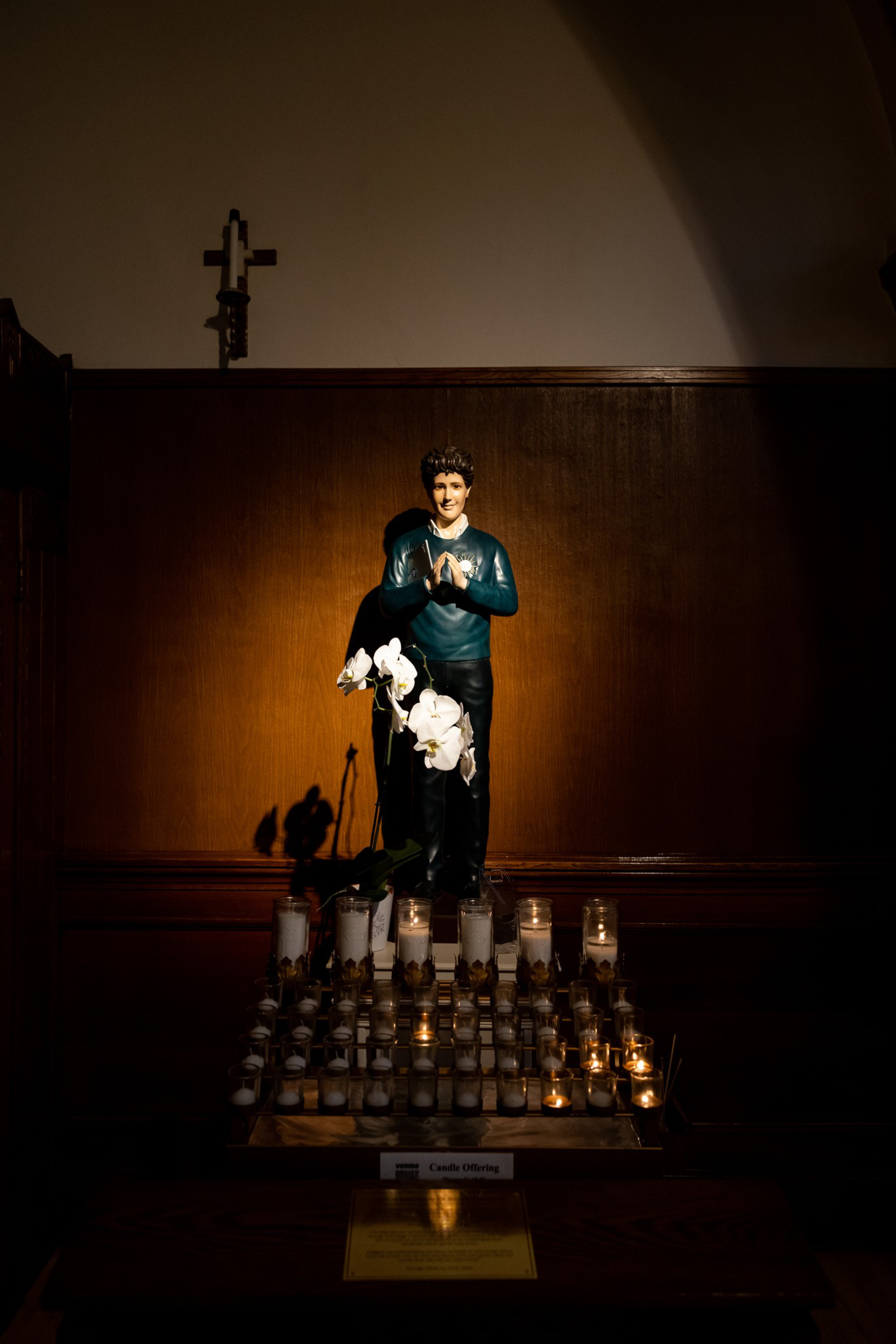 A statue of Saint Carlo Acutis, a 15-year-old computer programmer, at Star of the Sea. | Source: Jason Henry for The Standard
On paper, San Francisco’s Christian population is roughly the same size as it was a decade ago, according to Pew Research (opens in new tab). Its visibility in tech culture isn’t. The modern Bay Area has been famously irreligious. It was ranked (opens in new tab) the No. 1 "unchurched” metro area in 2014 and No. 17 "post-Christian” region in 2019 by market research firm Barna Group.
But Silicon Valley has always had a spiritual streak. Techies’ search for meaning has ranged from psychedelics (opens in new tab) in the 1970s to Burning Man’s “radical inclusion” gospel in the ’90s. In recent years, the effective altruism movement has pushed a philosophy of using data to determine the maximum good. Each generation has chased self-actualization, “experimenting with what it means to be a person in the 20th and now the 21st century,” said Geraci. This time, for some, it’s God.
The Christian shift among some in tech mirrors a national uptick. Gallup reports rising church attendance (opens in new tab) and baptisms among Republican Gen Z (opens in new tab) men. (opens in new tab) But the Bay Area’s interest in the faith is uniquely AI-adjacent.
The Christian founder classAt a recent evening mass at Star of the Sea, a Catholic church in the Outer Richmond, congregants’ Sunday best meant tech swag. There was an a16z Speedrun baseball cap, an Instagram-branded down jacket, and head-to-toe merch from police body-cam startup Abel (opens in new tab) on the evening’s lector, Daniel Francis, who founded the company.
It was after a similar Mass last January that Francis and nine friends got the idea for a black-tie debate club at the church.
They created The Hamilton Society, a space for intellectual discussions beyond startup small talk that has grown from 40 attendees at the first event to more than 600 and big-name guests like Anduril’s Trae Stephens. “We have product market fit with what people want in San Francisco,” said Federico Chavez-Torres, one of the founders.
Board members originally paid monthly dues with one ounce of silver, but the club switched to dollars when storage became impractical. Guests recite the Pledge of Allegiance before debates.
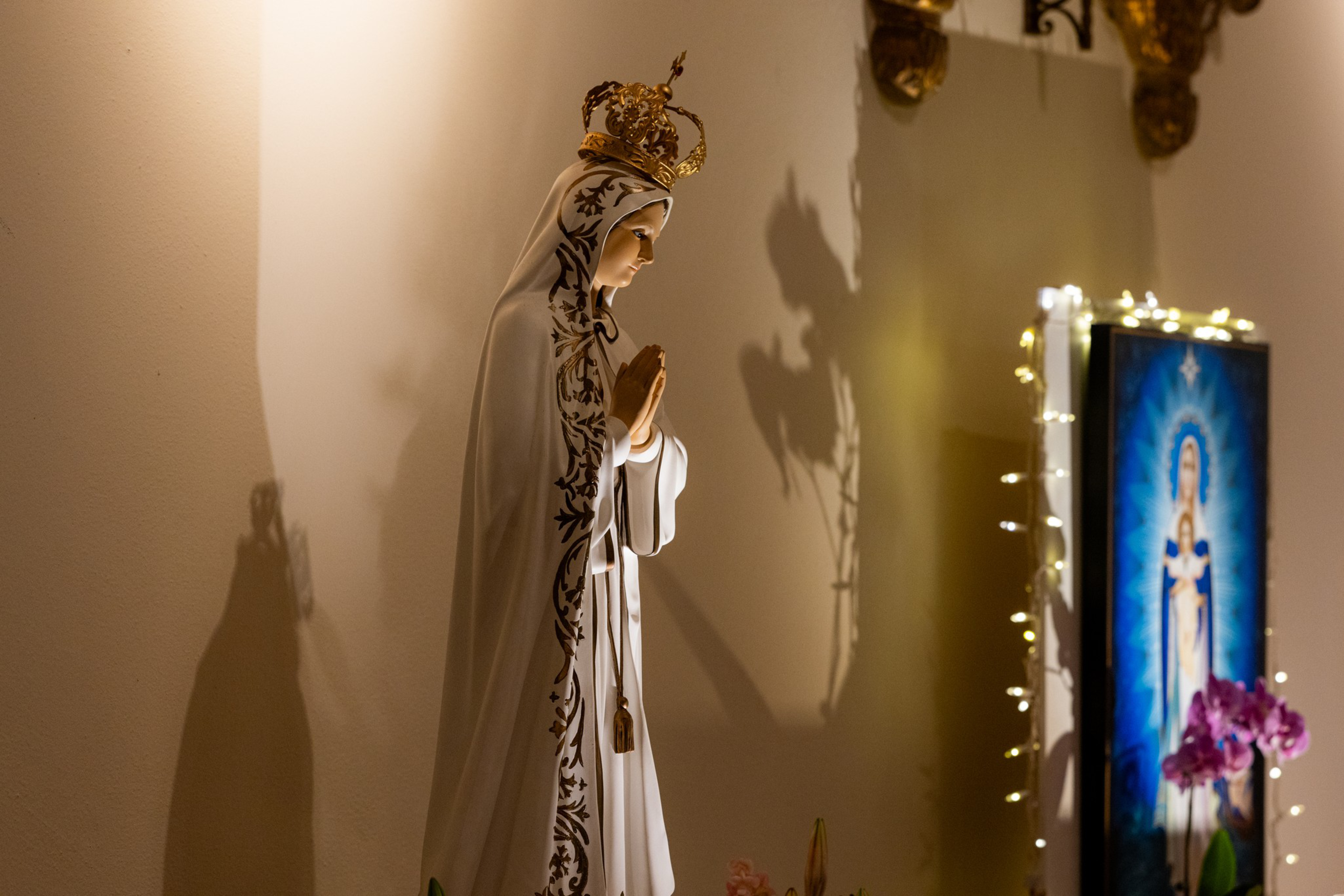 Source: Jason Henry for The Standard
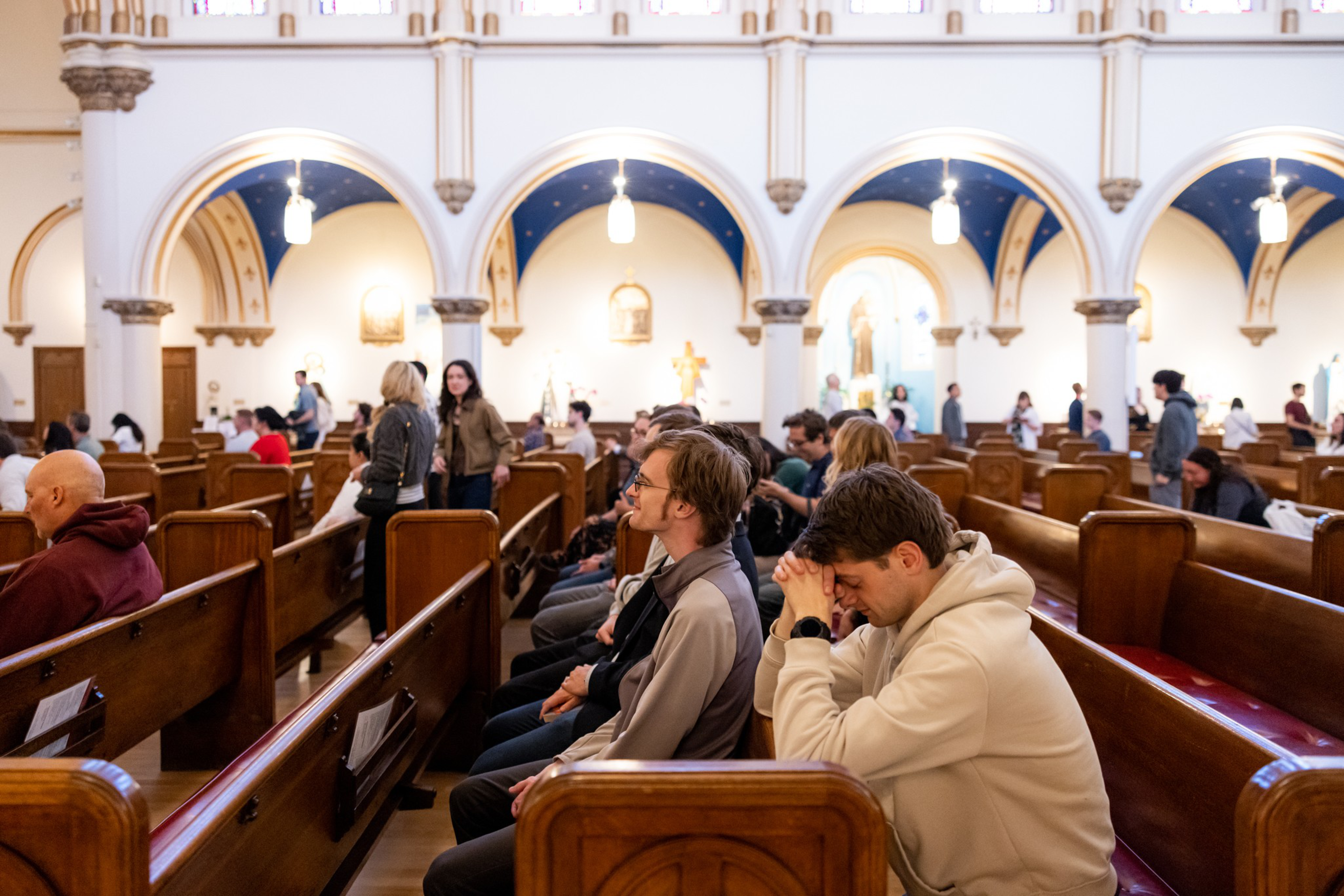 Source: Jason Henry for The Standard
Chavez-Torres, 27, identifies as part of San Francisco’s new Christian founder class. He runs Tex (opens in new tab) Software, an AI platform for trading industrial equipment. “When you’re building … and things are breaking, and you’re getting annoying emails, you really need God,” he said during a stroll through the Presidio, where his company is based.
Since moving to San Francisco in 2024, he has made most of his friends, work connections, and investor referrals through Catholic churches like Star of the Sea and St. Dominic’s in Lower Pac Heights. It’s “a locus of social organization in my life and in the lives of many other founders here in the city,” he said.
Father Joseph Illo of Star of the Sea has blessed (opens in new tab) the debate club and charges the group $300 to rent the space for each event. He sees The Hamilton Society’s success as proof that the church is connecting with Gen Z techies. The club raised funds to commission and install a statue of Saint Carlo Acutis, a 15-year-old computer programmer who was canonized last year by Pope Leo XIV.
When faith meets frontier AIFor Christians in tech, AI is a theological problem to grapple with.
“People are going to work day after day and feeling anxious about the very things that they’re doing,” said Geraci. “That might lead them toward … other kinds of metaphysical answers.”
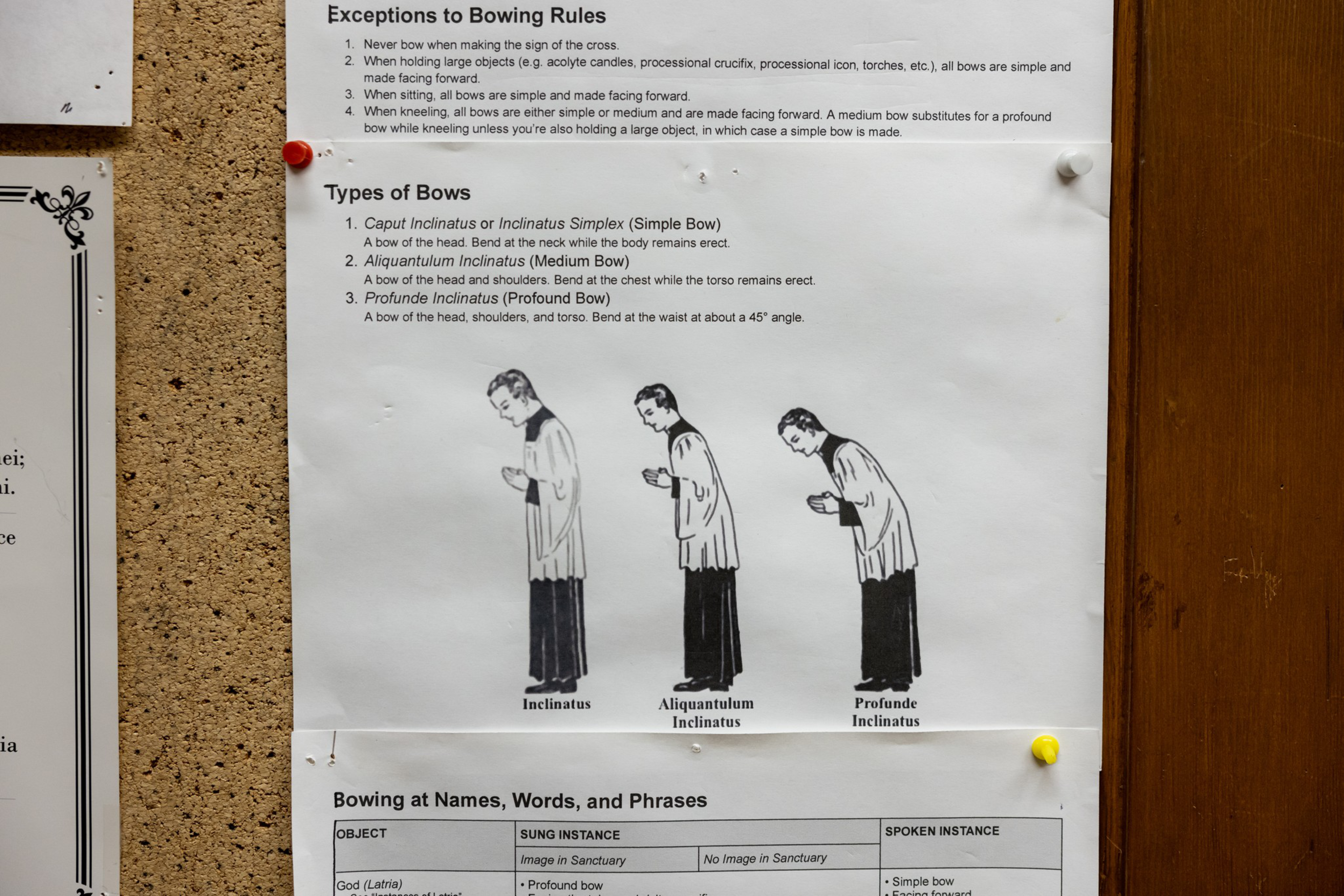 Literature for clergy in the sacristy at Star of the Sea Church. | Source: Jason Henry for The Standard
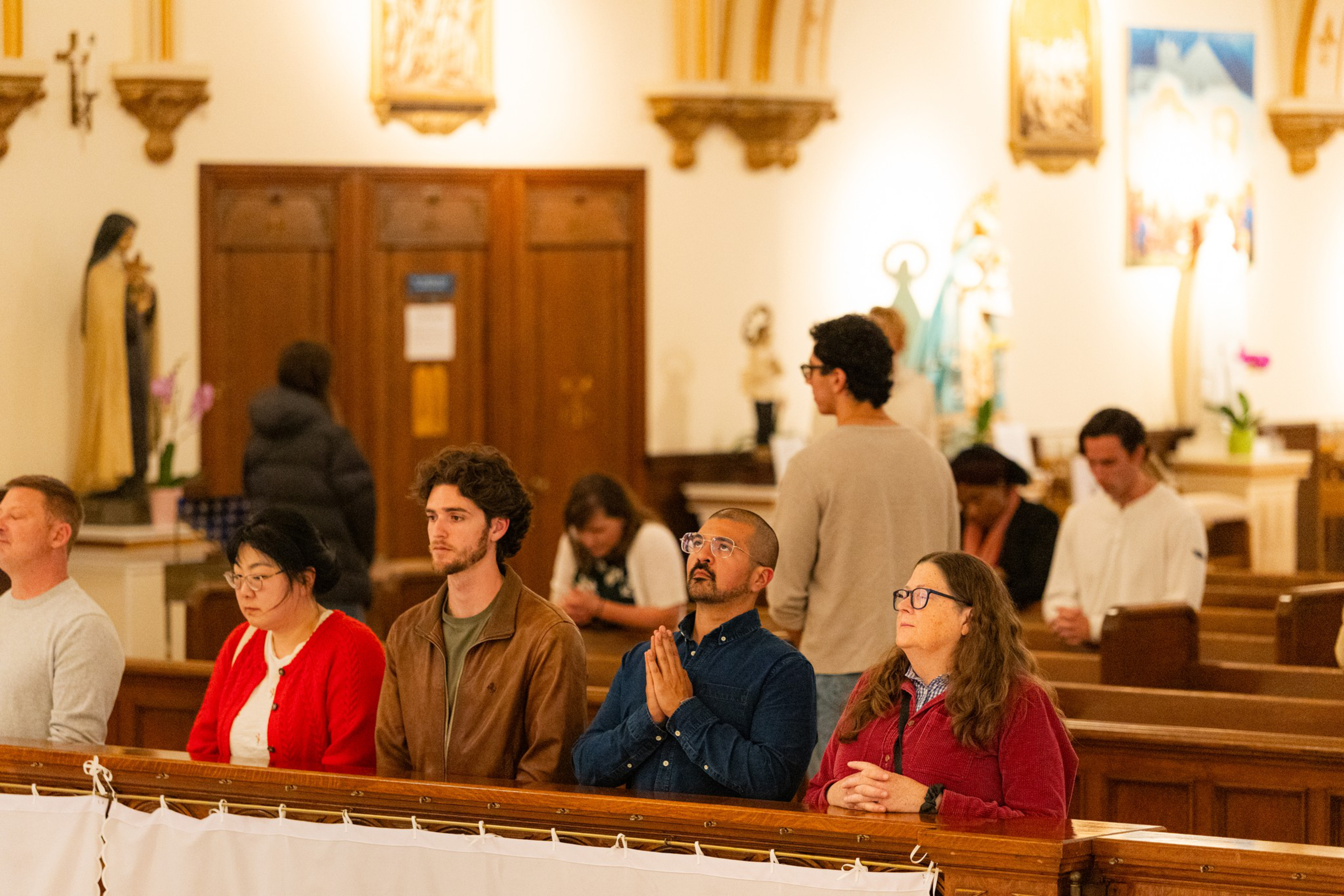 Federico Chavez-Torres, in blue shirt, during communion. | Source: Jason Henry for The Standard
Illo says he’s seen an increase in church attendance and adult baptisms in recent years, which he credits in part to AI-driven existential anxiety. “Any time there’s a fear, people tend to come back to religion,” he said. “The fear of the unknown: What will AI become? How will it affect each of our lives? That does bring people to church.”
The growing influence of Christianity in the Bay Area has not escaped the AI companies, which are actively courting religious leaders.
In late March, Anthropic invited around 20 Christian theologians, academics, and venture capitalists to its Howard Street HQ for a two-day summit on God and AI. Attendees included Father Brendan McGuire of St. Simon Catholic Parish in Los Altos and Paul Taylor, an Oracle product manager turned pastor and cofounder of the Bay Area Center for Faith, Work & Tech.
Chris Olah, one of Anthropic’s eight cofounders and recent guest of the pope, shook hands with attendees. Each guest received a bound copy of “Machines of Loving Grace” by cofounder Dario Amodei, a 14,000-word essay on AI-powered abundance, which posits that the tech will usher in an era of prosperity and scientific discovery for all. They also received copies of Claude’s 20,900-word constitution, a governing document for the chatbot’s behavior, often referred to as the AI Bible.
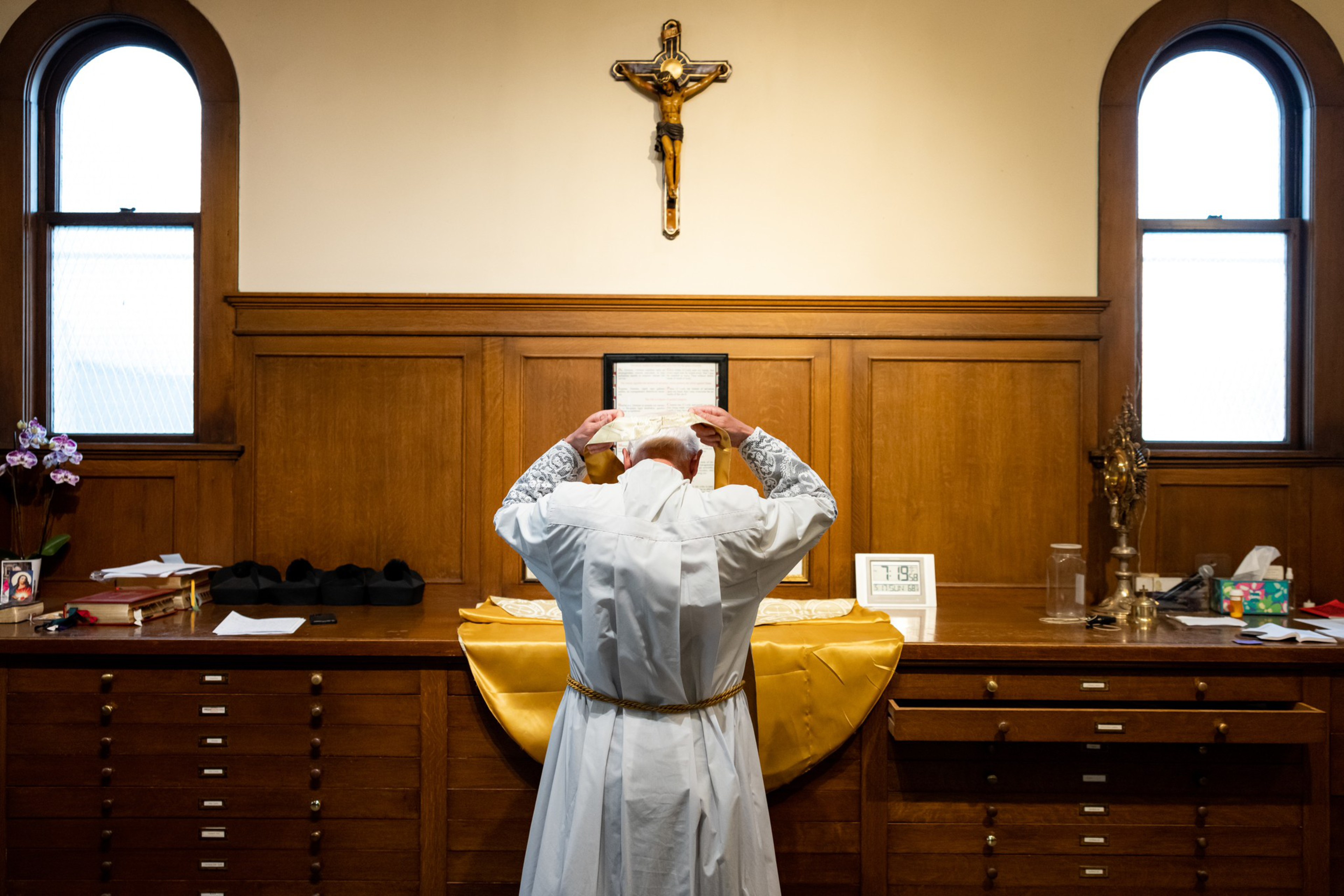 Pastor Joseph Illo in the sacristy at Star of the Sea. | Source: Jason Henry for The Standard
Then the work began, with questions like, can religious moral frameworks keep machines aligned with human values? “Part of the experience was to be wrestling with [these topics] together in small groups,” said Taylor. Anthropic wasn’t asking for answers like “should we turn left or right,” he said. It was more, “We’re facing a lot of questions. We need more voices in the conversations.”
Later, McGuire posted on LinkedIn: “What does it mean to be human? … How do we ensure that technology remains in service of the person, not the other way around?”
Have thoughts on this story?Start the conversationAnthropic declined to comment on specifics of the meeting but said it has since hosted gatherings with people from “wisdom (opens in new tab) traditions” to guide the “moral formation of AI systems.”
One attendee, who declined to be named, described the stakes as “bigger than COVID.”
The Christian caucusIn March, Taylor launched 4AI Cohort, (opens in new tab) a six-week, $60 breakfast course in Palo Alto for Christians grappling with working in and around AI. The weekly, 90-minute sessions, which start at 7 a.m., are part theology seminar and part AI ethics workshop, with assigned readings and homework. Everyone “shares a concern that AI threatens to degrade humanity in some way,” said Taylor.
At one session, around 25 people, ranging from Gen Z to boomers, sat at desks, their laptops open. By 6:55 a.m., the pastries were gone, and the coffee was running low. “I’m not afraid of AI,” Taylor told the room. “But I do think there’s lots to be concerned about.”
That morning’s session focused on agency. Can AI expand human potential without erasing human limits?
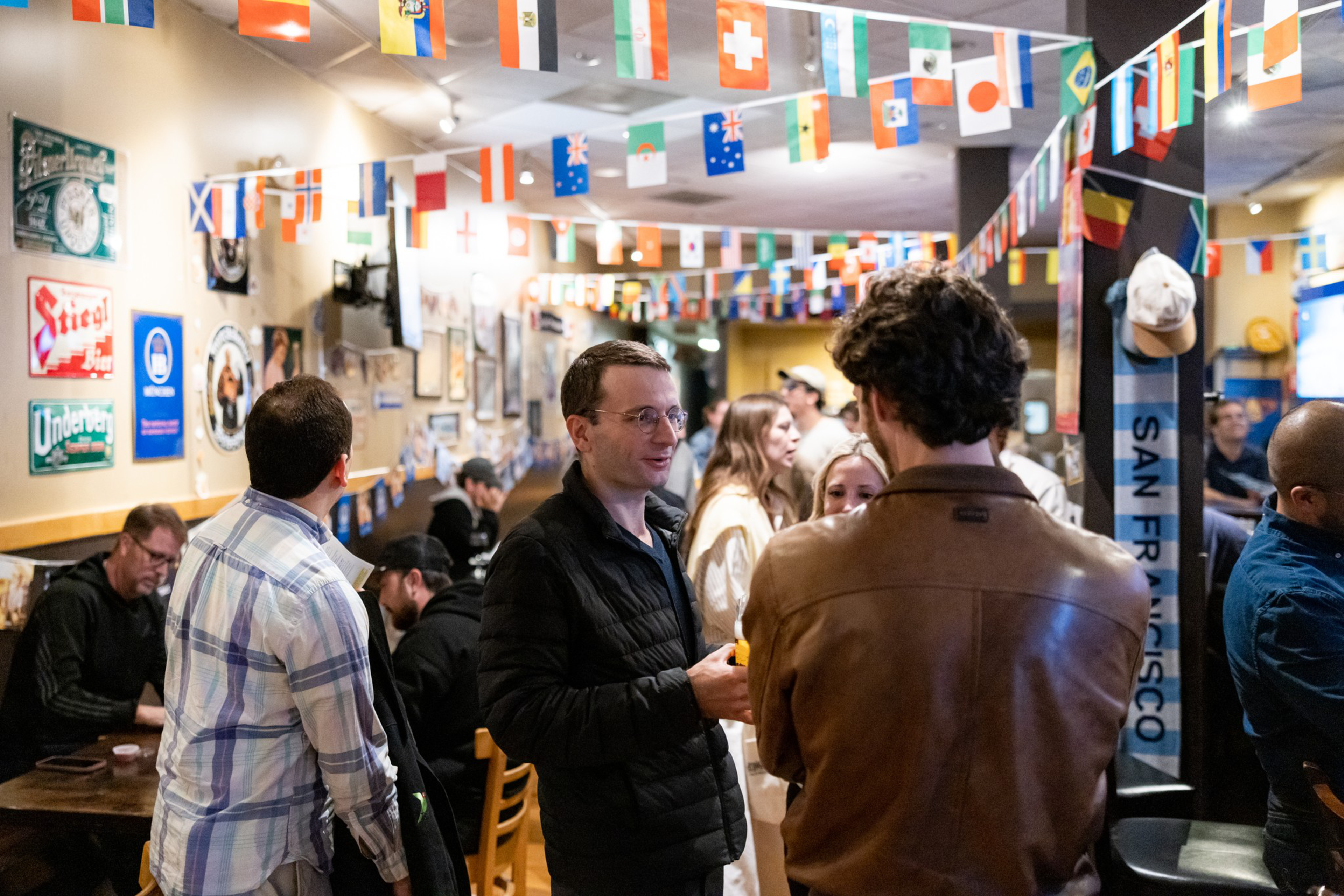 Daniel Francis and other parishioners get beers after mass at Steins down the street from Star of the Sea. | Source: Jason Henry for The Standard
Tyler Suard, director of AI research and analysis at Cencora, a Fortune 500 pharmaceutical distributor, came with his wife, Joanna Yanhua Zheng, who teaches Cantonese and Mandarin at Stanford. Suard is deeply AI-pilled. He built PastorGPT for his church and self-published “AI: The Human Story,” a beginner’s guide to the technology that sold about 20 copies.
“I really enjoy studying AI,” he said. “It’s a passion, like, not just my job. The reason I’m in tech is because of my faith, so I don’t see the two as being incompatible at all.”
Kate Kruizenga, founder of Phero Collective, a startup consultancy, valued the workshop for how it “emphasized tension” instead of glossing over it, giving her a clearer framework for what responsible AI use should look like. Kruizenga, who lives in Oakland, wakes up at 5:30 a.m. to attend the breakfasts.
Fifteen years ago, being openly Christian in tech carried social and professional risk, she said. When she moved to the Bay in 2010, colleagues warned her not to speak publicly about her faith, saying it would be “career suicide.” But a mentor at church helped her land a chief-of-staff role at Kaiser despite having no healthcare experience. Today, the taboo has mostly faded, she said.
“The sentiment in Silicon Valley used to be that if you are Christian, you need to keep that to yourself. You’re a minority,” said Pastor Ben Pilgreen of the nondenominational Epic Church in SoMa.
Pilgreen said attendance at his church is more than 30% higher than before the pandemic. He runs three Sunday services to serve 1,000 people and has added an overflow room, with hundreds more joining via livestream. He baptized 74 adults in 2025. On May 24, he announced that Epic is purchasing 491 Post St., which was built as a church in 1913 and later owned by the Academy of Art.
A recurring concern among his members has been how to be openly Christian at work, without being cringe about it. In April, he launched the Center for Sacred Vocation (opens in new tab), a program designed to integrate members’ religious values with their career ambitions.
“When people get exposed to AI, it’s like, wow, this is God-like,” said Pilgreen. “Surely there’s a designer that’s even more grand than who designed this.”
He has experienced the blurring boundaries of AI first-hand. Without permission, someone — he doesn’t know who — fed Pilgreen’s sermons into an AI agent and built a digital twin of him. “I don’t know how this happened,” he said. He’s unsure whether to find it flattering or disturbing.
AI is also literally directing people to church, according to Pilgreen. “Most of our new congregants found us through ChatGPT.”
Gen Z’s God squadGen Z Christians in tech are done downplaying their religion. Now they’re sending Partiful invites.
Catholic line dancing sounds like a punchline, but Bay Area Catholic Dance Crew (opens in new tab) events are a real scene, drawing 50 to 200 people to church halls and bars.
Christina Pirrotta, an engineer at Tesla who started the group, said she’s never hidden her beliefs, nor gotten flack for them. “People at my work definitely know I’m Catholic,” she said. “I have, like, a crucifix on my desk and some prayer cards.”
But she longed to meet like-minded people. “Finding other faith-based people was really important to me,” said Pirrotta, 25. She started a group chat, then, in February 2023, an Instagram account that now has 10,600 followers. “It kind of spiraled,” she said. “Non-Catholics started coming to our events because they were fun. Then bars reached out.” The group has produced three marriages, “averaging about one a year now.” Pirrotta met her boyfriend while dancing.
Her faith has been an antidote to AI doomerism. “I’m not worried about AI,” she said. “That machine is not created in the likeness of God and does not have a soul.”
For other Christians in tech, faith is less about escaping AI than about finding community inside it. Jo Pham, 32, a social media marketer at WhatsApp, meets with a “Christians at Meta” group for weekly morning devotions. “When I found them, I felt a bit more at home,” she said.
On Sundays, she attends Vive Church, a nondenominational congregation that meets in a Potrero Hill school auditorium. At a recent service, the six-piece worship band comprised employees of Google, Meta, and Tesla. In the foyer, Apostle Coffee, a pop-up cart that launched in March, served lattes. Pastor Emily Calderon, who works in crypto-marketing at PayPal, preached on routines in romance. The church accepted crypto donations.
Pham runs the Bay Area arm of Hype Network (opens in new tab), a community for faith-based founders, many of them full-time techies who are working on AI side projects like sermon-translation tools. She sees AI development as too consequential for Christians to sit out.
“With AI, everything points back to what it means to be human,” she said. “For me, all roads point back to God.”