Vance Declares Switzerland Talks a Win: IAEA In, Hormuz Open, 60-Day Clock Ticking
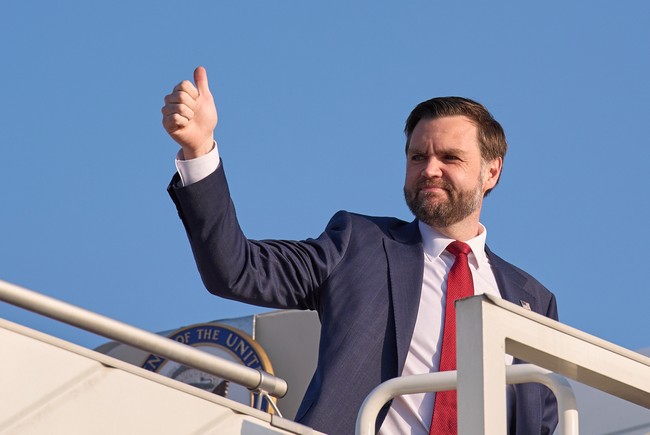
The initial rounds of negotiations taking place in Switzerland between the United States and Iran wrapped up Monday, and Vice President JD Vance, who led the U.S. team, says significant progress was made. In a press briefing held before his departure back to the U.S., Vance revealed that, despite "a little bit of whining" from Iran, the groundwork had been laid for a lasting agreement that built upon the framework set up in the MOU signed last week by the two countries.
Advertisement
There were four main areas being hashed out over the weekend: the situation in the Strait of Hormuz, international inspections of Iran's (supposedly non-existent) nuclear program, "deconfliction" mechanisms to enable future talks if the MOU terms are breached, and the formation of teams from both countries to complete the deal within the next 60 days.
NEW: Vice President @JDVance says the United States made significant progress in talks with Iran, building on the MOU:
- The Strait of Hormuz remains open
— Trump War Room (@TrumpWarRoom) June 22, 2026
- Iran agreed to allow IAEA inspectors back into the country — a critical step toward ending its nuclear program
- New… pic.twitter.com/1HPxCpzSxP
NEW: Vice President @JDVance says the United States made significant progress in talks with Iran, building on the MOU:
- The Strait of Hormuz remains open
- Iran agreed to allow IAEA inspectors back into the country — a critical step toward ending its nuclear program
- New mechanism was established to help facilitate ceasefires during escalations
- Technical teams were formed to finalize the details over the next 60 days
"Yesterday was a very, very good day!"
The vice president kicked off his remarks by saying, "Yesterday was a very, very good day. We made a lot of good progress. We did exactly what we wanted to do." He noted that "millions and millions of barrels" of crude oil and natural gas were moving through the Strait of Hormuz, resulting in lower gas prices. A crucial part of keeping the oil moving, Vance said, was designing a "de-escalation" mechanism in for when conflict "inevitably" comes up.
Advertisement
READ MORE: Trump Draws Red Line on Hezbollah As US-Iran Talks Clear First Hurdle
Trump: New Iran Deal Is a Wall Against Nuclear Weapons
Treasury Secretary Scott Bessent, who was not present at the negotiations, took to X to confirm that the U.S. had issued a "60-day general license authorizing the production, delivery, and sale of Iranian oil."
Under President @realDonaldTrump and @VP, we continue to make the world safer and more prosperous.
In line with the ongoing productive talks in Switzerland, Iran has committed to free and open transit in the Strait of Hormuz and to permit International Atomic Energy Agency…
— Treasury Secretary Scott Bessent (@SecScottBessent) June 22, 2026
Under President @realDonaldTrump and @VP, we continue to make the world safer and more prosperous.
In line with the ongoing productive talks in Switzerland, Iran has committed to free and open transit in the Strait of Hormuz and to permit International Atomic Energy Agency (IAEA) inspectors into their country.
As part of the framework, Treasury has issued a temporary 60-day general license authorizing the production, delivery, and sale of Iranian oil.
Also on the agenda for the talks was a regional ceasefire.
"We want a regional ceasefire," Vance said after the high-level talks with Iran and mediators Qatar and Pakistan wrapped up in Switzerland. "We want Hezbollah to stop firing at our friends in Israel. We want Israelis to be able to live in peace. We also want to make sure that when things happen, they don't spiral into a broader escalation.”
Advertisement
Vance also said that Iran had agreed to allow inspectors from the International Atomic Energy Agency (IAEA) into the country to monitor the denuclearization process. This has been one of President Trump's main objectives in the military operations against the Islamic regime, and the president last week declared his plan would be "a wall against a nuclear weapon."
When asked about the possible unfreezing of Iranian assets by the U.S., the vice president said that if that were to happen, the money would be used to feed Iranians through the purchase of food from American farmers. "The money would actually go to buy American soy, American corn and American wheat for the benefit of the Iranian people," said Vance.
Mediators from Qatar and Pakistai said "encouraging progress has been made" during the talks; the "technical teams" from the U.S. and Iran will remain in Switzerland for the rest of the week to continue hashing out the details of the deal.
Editor's Note: For decades, former presidents have been all talk and no action. Now, Donald Trump is eliminating the threat from Iran once and for all.
Help us report the truth about the Trump administration's decisive actions to keep Americans safe and bring peace to the world. Join RedState VIP and use promo code FIGHT to get 60% off your VIP membership.