Skinny on SCOTUS - (2025 Term - November-December)
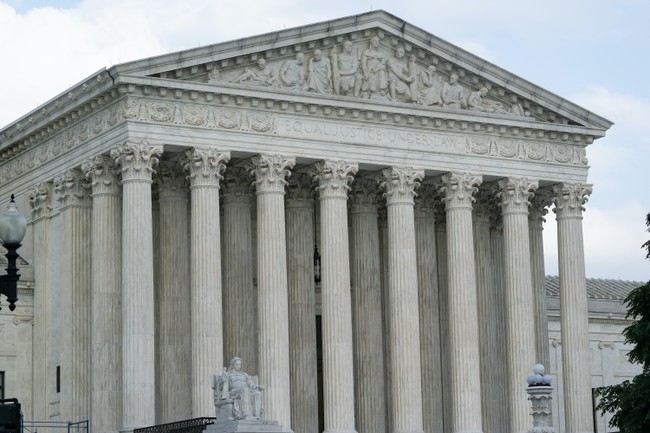
There's been so much attention paid in recent months to lower court rulings and to the Supreme Court's emergency docket that the first few formal opinions issued by the Court for its 2025 term have somewhat flown under the radar. Here, to remedy that, is our first Skinny on SCOTUS installment for this term.
All three of these cases were decided without oral argument. All three decisions were per curiam (i.e., by the court, not signed by a specific justice) and included no dissents. All three involved SCOTUS reversing the lower courts. And all three were quite brief.
The most notable of the three is Clark, as it involves the 4th Circuit essentially getting rapped on the nose by the Supreme Court and reminded to stay in its lane.
So, here's what we've gotten from SCOTUS thus far:
November 24, 2025 DecisionsDate: November 24, 2025
Author: Per Curiam
Split: 9-0
Dissent: N/A
Appeal From: Supreme Court of Mississippi
In May 2020, A. G. C. spent a weekend visiting her father, Jeffrey Pitts. After returning home, A. G. C. told her mother that she had been sexually abused. Eventually, that report led to criminal charges against Pitts.
At trial, the State moved for permission to place a screen between A. G. C. and Pitts when she took the witness stand. In support of its motion, the State pointed to a Mississippi statute providing that child witnesses “shall have the . . . righ[t]” to “a properly constructed screen that would permit the judge and jury in the courtroom . . . to see the child but would obscure the child’s view of the defendant.” Miss. Code Ann. §99–43–101(2)(g) (2020).
Pitts objected. He did not question the statute’s mandatory terms. But, he said, those terms had to give way to the Sixth Amendment’s demands. 405 So. 3d 20, 31 (Miss. App.2023). And, he submitted, the State had not attempted to meet, and could not meet, its Sixth Amendment burden of showing that screening was necessary in the particular circumstances of his case. 405 So. 3d 1238, 1243 (Miss. 2025).
The trial judge granted the State’s motion. In doing so, the judge reasoned that the “statute . . . appears to be mandatory,” and expressed “concerns about [his] ability to declare the statute unconstitutional and fail to follow it.” App.to Pet. for Cert. 36a (App.).
After a jury convicted him, Pitts appealed. 405 So. 3d, at31. Invoking Coy and Craig, he argued that the trial court had failed to make the case-specific finding of necessity the Sixth Amendment requires and, as remedy, sought a new trial. 405 So. 3d, at 31–35.
Ultimately, a divided Mississippi Supreme Court rejected Pitts’s arguments. The court did not dispute that the trial court failed to make a case-specific finding of necessity. See 405 So. 3d, at 1246. Instead, the court sought to distinguish Coy and Craig on various grounds. 405 So. 3d, at 1248–1252. With those distinctions in hand, the court then proceeded to hold that Mississippi’s mandatory statute provided sufficient authority for the screening in this case. Id., at 1254–1255. Unpersuaded, a dissent argued that Coy and Craig controlled this case and that the trial court failed to comply with their terms. 405 So. 3d, at 1255 (King, J., dissenting).
After the Mississippi Supreme Court ruled, Pitts sought certiorari.
Issue:
Whether a state statute that permits screening a child witness from a criminal defendant during their testimony violates the Sixth Amendment.
Holding: Reversed and remanded.
A defendant’s Sixth Amendment right to meet his accusers face to face may not be denied without case-specific findings of necessity, notwithstanding Mississippi’s right-to-screening statute.
Skinny: A court may properly screen a child witness from a criminal defendant during the child's testimony without violating the Sixth Amendment, but the court must first make specific findings regarding the necessity of doing so. Put another way, little ones can (and should) be protected, but that doesn't wholly negate criminal defendants' basic constitutional rights.
Added Note: In its decision, the Supreme Court included a note at the end to underscore that it was not ruling that the defendant was entitled to a new trial in the case — it left that up to the state court to decide.
Date: November 24, 2025
Author: Per Curiam
Split: 9/0
Dissent: N/A
Appeal From: 4th Circuit
According to the State’s witnesses at trial, Jeremiah Sweeney was arguing one night with neighbors about stolen marijuana. He eventually opened fire, missing his intended targets but killing a bystander who was about 75 yards away. At issue during trial was whether Sweeney could have been the shooter given his location and the angle of the bullet wound.
After the State rested its case, Juror 4’s curiosity got the best of him, and he decided to check out the crime scene for himself. Shortly after jury deliberations began, Juror 4 told the jury about his visit, and the jury promptly reported his visit to the court. The parties conferred and eventually agreed that rather than declare a mistrial, the court would dismiss Juror 4 and deliberations would proceed with 11 jurors. Sweeney was convicted, and his convictions were affirmed on direct appeal.
Sweeney later filed a petition for postconviction relief in state court. He argued, among other things, that his trial counsel was ineffective under Strickland v. Washington, 466 U. S. 668, 686 (1984), for not seeking to voir dire the entire jury to ensure that no other juror was tainted by Juror 4’s unauthorized crime-scene visit. The state court denied relief after a hearing. With the help of appointed counsel, Sweeney then petitioned for a writ of habeas corpus under 28 U. S. C. §2254 in Federal District Court. As in state court, Sweeney argued that his trial counsel was ineffective for not seeking to voir dire the entire jury. The District Court denied Sweeney’s petition, concluding that the state court’s application of Strickland was not objectively unreasonable.
In an unpublished opinion, the Fourth Circuit reversed—but not on the ineffective-assistance claim that Sweeney brought. Instead, the Fourth Circuit declared that Sweeney’s trial was marred by a “combination of extraordinary failures from juror to judge to attorney” that deprived Sweeney of his right to be confronted with the witnesses against him and his right to trial by an impartial jury. App. to Pet. for Cert. 22a, 29a. That error, the Court of Appeals concluded, entitled Sweeney to a new trial. Judge Quattlebaum dissented, criticizing the majority for “flout[ing]” traditional principles of party presentation. Id., at 99a–103a.
Issue:
Whether the 4th Circuit erred in granting a new trial on a basis that was not presented to it on appeal.
Holding: Reversed and remanded.
The U.S. Court of Appeals for the 4th Circuit departed from the principle of party presentation and abused its discretion in granting a new trial.
Skinny:
Appellate courts are to decide the issues presented by the parties, not inject additional issues or claims. Also: Stay in your lane, 4th Circuit.
As the decision notes: "To put it plainly, courts 'call balls and strikes'; they don’t get a turn at bat. Lomax v. Ortiz-Marquez, 590 U. S. 595, 599 (2020)."
December 8, 2025 DecisionDoe v. Dynamic Physical Therapy, LLC
Date: December 8, 2025
Author: Per Curiam
Split: 9/0
Dissent: N/A
Appeal From: Louisiana Court of Appeal
Louisiana immunizes healthcare providers from civil liability during public health emergencies. La. Rev. Stat. Ann.§29:771(B)(2)(c)(i) (West 2022). Below, the Louisiana Court of Appeal held that this state statute barred plaintiff’s federal claims. 2024–0723, pp. 11–12 (1 Cir. 12/27/24), 404So. 3d 1008, 1017–1018, writ denied, 2025–00105 (La.4/29/25), 407 So. 3d 623.
Issue:
Whether states have the power to confer immunity from federal causes of action.
Holding: Reversed and remanded.
Because a state lacks the power to confer immunity from federal causes of action, the Louisiana Court of Appeal’s judgment that a plaintiff’s federal claims are barred by a Louisiana statute immunizing health care providers from civil liability during public health emergencies is reversed.
Skinny: State statutes don't make federal law.
You can check out prior installments of The Skinny on SCOTUS series here.