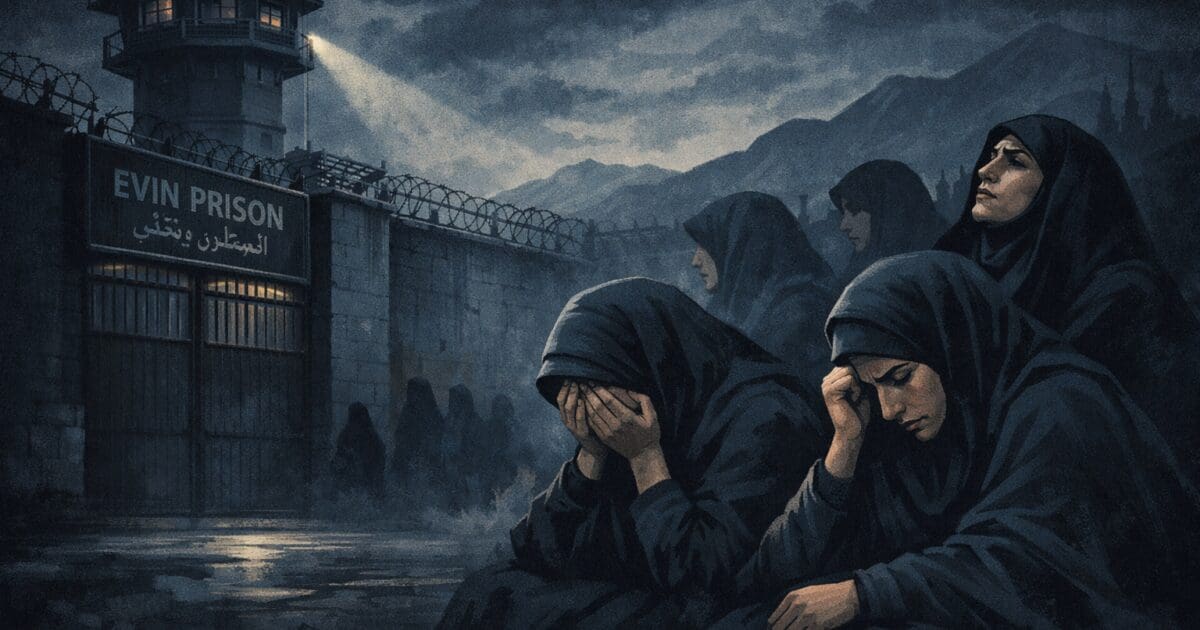
In a gut-wrenching live call to Manoto TV, Fatemeh — daughter of a top Iranian security official close to the feared Ahmad-Reza Radan — broke down, confessing her own torture by her father, the systematic rape of her imprisoned friends, the regime elite’s frantic escape plans with cash and fake passports, and her total moral destruction: “They killed me.”
A raw, tear-choked call aired live today on Manoto TV — the UK-based Persian-language channel that remains one of the few uncensored voices reaching inside Iran — a woman named Fatemeh shattered the facade of the Islamic Republic’s elite.
Identifying herself as the daughter of a high-ranking figure in Iran’s security apparatus, she spoke from the edge of despair. Her voice trembled as she described arrest, imprisonment, and the unbearable shame of being freed — not through justice or mercy, but solely because of her family name — while her friends languished in the same cells.
The Moment That Froze the Air: “Do You Know Mr. Radan?”
Midway through the call, Fatemeh posed a direct, piercing question to the host:
“Do you know Mr. Radan?”
The host confirmed he did — calling it an “infamous name.” Fatemeh then revealed that her father holds equivalent rank and reputation for cruelty. Though she never uttered her father’s name outright, the implication landed like a thunderclap: her family belongs to the regime’s innermost circle of repression.
She was almost certainly referring to Ahmad-Reza Radan, the current Commander of Iran’s Law Enforcement Force (FARAJA), personally appointed by Supreme Leader Ali Khamenei in January 2023.
Who Is Ahmad-Reza Radan?
Radan is one of the Islamic Republic’s most notorious enforcers. A veteran of the Revolutionary Guards (IRGC), he has spent decades overseeing:
- Brutal moral policing, especially enforcement of compulsory hijab laws
- Violent suppression of protests, including the 2009 Green Movement
- Widespread arbitrary arrests, beatings, and intimidation
- Systematic human rights abuses that earned him sanctions from the United States, European Union, United Kingdom, Canada, and others
His elevation to national police chief signaled the regime’s choice: escalation of coercion over any hint of reform, especially amid waves of unrest.
The Heart of Her Anguish: “My Friends Are in Jail”
Fatemeh returned again and again to a single, devastating refrain:
“My friends are in jail.”
She contrasted their suffering with her own release — a privilege she attributed not to innocence, but to her father’s feared name and influence. There was no relief in her words, only crushing shame. Her freedom felt stolen, unearned, tainted by the injustice it highlighted.
“They Killed Me” — A Cry of Moral Destruction
In the call’s most haunting moment, Fatemeh declared:
“They killed me.”
On the surface, the words confuse. In Persian emotional expression, however, this is the language of profound psychological annihilation — not literal death, but the death of self-respect, identity, and moral integrity.
She was conveying that:
- Her sense of self has been obliterated
- Her survival came at the price of her dignity
- She feels complicit in the very system tormenting others
- The privilege of her birthright has become a permanent sentence of guilt
This is moral injury in its purest form: when the fact of one’s own survival indicts the injustice all around.
A Darker Horror: “My friends are being raped in prison”
Fatemeh’s allegation aligns with decades of credible testimony from survivors and reports by international human rights organizations. Sexual violence in Iran’s prisons is not random — it is a deliberate weapon of punishment and ideological control.
Former detainees have described gang rapes by state agents, cloaked in religious Islamic justification: violating a woman before execution to “deny her paradise.” Whether sincere belief or cynical cruelty, the outcome remains the same — institutionalized rape as state policy.
A Crack in the Regime’s Armor
What made this call historic was not heroic defiance, but utter collapse.
Fatemeh offered no defense of her father.
No justification for the system.
No claim of personal innocence.
She sounded like someone who has finally seen that proximity to power in a tyrannical regime is not a shield — it is a form of imprisonment.
For a fleeting moment on live television, the Islamic Republic’s cruelty spoke in the broken voice of one of its own privileged children.
That kind of truth is almost impossible for the regime to censor, spin, or silence.
It lingers — a quiet, devastating indictment from within the walls.

Vlad Tepes
"Objects in history may be closer than they appear" – Eeyore for Vlad