America has a socialism problem, and it's bigger than most citizens realize.
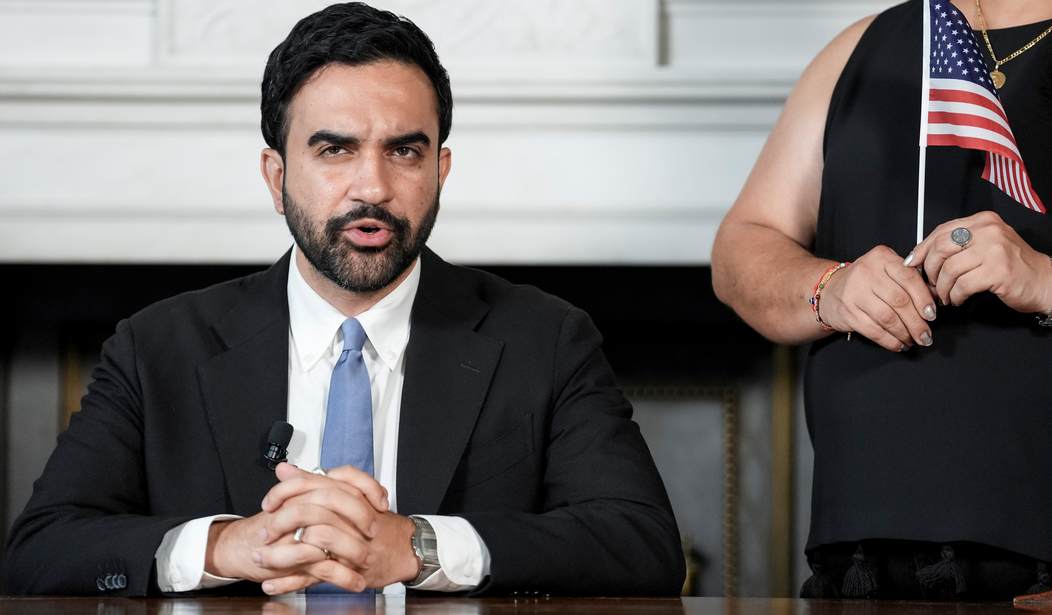
When candidates aligned with the Democratic Socialists of America win Democratic party primaries, or New York Mayor Zohran Mamdani hails "the warmth of collectivism," socialism's advance is obvious.
But it's making gains in other ways, too, especially in the transformation of America's workforce — which is coming to be chiefly employed in a sector one step removed from outright government control: healthcare.
In 1990, manufacturing was the top employment sector in most states, including New York and California.
Today, healthcare is the nation's biggest employer and is No. 1 in almost every individual state — New York, California, Texas, even Pennsylvania.
When Mary Talley Bowden, the founder of Americans for Health Freedom, posted a chart on X last weekend illustrating this revolution in American labor, it went viral, garnering more than 2.5 million views and eliciting hundreds of follow-up comments.
Many noted America hasn't changed from a nation of makers into a nation of caregivers:
Healthcare employment is growing less because we're adding doctors and nurses than because we're adding far more administrators.
The health workforce contains an army of bureaucrats whose jobs are based on keeping up with government regulation.
This is the 21st-century twist on socialism:
Instead of government owning industry outright, it forces industries to remodel themselves in the shape of Washington's own bureaucracies.
Healthcare isn't the only victim of this — compliance bureaucracies and human-resources departments set up to address mountains of federal, state and local regulations have taken root everywhere.
But healthcare is special: It's not only more heavily regulated than other fields, it's tied to the massive entitlement systems of Medicare and Medicaid, and a host of lesser programs as well.
The socialists who are an increasingly powerful bloc in the Democratic Party aren't content with the slow conversion of American healthcare into a quasi-public sector, however.
They're eager to expand Medicare into "Medicare for All," and many still dream of outright nationalization of medicine, on the model of Britain's National Health Service.
Whether the takeover occurs gradually through regulation or suddenly at a stroke, the consequences of merging of healthcare and government are monumental for social values as well the economy:
Progressives see gaining power over medicine as a shortcut to winning battles over abortion, euthanasia, biological sex and gender, and much else.
And the more Americans are made dependent on government — for their health or their jobs — the less free they are to vote against the people running the system.
The Trump administration's efforts to bring back manufacturing jobs are, among other things, an attempt to restore balance and freedom to our economy.
Tariffs that stop foreign producers from flooding the American market are just a first step, one that has to be coupled with creating a competitive environment for domestic firms.
A multiplicity of domestic producers keeps prices down — and gives workers a choice of employer, as companies must compete to offer the best wages and benefits.
Workers well-paid in the private sector, whose jobs are helped by protection but not merely a byproduct of government regulation — like the growing healthcare bureaucracy — are secure enough to exercise political choice, too.
Yet too many old-guard Republicans and libertarians are so repulsed by tariffs that they fail to see how much worse the alternative is.
"Healthcare pays more than manufacturing ($39.80 vs $36.70 per hour), and ... is harder to automate/offshore," Jeremy Horpedahl, a Cato Institute adjunct scholar, notes on X in response to the chart showing healthcare's workforce dominance and manufacturing's decline.
But that's like a libertarian saying he'd rather have people employed by the federal bureaucracy than the private sector, if government jobs pay more and are domestically based.
Manufacturing isn't free from regulation, but even when tariffs are involved, it's a less government-dependent sector than healthcare is.
Horpedahl himself, like many libertarian economists, is, ironically, a government employee — a professor at the University of Central Arkansas, a public institution.
Although libertarians and old-guard Republicans are sincere in their beliefs, they're not consistent, and it often seems like there's class-consciousness involved in their disdain for manufacturing.
America isn't facing a choice between perfect, government-free capitalism and anything else.
Instead, our choice is between a new form of socialism — in which government and private-sector bureaucracy blend together and employ increasing numbers of Americans — or a freer market safeguarded by populist and nationalist politics.
Yes, the new socialism is compatible with free trade and cheap foreign goods for just the reason Horpedahl cites: those goods don't compete with domestic bureaucracy.
But friends of freedom should make no mistake, tariffs are a small price for less socialism.
A country is only as free as its workforce. Manufacturing jobs made America great and free once before, and medical bureaucracy is no substitute.
Editor's Note: Do you enjoy PJ Media's conservative reporting that takes on the radical left and woke media? Support our work so that we can continue to bring you the truth.
Join PJ Media VIP and use promo code FIGHT to receive 60% off your membership.
Recommended
Trending on PJ Media Videos
Newsom Embraces Communists, Will Soon Regret It