Spielberg’s ‘Disclosure Day’ Falls Flat: A Christian Perspective on Hollywood’s Latest Alien Push
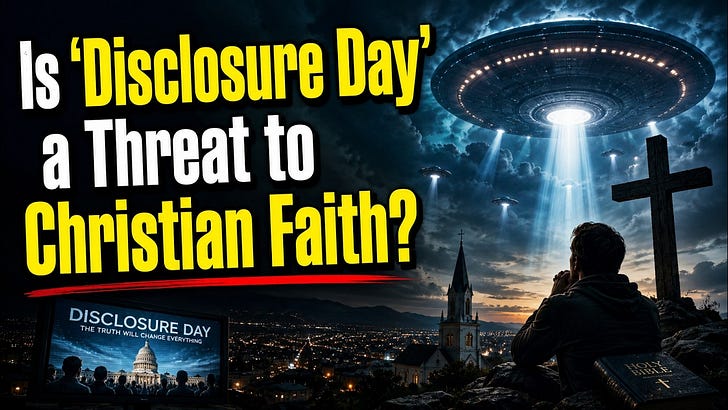 I went in to prepare for battle against high-level propaganda. I left chuckling about how ham-fisted the attempt really was.
Steven Spielberg has long been the master of blending science fiction with what feels eerily plausible. From Close Encounters of the Third Kind to E.T., his films have shaped how generations view the possibility of extraterrestrial life. With Disclosure Day, released amid growing Pentagon disclosures and cultural fascination with UFOs, many expected a cinematic event that could challenge faith at its core. Yet the result is something far less impressive—and perhaps more telling.
From a Christian worldview, the timing feels deliberate. As governments prepares more revelations about unidentified aerial phenomena, Hollywood rolls out another story normalizing the idea of visitors from beyond our world. The film centers on the lead up to forced disclosure, with characters grappling with what it means for humanity and, crucially, for belief in God.
Expectations ran high for technical brilliance and subtle subversion. Spielberg’s track record suggested a film that might elegantly weave anti-biblical themes into an entertaining package. Instead, audiences encounter something formulaic, predictable, and at times comically underwhelming. The plot follows familiar beats: good guys evading cartoonish antagonists, solving puzzles under pressure, all while the narrative telegraphs every twist. Even strong performances from leads like Emily Blunt cannot salvage the clunky execution that feels more like a throwback to 1980s adventure films than a modern blockbuster.
That mediocrity may be the most surprising element. A director known for elevating material delivers something that elicits awkward laughter rather than awe. One viewer described the climax as reminiscent of a rickroll, underscoring how the film fails to land its emotional or intellectual punches.
Yet the deeper concern lies not in the filmmaking but in the message. The story introduces a crisis of faith when undeniable evidence of aliens emerges. A character turns to a nun for guidance, asking how this reconciles with Scripture. The response offers reassurance: belief in God and aliens need not conflict. God made humanity supreme on Earth, the dialogue suggests, leaving room for other creations elsewhere in the vast cosmos.
This portrayal echoes positions taken by some theologians and even Vatican statements over the years, allowing for the possibility of extraterrestrial intelligence. C.S. Lewis explored similar ideas in his fiction. But it sidesteps the heart of biblical revelation.
Genesis records God’s deliberate creation of man in His image, granting dominion over the earth. The text offers no hint of parallel supreme beings on other worlds, nor does it frame humanity as merely one among many.
Such messaging risks softening resistance to what many discerning believers see as the ultimate deception. Scripture warns of strong delusion in the last days, where signs and wonders deceive even the elect if possible. The UFO phenomenon, long tied to occultic and interdimensional activity rather than distant planets, fits this pattern. Presenting “little gray men” as compatible with Christianity lowers guards precisely when vigilance is most needed.
The film’s failure to deliver either cinematic excellence or sophisticated propaganda may reveal Hollywood’s declining ability to captivate. Clichéd plots and on-the-nose dialogue replace the masterful subtlety of earlier works. Viewers expecting a threat to faith encounter instead a dull echo of familiar arguments that collapse under biblical scrutiny.
Yet the broader cultural effort continues. As disclosure narratives gain traction in official channels, entertainment serves as preparation. Christians must test everything, holding fast to what is good. The vastness of the universe testifies not to alien civilizations but to the glory of the Creator who spoke it into existence and centered His redemptive plan on this small planet and its inhabitants.
Ultimately, Disclosure Day serves as a reminder that not every cultural moment demands panic. Poor execution limits its reach. But the underlying push to normalize the extraterrestrial while diluting scriptural authority persists. Believers should approach such stories with eyes wide open, anchored in the unchanging Word that has withstood every challenge across millennia.
“And there shall be signs in the sun, and in the moon, and in the stars; and upon the earth distress of nations, with perplexity; the sea and the waves roaring.” — Luke 21:25
In an age of wonders and deceptions, that ancient warning calls us to discernment. Spielberg’s latest may not shake the foundations of faith for many, but it underscores the need to remain rooted in truth amid the noise.