WNBA Star Doubles Down On Biological Fairness In Sports
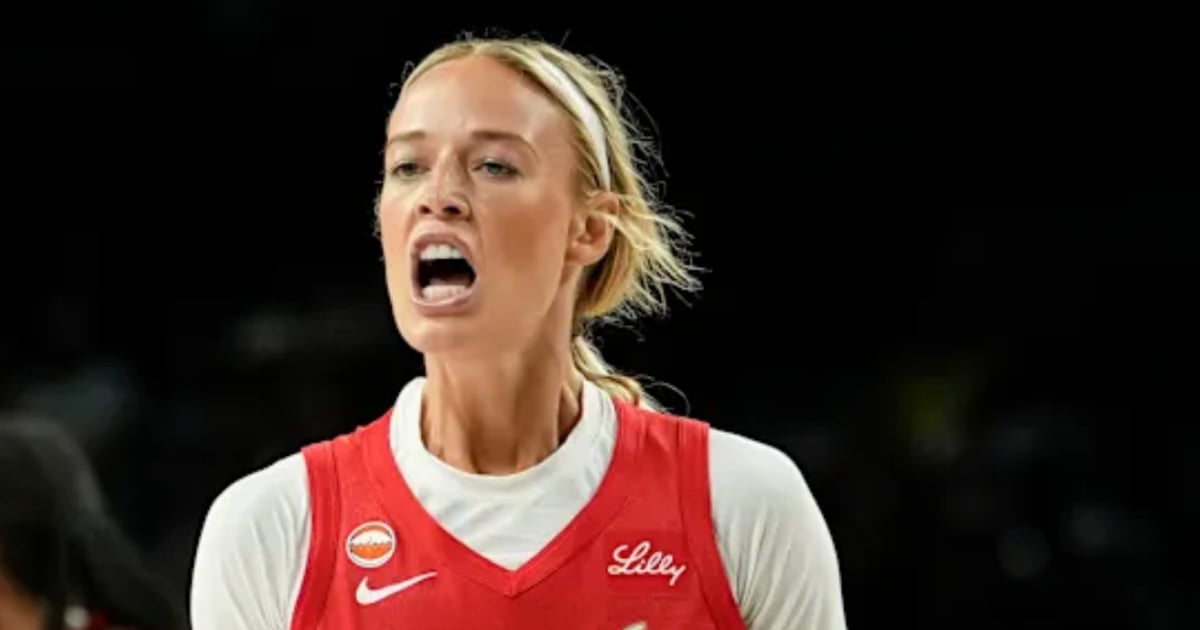
Indiana Fever guard Sophie Cunningham is standing by her belief that biological men should not compete in women’s sports, even as reporters continue pressing her to explain and defend the position. “I said what I said. I think it’s kind of common sense,” Cunningham said in a video posted to X. She made clear that […]
Indiana Fever guard Sophie Cunningham is standing by her belief that biological men should not compete in women’s sports, even as reporters continue pressing her to explain and defend the position.
“I said what I said. I think it’s kind of common sense,” Cunningham said in a video posted to X.
She made clear that she had no intention of walking the statement back.
“And I think I’ll always believe in that,” she continued. “I think it’s really important to protect children, and that’s little girls who are also involved in that category. I stand on what I said, and I will always believe that.”
When a reporter asked what form her advocacy might take, Cunningham did not offer a policy plan or suggest she was preparing to become a political activist. Instead, she said she planned to remain honest about what she believes.
“I do have beliefs. I do have morals, and I’ll always stand on those and be true to who I am,” she said. “People are going to take it how they want to take it.”
Her central argument was straightforward: women’s sports should remain protected for women and girls.
Advertisement
“When it comes just to protecting women in sports and young girls in sports, I feel very strongly about that,” Cunningham said. “I think that’s why you have Title IX.”
She was referring to the federal law that expanded educational and athletic opportunities for women and girls by prohibiting sex-based discrimination in schools receiving federal funding.
Another reporter asked how Cunningham would respond to transgender athletes who might feel hurt or rejected by her comments. She answered by separating her position on sports from any personal hostility toward transgender people.
“I extend love, and I don’t dislike anyone,” Cunningham said. “I think there’s room for absolutely everyone here, and I think there’s room to love everyone.”
She added that people often discover they have more in common when they speak to one another directly rather than arguing through social media or political labels.
“And I truly think when you get people in the same room, and you have conversations, you actually have a lot in common with a lot of people,” she said.
Cunningham then returned to the distinction she has repeatedly tried to make.
Advertisement
“I’m there to love, but I’m also there to love biological women,” she said. “And I think that there are rights that need to be protected. And like I said, I’m going to stand true to that.”
She also rejected claims that her position was motivated by animosity.
“I have never once said I hated the trans community,” Cunningham said.
In a separate interview with ESPN, she described the pressure athletes face to adopt a predictable set of opinions and present themselves in a way that pleases everyone.
“You see so many people change or try to fit into a box,” she said. “I don’t even know what that box is. It’s a fake box. Everyone wants to look the same. Everyone wants the same vibe. Screw that. I’m gonna be me.”
That refusal to fit neatly into a political category appears to be part of what has made her comments so difficult for some critics to accept. Cunningham does not describe herself as firmly aligned with either side of the political divide. Instead, she says she agrees with some arguments from both sides and rejects others.
“I’m very much in the middle,” she said. “I agree with things on both sides, disagree with things on both sides. And that’s all I’ve ever said about my political beliefs. But people love to assume.”
She also addressed the criticism she received after expressing her views.
“I got a lot of negative feedback about me hating trans,” Cunningham said. “And I’m like, ‘I never once said that.’”
For Cunningham, support and honesty are not opposites. She believes it is possible to treat transgender people with dignity while still drawing a firm line when it comes to female sports and locker rooms.
“I think that I am here to extend love,” she said. “But I also think with that love is truth, being honest. And I want to protect young girls in a locker room, or young girls in sport who shouldn’t have to go against biological men.”
Whatever critics may think of her position, Cunningham has been consistent. She is not claiming to have all the answers, and she is not presenting herself as the leader of a political movement. She is simply refusing to pretend she believes something she does not.
That may be why the questioning has continued. In a public environment where athletes are often expected to repeat carefully approved talking points, Cunningham has chosen a less polished route. She has said what she believes, explained why she believes it and accepted that some people will remain angry no matter how carefully she phrases it.
Her message has remained the same throughout: she does not hate transgender people, she believes everyone deserves respect, and she also believes women and girls are entitled to protected athletic spaces.
Whether that position satisfies her critics is another question. Cunningham does not appear particularly interested in changing her views simply to make the criticism stop.