Hunter Biden Reflects On His Dad’s Biggest Mistake
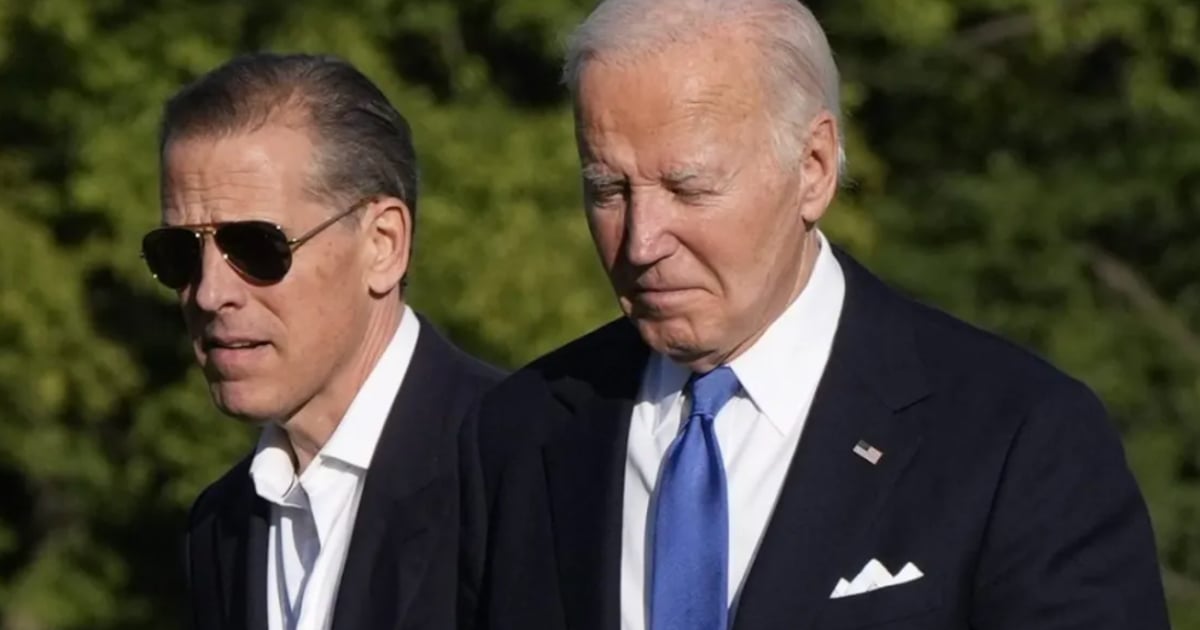
Joe Biden made no shortage of mistakes during his presidency and the campaign that put him in office. The chaotic withdrawal from Afghanistan is an obvious one. Choosing Kamala Harris as his running mate belongs somewhere on the list. So does deciding to run for another term despite mounting questions about his age and mental […]
Joe Biden made no shortage of mistakes during his presidency and the campaign that put him in office.
The chaotic withdrawal from Afghanistan is an obvious one. Choosing Kamala Harris as his running mate belongs somewhere on the list. So does deciding to run for another term despite mounting questions about his age and mental sharpness. There was the “Where’s Jackie?” moment, the attempted vaccine mandate and the bizarre “lying dog-faced pony soldier” remark.
The list is long. Somewhere below the biggest failures, but still worth mentioning, was Biden’s decision to nominate Merrick Garland as attorney general.
Garland was hardly an impressive choice. Under his leadership, the Department of Justice faced criticism over investigations involving traditional Catholics, parents who spoke out at school board meetings and other politically sensitive targets. Whether that reflected ideological bias, poor judgment or an agency with too much reach is open to debate.
Still, with the benefit of hindsight, Biden could have chosen someone worse. Hunter Biden apparently disagrees.
Hunter, who was prosecuted twice under Garland’s Justice Department, recently appeared on Jennifer Welch’s “I’ve Had It” podcast. During the episode, Welch complained that Garland’s DOJ failed to prosecute Donald Trump while choosing to prosecute Hunter.
That claim does not hold up particularly well.
Advertisement
Garland appointed special counsels in both matters. David Weiss oversaw the investigation of Hunter Biden, while Jack Smith handled the federal cases involving Trump. Both men were charged.
Hunter was convicted on federal gun charges and later pleaded guilty in his tax case. President Biden eventually pardoned him. Trump, meanwhile, was charged in multiple federal cases, including one related to the events of Jan. 6, 2021. Smith’s prosecutions ended after Trump won the 2024 election, consistent with the Justice Department’s longstanding position that a sitting president cannot be criminally prosecuted.
Hunter nevertheless called Garland’s leadership “the single greatest mistake” of his father’s administration.
He also acknowledged that responsibility ultimately rested with his father, since Biden selected Garland and then maintained a strict separation between the White House and Justice Department decision-making. Hunter described that separation as evidence that his father followed constitutional traditions and refused to interfere in criminal investigations.
That creates an obvious contradiction.
Hunter praised his father for staying out of Justice Department matters, then criticized Garland for failing to pursue Trump aggressively enough. At the same time, he complained that the department pursued him too aggressively. In other words, independence was admirable when it protected the appearance of presidential integrity, but unacceptable when it produced outcomes Hunter disliked.
He also spoke as though the Justice Department had ignored Jan. 6 entirely.
Advertisement
It did not.
Federal prosecutors charged nearly 1,600 people in connection with the Capitol riot by early January 2025. The department pursued everyone from violent offenders to defendants whose conduct involved entering the building, disrupting proceedings or participating in the broader chaos.
One can argue about whether some defendants were overcharged or whether particular sentences were excessive. What cannot seriously be argued is that Garland’s Justice Department refused to act.
Welch offered her own explanation for Garland’s supposed failures. She suggested that Barack Obama had selected Garland as a moderate Supreme Court nominee, that Biden later felt sorry for him after Republicans blocked his confirmation, and that Biden named him attorney general as a kind of consolation prize.
According to Welch, Garland then became too concerned with upsetting Republicans to pursue Trump properly.
Hunter agreed, calling the appointment a “massive mistake.”
Of all the failures of the Biden presidency, however, it is difficult to argue that Merrick Garland was the single greatest one. Afghanistan, inflation, the border crisis, Biden’s declining public appearances and the disastrous decision to seek another term would all seem to rank higher.
Hunter’s answer makes more sense when viewed as personal grievance rather than political analysis.
He was investigated, charged, convicted and ultimately rescued by a presidential pardon. Naturally, he resents the officials responsible for putting him in that position. But his frustration does not transform Garland into the defining failure of the Biden administration.
Hunter’s recent media appearances also suggest that he is trying to revise the public story of his father’s presidency and his own role in it. The problem is that each attempt seems to create new contradictions.
He presents himself as both unfairly targeted and fully accountable. He celebrates his father’s respect for Justice Department independence while criticizing the department for not producing the outcomes he preferred. He insists that Trump escaped scrutiny even though Trump faced federal prosecution from the same administration.
Hunter has also reportedly recorded an interview with Nick Fuentes, the far-right online provocateur, during a meeting in a Philadelphia hotel room. Reports suggest the encounter became heated and nearly turned physical. The interview is expected to be released later this month.
That appearance may prove even more disastrous than the Welch podcast.
Hunter Biden has repeatedly been offered opportunities to explain himself, rebuild his reputation and present a more sympathetic account of his life. Yet he continues to undermine that effort with selective memory, personal resentment and a remarkable inability to recognize his own contradictions.