CNN Segment On Firebombing Doesn’t Go As Expected
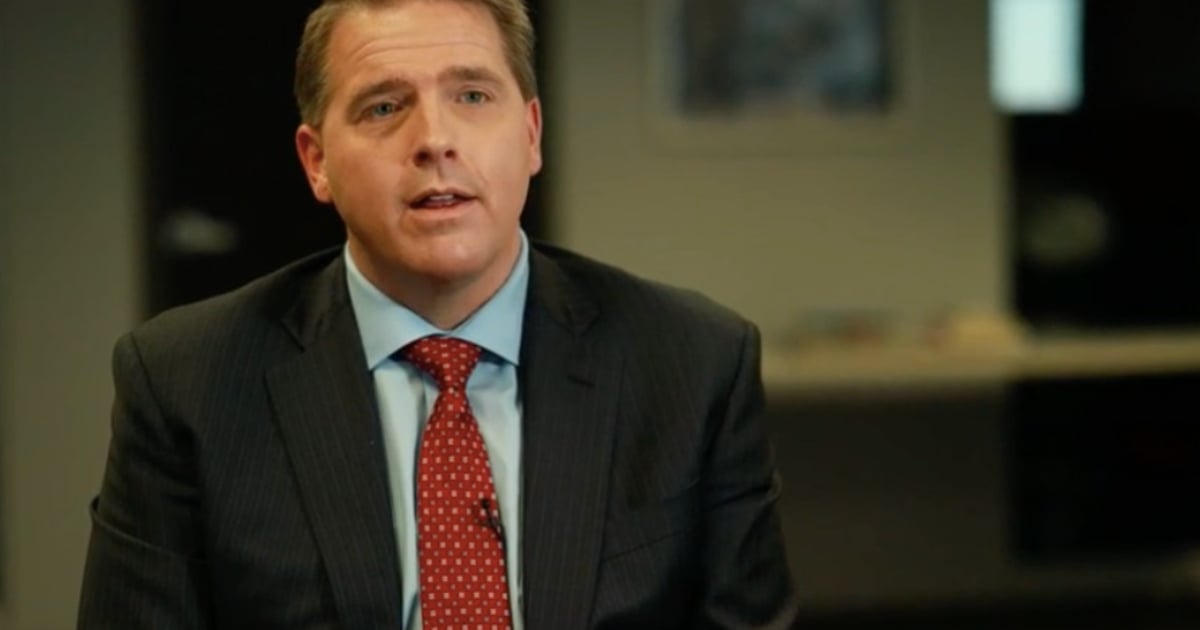
Monday’s alleged attack on a federal building in New York City led to a revealing exchange on CNN’s “NewsNight,” where host Sara Sidner appeared to suggest that Immigration and Customs Enforcement may have contributed to the hostility directed at the building. Police arrested 43-year-old Andrew Arrabaca of Poughkeepsie, New York, in connection with a gas […]
Monday’s alleged attack on a federal building in New York City led to a revealing exchange on CNN’s “NewsNight,” where host Sara Sidner appeared to suggest that Immigration and Customs Enforcement may have contributed to the hostility directed at the building.
Police arrested 43-year-old Andrew Arrabaca of Poughkeepsie, New York, in connection with a gas fire set near the entrance of a federal facility. The building houses several agencies, including ICE, the FBI, and U.S. Citizenship and Immigration Services.
According to The Center Square, Arrabaca allegedly told police that he was willing to injure or kill people if necessary. Authorities reportedly described him as an anti-government extremist.
Later that evening, Sidner asked conservative commentator Scott Jennings whether ICE’s conduct might help explain why people are becoming so angry.
“Is it possible that it’s the actions of ICE that has people talking like this, not just getting messaging from the Democrats, but seeing what’s happening in their communities?” she asked.
That question shifts the focus away from the person accused of setting the fire and toward the federal agency housed inside the building. Instead of treating the alleged attack as an act for which the suspect is responsible, Sidner’s framing invites viewers to consider whether ICE somehow brought the violence on itself.
That is difficult to describe as anything other than victim blaming.
Advertisement
Jennings immediately challenged the premise.
“So, if you believe that a government agency is doing something that you don’t like, and your choices are A, cast a vote, B, use your words, or C, go set off an incendiary device at the federal building in New York City, and you pick C, there’s no justification for this,” he said.
“There’s no rationalization of it, and that’s patently ridiculous if that’s what anybody’s going to argue tonight.”
His point was straightforward. Americans have many lawful ways to oppose government policy. They can vote, protest, organize, speak publicly, file lawsuits, contact elected officials, or support candidates who promise change. Setting a fire at a federal building is not another form of political participation. It is an alleged act of violence.
Now imagine a conservative host applying Sidner’s reasoning to Jan. 6, 2021. Suppose someone asked what the federal government had done to make supporters of President Donald Trump enter the Capitol. The reaction would be immediate. Any attempt to explain the riot by focusing on the government’s actions would likely be condemned as excusing political violence.
The same standard should apply here.
Opposition to ICE does not justify attacking a building used by federal employees. Anger over immigration enforcement does not remove responsibility from the person accused of starting the fire. Political frustration may help explain someone’s beliefs, but it does not excuse criminal conduct.
Advertisement
Sidner’s framing leaves her with two uncomfortable possibilities. Either she applies different standards depending on who commits political violence, or she consistently believes that government conduct can be used to shift responsibility away from violent actors.
Neither position is reassuring.
There are meaningful differences between political protests, riots, and targeted attacks, and those differences should not be ignored. Jan. 6 involved an effort by Trump supporters to disrupt the certification of the 2020 election. Violence occurred, and those responsible for criminal acts should be held accountable. In the New York incident, the alleged act involved setting a fire at the entrance of a federal building and reportedly expressing a willingness to injure or kill.
The broader issue is not complicated. People are responsible for the violence they choose to commit. Criticism of government agencies is legitimate. Peaceful protest is legitimate. Voting against elected officials is legitimate. Firebombing or setting fire to a federal facility is not.
Political leaders and media figures should be able to say that without qualification. Upholding the law should not depend on whether the attacker’s politics align with one side or the other.
When public figures search for ways to blame law enforcement for being attacked, they weaken the basic principle that political disputes must be handled through lawful means. A government cannot function if violence is treated as an understandable response whenever a group strongly dislikes a policy.
Federal agencies can and should be criticized when criticism is warranted. Their conduct should be investigated, debated, and challenged through the courts and the political process. But none of that changes the responsibility of someone who allegedly chooses violence.