Wong Turn: SCOTUS Denies Trump on Birthright Citizenship; UPDATE: Trump Salutes SCOTUS
Did anyone expect a different outcome in Donald Trump's attempt to redefine birthright citizenship by executive order? Really?
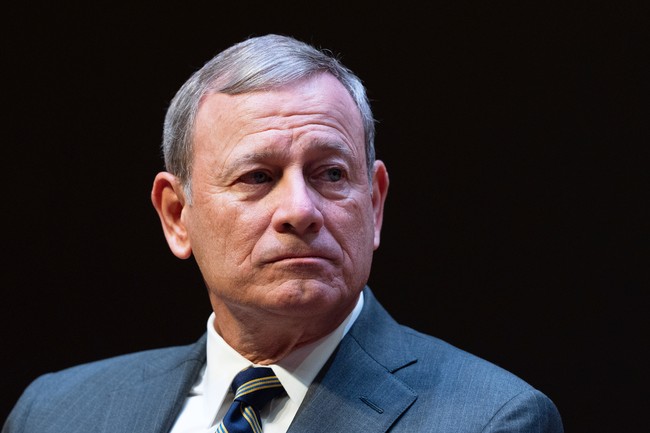
The Supreme Court finished its term with a 6-3 decision authored by Chief Justice John Roberts that essentially reaffirms the text of the Fourteenth Amendment as well as the court's 1898 decision in Wong Kim Ark. Roberts starts off by noting that both of these precedents were firmly based in English common law, and that the text of the Fourteenth Amendment nearly lifts that from history. Birth under the jurisdiction of the United States grants citizenship, Robert writes (from the summary):
Advertisement
Held: Children born in the United States to parents unlawfully or temporarily present are “subject to the jurisdiction” of the United States and are citizens at birth under the Fourteenth Amendment’s Citizenship Clause. Pp. 2–26.
(a) The Citizenship Clause must be understood in light of its historical context, from the English common law to the widespread condemnation of the Court’s decision in Dred Scott v. Sandford, 19 How. 393. Pp. 2–9.
(1) Under the English common law, children “born within the [sovereign’s] dominions” owed a natural “allegiance” to the sovereign who protected them at birth, 1 W. Blackstone, Commentaries on the Laws of England 354, 356 Blackstone), regardless of how “momentary and uncertain” their presence, Calvin’s Case, 7 Co. Rep. 1a, 6a, 77 Eng. Rep. 377, 384. Such children were therefore “natural-born subject[s].” Doe v. Jones, 4 T. R. 300, 308, 100 Eng. Rep. 1031, 1035. The same rule applied to children born of parents subject to expulsion. See, e.g., 4 Blackstone 166. The rule’s exceptions were narrow: children born in lands the sovereign did not control, children born in areas temporarily outside the sovereign’s control, and children of foreign ministers (by a fiction of extraterritoriality). Calvin’s Case, 7 Co. Rep., at 18a–18b, 77 Eng. Rep., at 399.
This common law of citizenship—known as jus soli, or right of the soil—crossed the Atlantic and prevailed in “each and all of the states” after American independence.
Furthermore, Roberts writes, the court settled this in Wong Kim Ark over essentially the same argument and concerns:
Advertisement
(1) For nearly two decades after the Amendment’s ratification, the Executive Branch viewed the Citizenship Clause as “simply an affirmance of the common law,” with the limited exception of “the children of foreign ministers,” and others “with rights of extraterritoriality.” Memorandum of Secretary of State H. Fish to Mr. Marsh (May 19, 1871), in 2 Digest of the International Law of the United States §183, p. 394. But the end of the Reconstruction era brought uncertainty. Around that time, the State Department began to deny citizenship to those with “dual or doubtful allegiance,” id., at 402, and several scholars proposed a new international-law based theory of the Citizenship Clause, focused on the parents’ status, not the child’s, F. Wharton, Conflict of Laws §10, p. 35. Only if a child’s parents were “domiciled in the United States” was the child “internationally subject to the jurisdiction of the United States,” as the Citizenship Clause (they said) required. Id., §12, at 41–42 (emphasis added). Acknowledging that the common law took a different view, these writers insisted that jus soli had not been made part of the Constitution. Pp. 13–14.
(2) In Wong Kim Ark, the Court held that the Fourteenth Amendment was “declaratory” of the “fundamental rule of citizenship by birth” that prevailed at common law, 169 U. S., at 688, excluding only those recognized as exempt “from the jurisdiction of this country”—the “children of ambassadors” and those born in the nations of Indian tribes, id., at 675, 681–683, 693. All others were citizens at birth, whether born to permanent residents or temporary visitors. See id., at 676, 687–688. The Court wrote that the words “ ‘subject to the jurisdiction thereof’ ” “must be presumed to have been understood . . . in the same sense” as Chief Justice Marshall used them in Schooner Exchange. Wong Kim Ark, 169 U. S., at 687. Under that understanding, aliens who traveled to the United States for “business or pleasure” received no “exemption from the jurisdiction of the country.” Id., at 686. To the contrary, they were subject to that jurisdiction for as long as they remained here—and any children born to them were American citizens under the Fourteenth Amendment. See id., at 682–688. Pp. 14–16. ...
Attempts to narrow Wong Kim Ark by noting that the Court’s opinion repeatedly referred to the domicile of Wong’s parents fail because the holding’s underlying reasoning cannot be squared with a domicile requirement; the Court exhaustively canvassed the text and history of the Citizenship Clause and at no point identified any evidence that the ratifiers thought themselves to be imposing a domicile limitation. Pp. 17–26.
Advertisement
Normally, it's best to focus on the formal opinion rather than the summary, but the combined opinion and commentaries run almost 200 pages in this decision. Justices Clarence Thomas and Samuel Alito wrote lengthy dissents, which Roberts attempts to summarize and rebut:
Neither theory works. As to the principal dissent, it is simply not true that domicile in a new nation severs one’s ties to the old one. See Story §540, at 451 (“Nations generally assert a claim to regulate the rights, duties, obligations, and acts of their own citizens, wherever they may be domiciled.”). If the test truly is whether a person is “amenable to the laws” of two governments at once, post, at 14 (THOMAS, J., dissenting), then it is a test that every child born to a foreign parent fails—a result that even the principal dissent cannot stomach. JUSTICE ALITO seems to recognize this bind, so he would create an ad hoc exception for those whose parents have “done everything within their power . . . to become Americans.” Post, at 27. He does not explain how that exception can be squared with his view of the text, which (to repeat) is that anyone “automatically” made a “national[]” of his “parents’ native country” was not entitled to citizenship under the Civil Rights Act.6 Post, at 37. In our estimation, the Act raises more questions than answers—and was replaced by the Fourteenth Amendment, which “better” expresses the views of the Reconstruction Congress anyway. Cong. Globe, 39th Cong., 1st Sess., at 2894 (Sen. Trumbull). This Court said as much in Wong Kim Ark. See 169 U. S., at 675, 688 (“any possible doubt” about the meaning of the Civil Rights Act “was removed” by the change to “the affirmative words” of the Citizenship Clause). ...
As we have already explained, the Court exhaustively canvassed the text and history of the Citizenship Clause. It traced an unbroken line from the English common law, into the founding and antebellum eras, and through the debates, to the Clause’s ratification. Yet at no point did the Court identify any evidence in the historical record that the ratifiers of the Fourteenth Amendment thought themselves to be imposing a domicile limitation.
Advertisement
When Trump issued EO 14160, many were rightly skeptical of the argument that a president could effect this kind of change through executive power alone. Had Congress created a statute defining birthright citizenship more narrowly, the change might have had more chance of passing muster. Roberts' constitutional argument in the controlling opinion all but precludes any approach other than passage and ratification of another amendment to redefine citizenship. In his partial dissent, Justice Brett Kavanaugh writes that the ruling should have confined itself to the existing statute:
Executive Order No. 14160 establishes new exceptions to birthright citizenship for children born to foreign citizens unlawfully or temporarily in the country. 90 Fed. Reg. 8449 (2025). The Court today holds that the Order violates the Fourteenth Amendment to the Constitution. I respectfully disagree with the Court’s constitutional holding. In my view, the Executive Order does not violate the Fourteenth Amendment. But the Order does contravene a federal statute, 8 U. S. C. §1401(a). Congress could—consistent with the Fourteenth Amendment—amend §1401(a) or otherwise enact new legislation establishing exceptions to birthright citizenship for children born to foreign citizens unlawfully or temporarily in the country. But Congress has not yet done so.
It seems unclear that an act of Congress would displace the Fourteenth Amendment's explicit language, not to mention the precedent in Wong Kim Ark. It does seem clear, though, that this precedent will make it even less likely that a revision to the statute Kavanaugh cites will clear judicial review. This exercise makes it very clear that the only way to address birthright citizenship is by amending the Constitution to provide more clarity on the requirements for American citizenship.
Advertisement
Perhaps Trump will push for that solution, either in Congress or in an Article V convention. However, the popular support for redefinition does not reach the kind of consensus that would pressure states into ratification, at least not yet. If Trump wants to make this change, he and his allies will have to do some very hard work to get it across the finish line, one way or the other.
Update: Trump clearly expected this outcome too. Rather than attack, Trump offered a salute to the Supreme Court for their overall work in this term:
The biggest and most consequential Decision issued by the Court, by far, is the Slaughter Case, which overturned the very famous Humphrey’s Executor Rule. This whole concept of “Power” has been fought over for nearly 100 years, going all the way back to Franklin Delanor Roosevelt, where a large slice of his Power was taken away. He fought to regain it, even wanting to “pack the Court,” but was unsuccessful in doing so. This Decision gives tremendous additional Power back to the Presidency, where it belongs. It is an Honor to be the sitting President who, after all these years, WON this very important, and hard fought, Case. We had other good Victories, too, and we also had the Birthright Citizenship loss, which we will work to correct in Congress, but the big SLAUGHTER, was SLAUGHTER. The Republican Party was treated very fairly by the United States Supreme Court. Thank you for your attention to this matter! President DONALD J. TRUMP
He's right about Slaughter, but Trump won a big victory on Title IX today as well. Taking this to Congress may not work for multiple reasons, but it's at least the right direction to proceed. And this gracious salute probably will catch many people by surprise.
Advertisement
Editor’s Note: We voted for mass deportations, not mass amnesty. Help us continue to fight back against those trying to go against the will of the American people.
Join HotAir VIP and use promo code FIGHT to receive 60% off your membership.