When Power Suits and Padded Shoulders Ruled
As a college freshman in the fall of 1994, I read Alex Kotlowitz’s There Are No Children Here in an introductory sociology course. For a week, I was over the moon. Here was a gripping story about good kids surviving a fearsome public-housing complex—a story that braided heartbreaking interviews, contemporary news, historical events, and policy discussions.
My enthusiasm, however, faded as I read further and attended more classes. This was actually a story, the book and my professor believed, about racism, classism, and conservative cruelty. I objected (silently, of course) to the progressive interpretation: You could just as easily see it as a warning about poor personal choices, government dependency, arrogant technocracy, and failed bureaucratic systems. But more frustrating was the seeming requirement of seeing the story through any political lens. Chapter after chapter, class after class, an endlessly interesting tale was being spoiled by forcing politics down its throat.
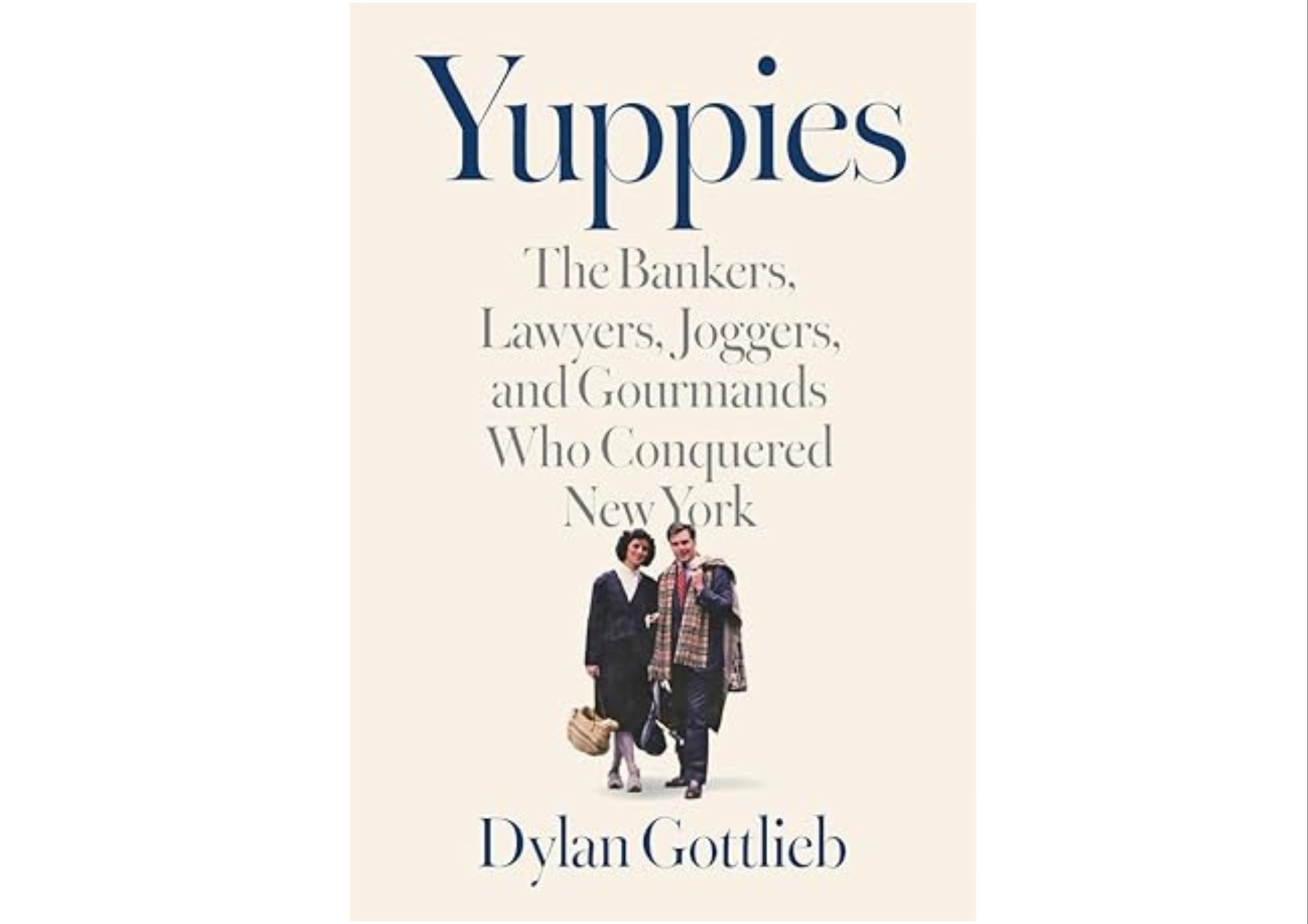
I was reminded of this while reading Dylan Gottlieb’s Yuppies: The Bankers, Lawyers, Joggers, and Gourmands Who Conquered New York. At its best, the book offers a fascinating, convincing explanation of how yuppyism came about, revealed itself in the workplace and society, and changed the Big Apple and the broader culture. Other times, it seemed like a great story was being shaped to accommodate the modern progressive’s fixation on capitalism, power, and identity.
In the 1980s and ’90s, "yuppy" went from benign description to epithet. In the early economic heyday of the Reagan era, "young urban professionals" were first portrayed as a nearly environmental phenomenon: swarms of ambitious, highly educated, well-dressed industry go-getters descending on Manhattan. As the booming economy slowed, financial crises mounted, and America soured on greed-is-good-ism, yuppies became an avatar for the decade’s decadence: They were selfish and libertine.
But in New York City, yuppies were far more than cultural symbol. As the city was losing hundreds of thousands of manufacturing jobs, it was also losing residents, tax revenue, and its mojo. These young transplants provided a jolt of energy and a mountain of resources. Along the way, they reshaped the city’s image.
Gottlieb, an assistant professor at Bentley University, makes a significant contribution through his explanation of how changes in financial and legal rules, education, culture, housing policies, and more made yuppies possible (if not inevitable). For example, he dismisses the notion that yuppies’ greed alone led them to New York banking. Instead, changes to financial regulations altered the industry and created new, high-paying jobs that probably would’ve attracted any generation’s talented graduates. He provides an accessible description of shelf registration, capital controls, commission rates, and index funds. He explains the importance of the growth of computer terminals and mergers and acquisitions. He shows the effects of changes in bankruptcy law and legal billing and advertising. Gottlieb effectively demonstrates that the yuppies’ rise was downstream of such forces.
Some of the book’s most interesting sections relate to elite colleges and graduate programs. For ages, products of the top schools found plum office jobs across America in an array of major corporations, e.g., Detroit’s automakers, Pittsburgh’s steel industry. But the ascendant finance industry suddenly descended on campuses, recruiting scads of students. The MBA quickly became the most popular graduate program, and record numbers of those graduates went into finance. Undergraduate programs were implicated as well. In 1985, nearly half of Yale grads applied to one bank. As Gottlieb notes, "In 1979, only one in thirty seniors at the University of Pennsylvania headed to Wall Street. By 1987, it was one in three."
The influx of yuppies fundamentally changed the Big Apple. Wall Street offices were suddenly chock full of dapper, eager 20-somethings, not just buttoned-up aging bankers with green eyeshades. Neighborhoods were altered: "During the 1980s, the percentage of Upper West Side residents with college degrees tripled and the share with professional or managerial jobs more than quadrupled." The dating market changed: "In 1970, fewer than one in ten women in New York between the ages of 25 and 29 were unmarried; by 1980, that number had surged to one in four."
Maybe most interestingly, the housing market changed dramatically as affluent arrivers wanted desirable housing immediately: "From 1975 to 1984, median rents in Manhattan doubled." This affected New Jersey commuter cities like Hoboken and the outer boroughs as well: I now understand yuppies as the transition phase between the 1950s image of Brooklyn as an ethnic enclave to today’s haven for the far left. I was also shocked to learn of the wave of evidently self-inflicted arsons in struggling areas that displaced low-income renters and enabled landlords to remake buildings for wealthier yuppies.
This tidal wave of young professionals with disposable income to burn and nouveau tastes also changed consumption. "In the 1980s, companies invented luxury products at every dollar level for the newly discovered yuppie market." Expensive coffees, beers, watches, and magazines resulted. Foods once seen as peasant-ish were now stylish. Swanky restaurants thrived, launching obscure chefs to fame and enabling niche publications like the Zagat guide to explode.
The second half of Yuppies moves into more social and political territory. The chapter on jogging and marathon-running casts this form of exercise as a cultural statement—it was wrapped up with Central Park crime, style, dating, and the Sony Walkman. The nearly 40-page chapter focused on Gary Hart’s political ambitions might’ve been scaled back, though it makes an interesting case that yuppies changed the constituencies, sensibilities, and fundraising of the Democratic Party.
Overall, I ended up more sympathetic to yuppies than Gottlieb. Sometimes they appear in these pages as an invasive species. But American cities are continuously remade by arriving strivers. Yuppies were just the 1980s model. For the most part, they didn’t come from money, and they were law-abiding and extraordinarily hardworking. They brought discipline and vim to a lethargic, sclerotic, crime-riddled city.
My bigger concern was that Yuppies had a political agenda that was unnecessary and sometimes detracted from the book’s otherwise level tone and persuasive arguments. The book’s introduction reads like a serious, accessible, apolitical modern history. But in its final paragraph it takes a hard-left turn. Here Gottlieb refers to "plutocrats," "extracted profits," "eroded the power and wages" of workers, "strategic bankruptcies," "stratified society," "handmaidens to an extreme and even dangerous stage of redevelopment," "remake society in their image," and "authors of a more unequal chapter in American life." It is so jarring that I wondered if the paragraph had been shoehorned into a sober-minded doctoral dissertation at the behest of an agent wanting to appeal to progressive activists.
This pattern unfortunately repeats. Long, welcome stretches of temperate, fascinating history and analysis are followed by grafted-on asides: "corporate raiders," "exploitation," "architects of financialization of American life," "ruthless profit-driven orientation." Yuppies didn’t need to begin a chapter with a quote from The Communist Manifesto. It didn’t need to editorialize that today’s current conservative populism is fueled by "racial grievances."
Even jogging is seen through the lens of power: "With each footfall, yuppies laid claim to the streets, joining a wider political and cultural debate over who really ‘owned’ New York and its shared spaces." Indeed, some sentences only make sense if the reader already believes in critical theory: "In running as in life, yuppies believed that achievement was the product of hard work, goal-setting, bodily discipline, and delayed gratification."
I recommend Yuppies to anyone who wants to learn more about the 1980s or New York’s rebound from its 1970s decay. It is, however, an example of the consequences of academia’s sharp left turn: Whether intentional or not, it often reads as oblivious or hostile to non-progressive ways of seeing the world. In that way, Yuppies aligns with the Mayor Zohran Mamdani era of New York City—and depending on your perspective, that could be seen as a compliment or critique.
Much like the two-sided nature of the term "yuppy."
Yuppies: The Bankers, Lawyers, Joggers, and Gourmands Who Conquered New York
by Dylan Gottlieb
Harvard University Press, 330 pp., $32
Andy Smarick is a senior fellow at the Manhattan Institute and writes weekly columns on his Substack Governing Right.