REVIEW: 'Blue Velvet'
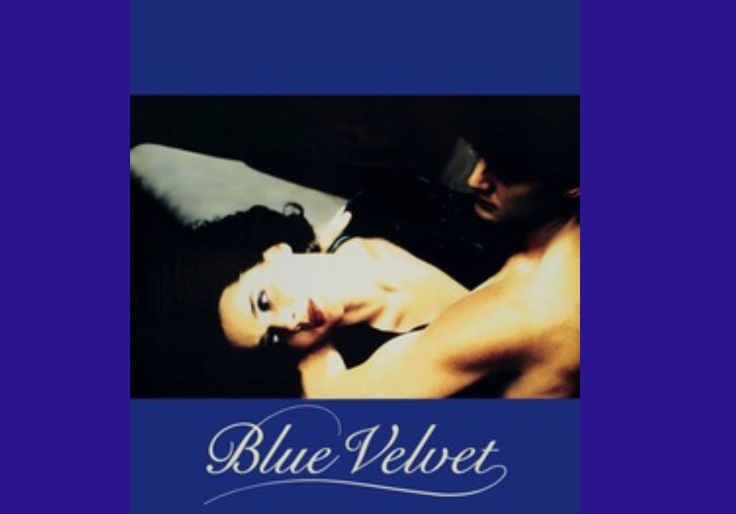
"I don't know if you're a detective or a pervert," says Sandy Williams, an innocent blonde high schooler, to Jeffrey Beaumont, her handsome suitor and unlikely partner in crime, at the outset of the small-town mystery Blue Velvet (1986). Of the theatergoers who paid to watch it, director David Lynch, the maverick behind Eraserhead (1977) and Dune (1984), wondered the same.
As riveting and revolting as the day it was released, Blue Velvet chronicles the moral odyssey of Jeffrey, played by Kyle MacLachlan in his breakout role. The soft-spoken college student returns to his native Lumberton, North Carolina, a fictional setting based on Lynch's hometown of Spokane, after Jeffrey's father, proprietor of a classically American hardware store, suffers a stroke.
Walking in a field, Jeffrey discovers a severed human ear. He takes the appendage to an upright detective he knows and finds himself enchanted with the detective's daughter, Sandy, played by Laura Dern in her breakout role. At this early stage, the two share an earnestness—Jeffrey delights Sandy with his corny "chicken walk," a crouched strut performed with flapping elbows—that had all but vanished from teenage life by the mid-1980s.
Indeed, in Lynch's vision, Lumberton straddles the harsh realities of modernity and an earlier, more innocent time. Sandy dresses like a pre-Beatles bobbysoxer; Jeffrey drives a vintage convertible; the town bears little sign of currency, with no video arcades or Reagan posters in sight; and the soundtrack repeatedly reverts to Bobby Vinton's version of the title song, which hit #1 in 1963, and to Roy Orbison's "In Dreams," which reached #7 the same year. These time-bending features only deepen the dreamlike quality to Lynch's storytelling.
Thirsty for adventure, Jeffrey pumps Sandy for information from her father about the severed ear and learns it has something to do with a beautiful but troubled lounge singer, played by Isabella Rosselini in her breakout role, named Dorothy Vallens. The two teens scheme for Jeffrey to visit her apartment, painted in reddish hues suggestive of hell, under a daytime pretext. He snatches a key and returns as a nighttime snooper—and that's when things get really weird.
Dorothy catches Jeffrey, pulls a knife on him—and seduces him. Before things can progress, a knock sounds. Rushed into a closet in his boxers, Jeffrey peeps from inside the slatted doors in amazement as Dorothy receives a manic, violent visitor: Frank Booth, played by Dennis Hopper, the veteran of '60s cinema whose career, revitalized by the controversy that Blue Velvet aroused, also enjoyed a breakout role. (Casting is one of this film's many strengths.)
Dressed in leather, sniffing madly from a handheld gas mask—in Lynch's conception it administered doses of helium, but Hopper, more knowledgeable about drugs, changed it to nitrous oxide—Frank beats and rapes Dorothy amid endearments such as "Don't you f—ing look at me!" and "Baby wants to F—!"
Jeffrey learns Frank is keeping Dorothy's husband and toddler son as hostages and blackmailing her into sex acts. When Frank leaves, Jeffrey helps the stricken woman from the floor, only for her to resume her seduction. Jeffrey succumbs—even to Dorothy's whispered demand for him to hit her during sex.
Meantime, Jeffrey's relationship with Sandy intensifies. While she professes to love her jock boyfriend, Sandy is unmistakably falling for Jeffrey, finding his adventurousness at once exciting and disturbing. Jeffrey's attraction to darkness is counterbalanced by his longing for the goodness and purity Sandy embodies, epitomized in her rapturous account of a dream she had after she met Jeffrey:
In the dream, there was our world, and the world was dark because there weren't any robins, and the robins represented love. … And all of a sudden thousands of robins were set free, and they flew down and brought this blinding light of love. And it seemed like that love would be the only thing that would make any difference. … There is trouble till the robins come.
"You're a neat girl," Jeffrey replies.
Before long, he is staking out Frank's haunts, snapping surveillance photos showing a Lumberton detective, a colleague of Sandy's father, is in cahoots with Frank and his gang. But Jeffrey's immersion in Lumberton's nocturnal underworld nearly kills him when Frank and his stooges catch the college student emerging from Dorothy's apartment one night. They take him to the bohemian home of Ben, a drug-dealing homosexual—played by Dean Stockwell in, yes, his breakout role—who uses a work light as his pretend-microphone to perform a lip-synched performance of "In Dreams," a defining moment improvised during shooting.
Never happy for long, Frank conscripts Jeffrey for a "joy ride" to a deserted lumber mill. There, as Dorothy screams in anguish, and as one of Ben's drug-addled floozies clambers atop a car to sway unevenly to "In Dreams," now blasting from the radio, Frank and his goons beat Jeffrey unconscious and abandon him.
Like the scene with Ben, in which Frank repeatedly praises the gay man's appearance—"You are so f—in' suave," he gushes as Ben blushes—Frank's interactions with Jeffrey also betray the villain's suppressed homosexuality. Before beating Jeffrey, arms constrained by the gang, Frank extols how "pretty" he is. Then Frank applies Dorothy's lipstick to himself and "kisses Jeffrey all over the mouth," as the screenplay records.
"I'll f— anything that moves!" Frank exults.
However repugnant the characters and action, Lynch's penchant for dark comedy remains. The movie's most famous line arises when Frank asks Jeffrey his favorite beer: "Heineken? F— THAT SH—. PABST BLUE RIBBON!!!!"
At last, Jeffrey takes the evidence he has gathered to Detective Williams. Taking Sandy on a date, he narrowly escapes a thumping from her jilted boyfriend, a football star, when Dorothy Vallens turns up unexpectedly, naked, bruised, and disoriented. Here Sandy learns that Jeffrey's foray into amateur investigation encompassed a sexual relationship with the tormented lounge singer. "He put his disease in me!" Dorothy bellows as Sandy breaks into tears.
The climax that night unfolds in Dorothy's apartment, where Jeffrey discovers the crooked detective and Dorothy's husband, Don, have both been killed. Don is missing an ear. Communicating with Detective Williams over police radios he knows Frank is also using, Jeffrey lures the gangster to the scene and, having swiped a pistol from the dead detective's hip, shoots Frank to death from the same closet in which he first glimpsed Frank's sickness.
The closing scene depicts Jeffrey, his father fully recovered, returned to a forgiving Sandy, as Dorothy is reunited with her toddler son. The young lovers agree they live in a "strange world" when they gaze upon a robin that has alighted on their windowsill, a wriggling insect trapped in its beak.
Reviews were, uh, mixed.
"This movie has caused a firestorm around the country," declared the era's preeminent film critic, Roger Ebert, "with some advance reviews calling it a masterpiece and others calling it sick and depraved, and still others calling it a sick, depraved masterpiece."
Acknowledging Lynch's talent—that Blue Velvet was "well made" and featured "scenes that have a lot of power"—Ebert nonetheless recoiled from the "cruelly unfair" treatment of Rossellini and found irreconcilable the juxtaposition of sadism and comedy: "Blue Velvet is a movie that really challenges you to think about your reactions to it. … But the more I thought about it, the less I liked it."
Gene Siskel, Ebert's TV partner, disagreed, rejecting first the idea that audiences should feel sorry for Rossellini; after all, Janet Leigh had survived the shower scene in Psycho (1960) just fine. "Eyes open and oh, my God, we're really getting in over our heads," Siskel summarized his reaction, "and that's an experience which is challenging, shocking, but mesmerizing."
Ben Brantley, who would go on to spend more than two decades as the New York Times's chief theater critic, remembered attending the film's opening as a teenager in midtown Manhattan, then returning for a second viewing the next day. As credits rolled the first day, Brantley "heard a noise I had never before experienced at the movies: the sound of people hissing." The second showing brought: applause.
One theatergoer "aghast" at what he beheld, seated alone in a small cinema in Malibu, was Roy Orbison, bowled over by the use of his music in such sinister settings. "I was shocked, almost mortified, because they were talking about the candy-colored clown in relation to doing a dope deal," the legendary singer told the British music journalist Nick Kent. "Then Dean Stockwell did that weird miming thing. … Then they were beating up that young kid! I thought, 'What in the world?'" "In Dreams," after all, was one of Orbison's greatest hits and a song of especial importance to him.
A subsequent viewing, on VHS, turned Orbison around. "I really got to appreciate not only what David Lynch gave to the song, and what the song in turn gave to the film, but how innovative the movie was, how it really achieved this otherworldy quality that added a whole new dimension to 'In Dreams,'" he told Kent. "I find it hard to verbalize why, but Blue Velvet really succeeded in making my music contemporary again." An invitation for Orbison to join the Traveling Wilburys, extended by George Harrison, followed soon thereafter.
The ambivalence of the initial critical reception to Blue Velvet slowly gave way to universal acclaim. The BBC later ranked it the 60th greatest American film of all time, nestled between Stanley Kubrick's Eyes Wide Shut (1999) and Miloš Forman's One Flew Over the Cuckoo's Nest (1975). The American Film Institute, in 2008, proclaimed the movie the eighth best mystery ever made, in a category where Alfred Hitchcock owned nearly half the entries, along with placement on AFI's lists of "cinema's greatest thrills" and "greatest villains." Google searches today produce an AI summary that describes Blue Velvet as a "neo-noir classic" and "an American masterpiece."
So what did it mean? What were we to glean from the sordid entanglement of Jeffrey Beaumont, Dorothy Vallens, Frank Booth, and Sandy Williams?
Lynch, who died in 2025, specialized, like few other auteurs, in conjuring the inscrutable. Viewed at the remove of four decades, Blue Velvet seems almost a dry run for Twin Peaks, Lynch's acclaimed 1990s TV series, which also trafficked in time-bending dream-to-nightmare cinematography and pacing. As well, the score for both projects, composed by the brilliant Angelo Badalamenti, mixed noirish jazz, retro bass-heavy pop, and dark orchestration reminiscent of Bernard Herrmann's Hitchcock-era works.
Like all artistic triumphs, Blue Velvet reminds us of the duality of human nature. No one is spared, even the honorable Williamses: Dern's Sandy, the film's exemplar of moral purity, sneaks around her boyfriend, whom she says she loves, to join Jeffrey's odyssey, while her by-the-book father exhibits only grim rectitude, nothing like tenderness, love, or understanding as a husband or father.
With so much of the action unfolding in voyeuristic scenes, many have suggested that the film presents a commentary on the cinematic experience. Ian Cattanach, the Gen Y critic whose "Write Conscious" podcast dives deep into the Lynch oeuvre, notes that "one of the meta alternative theories" of the film's meaning, which he rejects, posits that "Dorothy really doesn't have a kid, that [she] and Frank are just role-playing … that she likes to play the kidnapped victim and she wants to move Jeffrey into their dream. … So [Frank] and Dorothy have to play out these weird dreaming role-plays as a means of [a] kind of individuation."
In truth, Lynch aimed beyond the individualized for a bifurcated portrait of America itself. "Blue Velvet is a very American movie," he told Film Comment, in an interview conducted at a Bob's Big Boy in Los Angeles in June 1986, "a trip beneath the surface of a small American town."
Some published sources report that Lynch first began shopping around the screenplay for Blue Velvet in the late 1970s, in which case it could be viewed as an exclamation mark on the moral turpitude of Vietnam and Watergate. Ultimately, however, the film was shot and released more than a decade after Richard Nixon's resignation and the fall of Saigon. With its sarcastic evocation of white picket fences and roses in bloom, it seems more appropriate to regard Blue Velvet as a response to the reelection of Ronald Reagan, which at once heralded and cemented the country's safe emergence from the post-Watergate era.
Lynch's point, then, seems to have been that even when it is morning in America, it follows a night that will, inescapably, return.
Editor's note: This retrospective review is one in a series celebrating 1986, arguably the greatest year in movies—inarguably if you're Gen X.
James Rosen is chief Washington correspondent for Newsmax and the Gen X author, most recently, of Scalia: Supreme Court Years, 1986-2001.