Keir Starmer Prepares to Step Down Monday
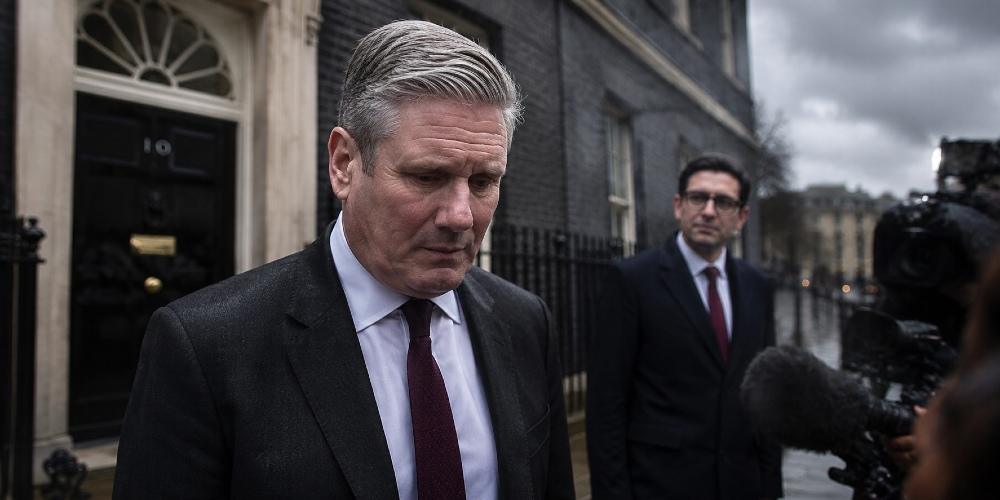
Keir Starmer spent the better part of two years lecturing Britain about responsibility, about institutions, about the solemn duty of leaders to put country before self. He is now reportedly about to discover how that sermon sounds when it is preached back at him.
According to the Observer and confirmed in spirit by nearly every masthead in Fleet Street, the prime minister is expected to announce on Monday that he is stepping down and setting out a timetable for his exit from Downing Street.
As of this writing there is no formal statement from No. 10, and Starmer himself spent the weekend at Chequers with his wife rather than at a podium. But the direction of travel is no longer in doubt. Newsweek reports he has concluded his position is untenable after consulting cabinet ministers, advisers, party donors, and union bosses, the full institutional apparatus that keeps a Labour leader upright. When that apparatus stops holding you up, you fall.
The man who said he would never goThis is the same Starmer who, only days ago, planted his flag and dared the party to come take it. He had a mandate until 2029, he insisted. He would not walk away. Confronted with the prospect of a leadership contest, he was emphatic, telling reporters he would run and stand and refusing to entertain the idea of quitting. That defiance has the shelf life of a fortnight in modern British politics, which is roughly how long it lasted.
What broke him was not a vote of no confidence or a backbench coup in the classical sense. It was an electoral fact he could not argue with. On Thursday, Greater Manchester Mayor Andy Burnham won the Makerfield by-election with 54.8 percent of the vote, clearing the one obstacle that stood between him and a seat in the Commons.
“Everyone knows that politics isn’t working,” Burnham told supporters in his victory speech. “Everyone can feel that the country isn’t where it should be. Tonight could, just could, be the turning point.”
Burnham now has the seat, the popularity, and the demonstrated ability to beat Reform UK that no other Labour figure can claim. The holdouts who had been propping Starmer up read the result and quietly went home.
A premiership undone by its own promisesThe collapse did not happen overnight, whatever the breathless framing of the past 48 hours suggests. It accumulated. More than 80 Labour MPs publicly called for Starmer to go after the May local elections, in which the party shed well over a thousand council seats while Nigel Farage’s Reform UK gained more than 1,450.
The defence-spending revolt cost him his defence secretary and two more ministers in a single day in June. The Mandelson affair, in which Starmer appointed a friend of Jeffrey Epstein as ambassador to Washington and then fired him, drained whatever was left of his moral authority. Each wound was survivable. The sum was not.
There is a grim comedy in the reporting that Starmer, facing the end, has turned his attention to securing his “legacy.” A senior government figure told the Telegraph the prime minister has recognized the game is up and is now thinking about how history will treat him.
The honest answer is that a man who governs by polling and reverses himself on command does not leave a legacy so much as a weather pattern. The most cutting verdict came from inside his own party, an adviser who reportedly concluded that Starmer was neither political nor a leader, the two qualifications the job actually requires.
He was warned, repeatedly, by people who wanted him to succeed. He had himself urged resignation on others whose positions became untenable, never imagining the same standard would be turned on him.
Be not deceived; God is not mocked: for whatsoever a man soweth, that shall he also reap. Starmer sowed a politics of managerial evasion and borrowed conviction, and he is about to harvest the result in front of the whole country.
Britain is now on course for its seventh prime minister in ten years, an instability the political class once blamed entirely on the Conservatives and their habit of swapping leaders mid-term. The vow never to repeat that habit may turn out to be the last promise Starmer breaks before Monday.
Whether Burnham or anyone else can arrest the decline is a question for next week. For now, the only thing left to do is watch the clock run down, which it will, all the way to Monday.