Does Your Doctor Have A Real Medical Degree?
 Introduction
Have you ever even thought about whether your physician has a real medical degree? We all just assume that our doctors possess the necessary education, training, and credentials to practice medicine, but this isn’t the case with everyone who proclaims to be a physician.
Medical degree fraud occurs when an individual falsely claims to hold a medical degree. These individuals forge credentials, purchase fraudulent diplomas, or otherwise misrepresent their professional qualifications in order to obtain employment or medical licensure. Certainly, there are millions of legitimate healthcare professionals worldwide, and cases of medical degree fraud are relatively rare, but the statistics are still stunning.
I recently ran across a social media post that exposed a fake degree ring. The authorities seized 100,000 fraudulent certificates…for medicine, nursing and other healthcare related jobs. Imagine one of these 100,000 treating your relatives, or you. Even more stunning is that these authorities estimate they only seized 10 percent of the fraudulent certificates. That means 900,000 fake degrees are still out there—just from this one degree ring. Just think—900,000 degrees attached to real people inside real hospitals treating real patients. The only problem is that these real people are not real doctors.
The H-1B Visa ProblemThis article goes on to cite an officer in a US consulate stating that of the 51,000 H-1B applications she processed in Chennai during her career, 80 to 90 percent of the applicants used fraudulent documentation.
The fake degree program has a touchpoint with the US work visa program known as H-1B that allows employers to hire foreign professionals in specialty occupations requiring specialized knowledge. Medicine is certainly one of those areas. The US employer sponsors the worker, who comes to the US for a period of 3 to 6 years, after which the visa holders can generally pursue and gain permanent residency (e.g. a green card). Most new H-1B visas are subject to an annual lottery because demand exceeds the available number. Yes, foreigners with medical training are sought after, but what if their degrees are fake?
The MBU ScandalIn 2020, Manav Bharti University (MBU) in India was exposed for issuing nearly 42,000 degrees since the universities founding in 2009. The only problem was that only 5,455 were determined to be genuine, leaving about 36,0000 fraudulent degrees. Incredibly, this fake degree mill operated for over a decade, and during that time, fake degrees were sold across 17 Indian states. Degrees were issued without normal academic requirements being completed, and many blank degree certificates were found during the 2020 raid. The university raked in enormous proceeds from the scheme—to the tune of $45 million. Incredibly, the scheme ran for a decade in the era of modern digital records, medical accreditations and government oversight. And it worked. Well. It is one of the largest university credential fraud cases ever uncovered. For every legitimate degree issued, seven were fraudulent. Let that sink in a bit.
Not Just A Modern ProblemBut if you think medical degree fraud is a fairly modern phenomenon, think again. The 19th century equivalent to the MBU scandal was an operation run by John Buchanan in Philadelphia.
Philadelphia’s Eclectic Medical College of Pennsylvania was a legitimate but struggling medical school. Buchanan, originally from Scotland, was a physician who became associated with the school in the 1860s. His contemporaries note his skill as a promoter and salesman. Over time, Buchanan gained control of the school, and he soon began to issue medical degrees to people who had completed little to no formal training. The school sold medical degrees to applicants in both the US and abroad, and the operation soon became the largest medical diploma mill in America at the time.
Like MBU, Buchanan had a significant volume of degrees being produced. By the 1870s, various organizations including the newspapers began investigating Buchanan’s activities. The investigations even uncovered the sale of degrees through advertisements and correspondence, and diplomas were reportedly sold to people in Canada, Britain, Germany, and other countries.
Authorities struggled for years to stop the operation, but Buchanan had made astute political connections that helped shield him from consequences. Finally, in 1880, an undercover sting operation allowed enough evidence gathering to prosecute Buchanan. Amazingly, when investigators closed in on him, Buchanan staged an elaborate fake suicide and fled to Canada, but was eventually arrested, convicted, and imprisoned in Philadelphia’s Eastern State Penitentiary.
For a deeper dive into Buchanan’s history, I recommend the book Diploma Mill: The Rise and Fall of Dr. John Buchanan and the Eclectic Medical College of Pennsylvania by David Alan Johnson, which reconstructs the entire scandal from archival records.
Post-Civil War WeaknessBuchanan’s scheme worked well because of weak medical regulation after the Civil War. Many states had repealed licensing laws, and the government provided little oversight of medical schools. In many places, anyone could call themselves a physician without extensive scrutiny.
Medical schools cropped up everywhere, but standards widely varied, with some schools providing serious training and others being basically diploma mills. The lack of uniform standards made it easier for fraudulent schools and practitioners to operate. Physician demand also fueled the fire. There was a tremendous shortage of physicians after the war, and as the country further expanded westward, healthcare providers were desperately needed. Naturally, this situation created opportunities for unqualified individuals to present themselves as doctors.
Around 1900, medical societies and state governments began cracking down on this issue. States created medical boards, strengthened licensing requirements, and increased scrutiny of medical schools. In 1910, the medical cabal began forming and issued the Flexner Report, commissioned by the Carnegie Foundation and written by John D. Rockefeller’s personal lawyer. The report exposed poor-quality medical schools and helped drive accreditation standards. Medical education became far more regulated, but the Flexner report is also widely regarded as the driver that turned medical schools into the big pharma machines they are today.
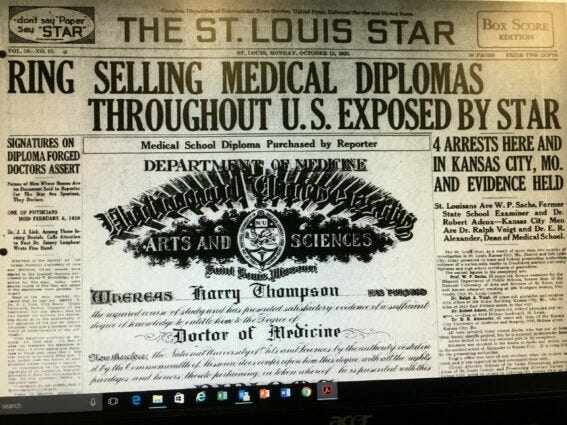
Diploma mills never went away. Here is one example of an investigative series written by The St. Louis Star to expose the medical diploma mill activities at Missouri’s Kansas City College of Medicine and Surgery and at the St. Louis College of Physicians and Surgeons. This mill served as a fake licensure pipeline in several states, and exposed the four doctors that belonged to a loose national network of medical diploma mills across America.
The article, written in 1923, triggered massive national interest and was a major embarrassment to medical education and licensing in the US. As a result, a Connecticut medical licensing board was dissolved, the Missouri board was reorganized, and the Arkansas medical board fought to stay alive.
Modern-Day ExamplesIn 2009, Wired writer David Wolman chronicled the efforts of Illinois physics professor George Gollin who single-handedly toppled a $7 million fake-degree empire that granted nearly 10,000 fake degrees used by everyone from schoolteachers to Bush White House staffers.
Israeli authorities investigated several Armenian universities alleged to have awarded dozens of doctors and pharmacists credentials without completing required studies. Authorities flagged degrees presented to the Israeli Health Ministry.
The Pakistan Axact scandal is often touted as the modern-day equivalent to Buchanan’s 19th century scheme. In 2015, investigators uncovered one of the largest diploma-mill operations in history run by Pakistan-based company Axact. The firm publicly presented itself as an information technology firm but behind the scenes, it was accused of operating hundreds of fake online universities, colleges, high schools, and accreditation agencies.
They created convincing educational websites with legitimate-sounding names. Sales representatives posed as university officials. Prospective students were told they could earn bachelor’s, master’s, doctoral, and even professional degrees through online study. In reality, there was little or no coursework. Customers paid fees and received diplomas. After selling a degree, operators often persuaded customers to purchase additional certifications and accreditations.
Axact operated approximately 350 fictitious schools and generated tens of millions of dollars from customers around the world. The New York Times launched a major investigation, revealing the vast scope of the operation. Soon after, Pakistani officials raided the company offices, seized records, and arrested executives. The US Department of Justice revealed Axact as a worldwide diploma-mill scheme that collected at least $140 million from consumers.
During the 1970s and 1980s, several newly established Caribbean medical schools were investigated by regulators over allegations involving diploma sales.
Forged medical diplomas have also been linked to institutions in the former Soviet states of Romania, Bulgaria, Russia, Ukraine, Georgia, Serbia, and Albania.
There are smaller operations as well, like the small storefront operations in New York City’s Chinatown where one can pick up a fake degree certificate. Manila in the Philippines has similar shops where one can obtain a crude forgery of academic documents purchased for a few dollars.
Degree shops have recently appeared on the on the Syrian-Turkish border, where degree merchants take advantage of desperate Syrian refugees by selling them forged documents on their way to Europe. A high school diploma reportedly costs USD $600, while a university degree can be as much as USD $2,500.
In 2017, an Indian man was charged with selling 2,000 forged degrees in Bangalore, a city in which 40,000 people are said to be employed with fake credentials, according to police estimates.
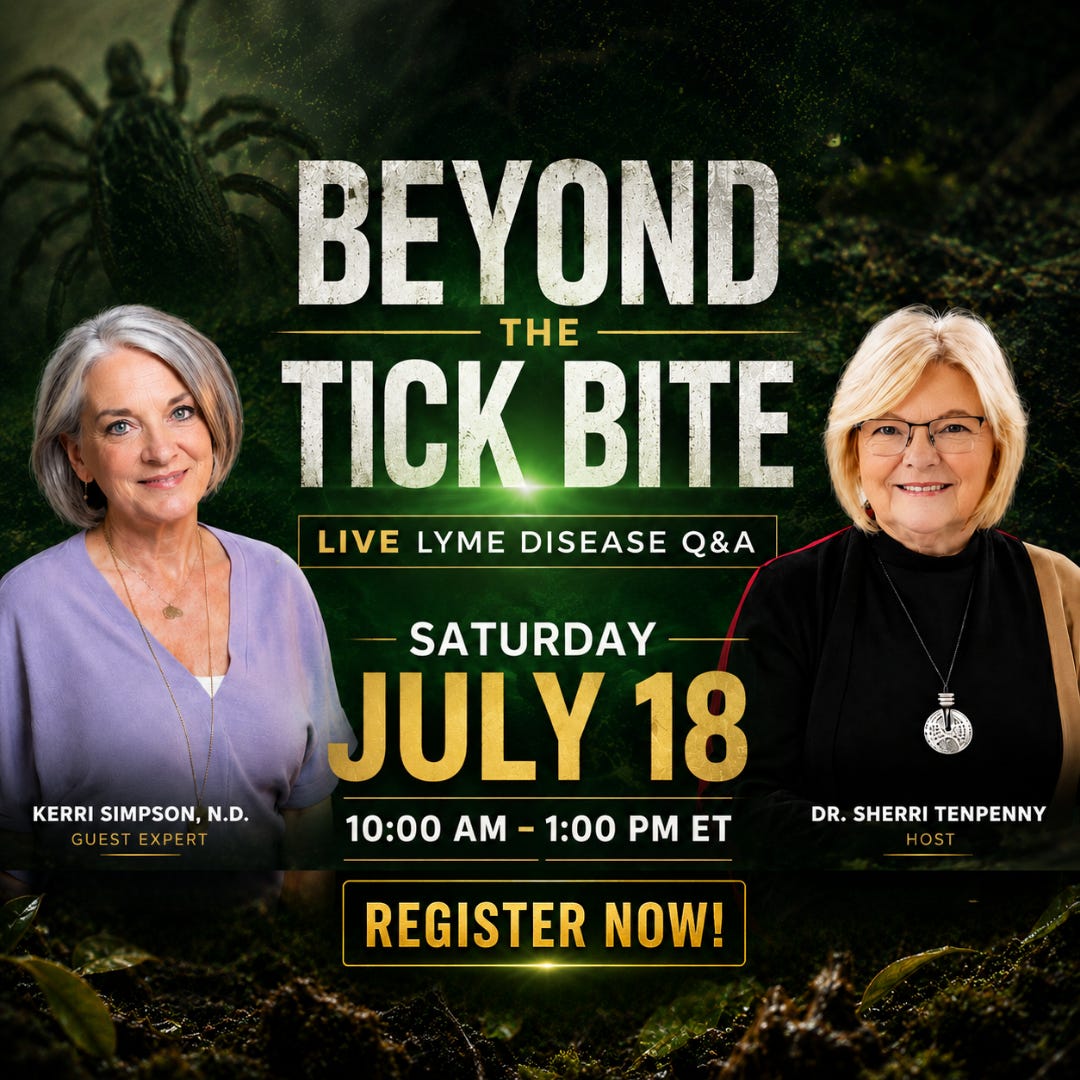 Click image to registerWhy It Matters Today
The Buchanan case is a very early example of credential fraud on a massive scale, but fake degrees, inadequate verification, and diploma mills persist to this day, despite accreditation and credentialing bodies, licensing boards and other measures.
The rise of online diploma mills, digital document manipulation, and international migration of healthcare workers create new and modern opportunities for credential fraud. Investigations conducted by licensing boards, hospitals, and law enforcement agencies regularly uncover fraudulent credentials, and quite often, fraudulent practitioners work for years before their deception is exposed.
US physician licensing is quite rigorous compared with other countries. Medical school accreditation, and national licensing exams reduce fraud. Individuals still forge diplomas, misrepresent residency training, or falsely claim medical credentials. Hospitals and licensing boards still periodically identify applicants who have submitted altered records or fabricated educational histories.
Medical degree fraud vary considerably across countries and the lack of international standards contributes to the occurrence of fraud. And just like after the Civil War, shortages of healthcare workers remain a major driver, and the global migration of healthcare professionals increases the complexity of credential verification. Licensing authorities must evaluate degrees from thousands of medical schools worldwide—not an easy task.
In closing, here is an example of real-world harm.
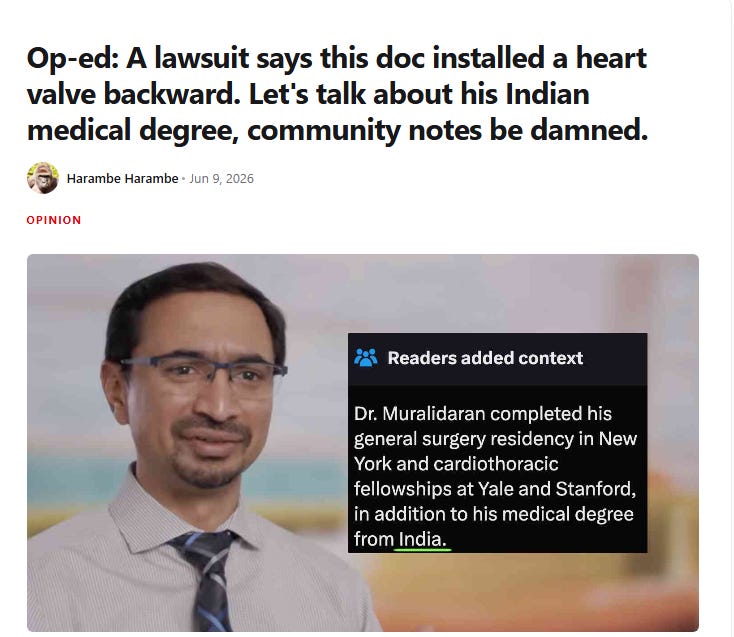
Dr. Muralidaran performed pediatric heart surgeries at a renowned Portland hospital, OHSU Doernbecher Children’s Hospital—one of the Pacific Northwest’s premier medical institutions. He put a heart valve in a 13-year-old girl, and after surgery, her heart would not restart properly. She spent weeks on life support while the good doctor and staff repeatedly told the parents their daughter was dying from the “shock” of surgery. It was only when the family managed a last-ditch transfer to a Seattle hospital that the truth came out—Muralidaran had installed the heart valve BACKWARDS. When Seattle surgeons fixed it, the girl’s heart started functioning normally. It turns out he earned his degree from Madras Medical College in India, one of the schools known for these kinds of degree shenanigans.