Chinese Universities Surge in Global Rankings as U.S. Schools Slip - DailyClout
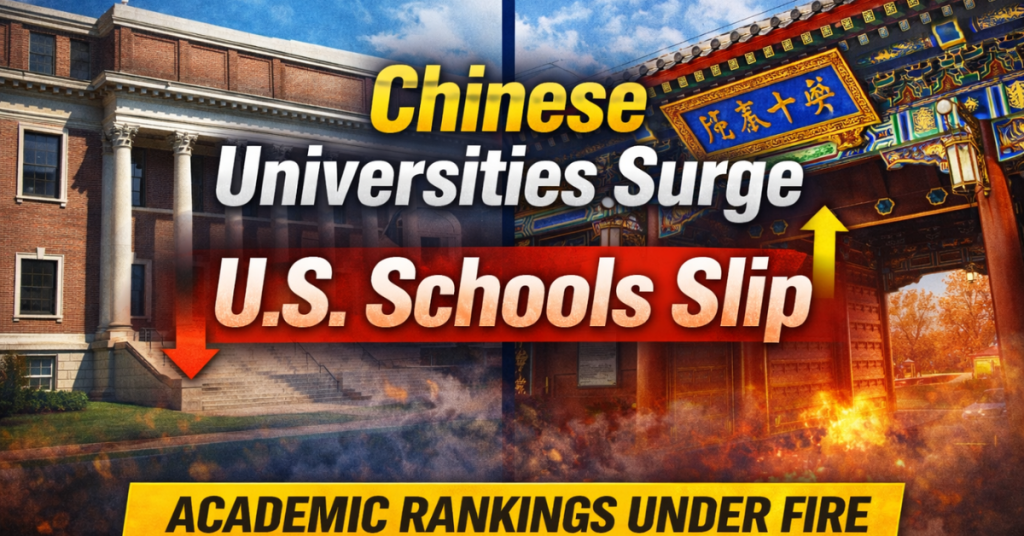
Chinese universities are rapidly climbing global rankings, while many U.S. institutions are losing ground—an unmistakable signal that the balance of academic power is shifting. The latest rankings measuring research output, citations, and scientific influence show China consolidating its gains across science and engineering fields, even as America’s traditional dominance shows signs of strain.
At the top, Harvard University still leads in overall academic output and influence—but it has slipped to No. 3 in a major global assessment focused on published research and citations. More striking than Harvard’s dip is the broader trend: Chinese universities are rising in number, consistency, and impact, while U.S. schools outside the elite tier are falling further behind their global peers.
What’s Driving China’s RiseChina’s surge is not accidental. Over the past decade, Beijing has poured sustained, strategic funding into higher education, with a laser focus on STEM research, applied science, and publication volume. Flagship institutions such as Tsinghua University and Peking University now routinely appear near the top of global lists that prioritize measurable output—papers published, citations earned, and international collaborations formed.
Crucially, Chinese universities have aligned incentives around research productivity. Faculty promotion, funding, and prestige are closely tied to publication and citation metrics, creating a system that relentlessly rewards output and global visibility.
Why U.S. Schools Are SlippingIn contrast, many American universities face fragmented priorities. While elite institutions still excel, a growing number of U.S. schools are constrained by rising administrative costs, declining public funding, and internal focus shifts away from core research missions. Critics argue that bureaucratic expansion and ideological signaling have crowded out investment in hard science and research infrastructure at many campuses.
There is also a talent pipeline issue. International students—long a key driver of U.S. research strength—are increasingly choosing Asia and Europe, drawn by generous funding, modern labs, and fewer visa hurdles.
Rankings Aren’t Everything—But They MatterIt’s important to note that rankings focused on research output don’t measure everything. Teaching quality, academic freedom, and originality are harder to quantify. Still, these rankings are a powerful proxy for scientific influence, and influence matters—especially in emerging technologies like AI, materials science, biotechnology, and energy.
When Chinese universities dominate the metrics that governments, industries, and research funders track, they gain leverage: more partnerships, more talent, and more say over the future direction of global science.
The Bigger PictureThe takeaway isn’t that American higher education is collapsing—it’s that complacency is no longer an option. China is playing a long game, treating universities as national infrastructure tied directly to economic and technological power. The U.S., by contrast, risks fragmenting its advantage if it fails to refocus on research excellence, academic rigor, and global competitiveness.
The rankings are a warning shot. Whether U.S. institutions respond with reform—or continue to drift—will shape not just higher education, but the balance of innovation and influence in the decades ahead.
Spread the WordSubscribe to DailyClout so you never miss an update!
Spread the Word