Ally's Liberal Government Creates New Headaches For US
South Korea’s liberal government is drawing criticism from U.S. lawmakers and national security analysts who say that the country is discriminating against U.S. businesses.
President Lee Jae Myung — who leads the liberal Democratic Party — took office after South Korea’s conservative former president was removed following a martial law crisis, the Associated Press reported on June 3, 2025. Lee’s liberal Democratic government is receiving scrutiny in Washington, as a policy brief released by Polaris National Security sheds light on how U.S. businesses in South Korea are coming under fire from Lee’s increasingly left-leaning government.
The South Korean government’s crackdown on U.S. businesses appears to signal the nation is moving more in the direction of the Chinese Communist Party (CCP) and Xi Jinping. Lee celebrated the 100th anniversary of the CCP in Shanghai on Jan. 7, The Chosun Daily reported.
A July 1 House Judiciary investigation includes an interim staff report that highlighted “South Korea’s history of discriminatory treatment against American-owned businesses.”
“The House Judiciary Committee’s findings should serve as a wake-up call,” former Republican Utah Rep. Chris Stewart told the Daily Caller News Foundation. “South Korea is one of America’s closest allies, which is exactly why these allegations need to be taken seriously. During my time on the Intelligence Committee and the House China Task Force, I warned about foreign governments weaponizing state power to pressure American companies.”
“That’s the kind of behavior we expect from our adversaries – not our allies. The US-ROK alliance is strongest when both countries uphold the same commitment to fair treatment, due process, and a level playing field for each other’s businesses,” Stewart added.
Specific American companies such as Fortune 150 Seattle-based tech company Coupang, Amazon Web Services, Microsoft and Google are being harassed by the South Korean government, according to the policy brief released by Polaris National Security.
The report, titled “Closed for Competition: South Korea’s Discriminatory Attacks on American-owned Businesses,” explains that the South Korean government’s efforts to chastise American businesses were spearheaded by the Korea Fair Trade Commission (KFTC). The report alleges that the KFTC initiates investigations with “insufficient evidence” and that it does not allow companies to challenge the investigations before final determinations are reached by the agency. (RELATED: There’s One Country Winning Big In Ukraine War)
A spokesperson from the South Korean Embassy in Washington D.C. told the DCNF that the country’s government “regrets” that the congressional report “appears to be largely based on the unilateral assertions of Coupang and respectfully disagrees with several characterizations in the report.”
“The Republic of Korea is fully committed to ensuring a fair and non-discriminatory business environment for all companies regardless of their nationality,” the embassy spokesperson said. “Korean laws and regulations are applied fairly and without discrimination toward any domestic or foreign companies, not targeting at any particular foreign company, and will continue to be so.”
However, a U.S. official who requested anonymity to speak openly about the matter told the DCNF that the American government “has ongoing concerns with South Korea about regulations and enforcement that target or discriminate against U.S. technology companies.”
The State Department, Amazon Web Services and the KFTC did not respond to requests for comment.

A delivery truck of South Korean e-commerce giant Coupang is driven along a road in Seoul on December 9, 2025. (Photo by ANTHONY WALLACE / AFP via Getty Images)
A petition filed with the Office of the U.S. Trade Representative on behalf of Greenoaks Capital Partners LLC and Altimeter Capital Management, LP details the South Korean Government’s targeting of Coupang, a digital retail company that appears to be similar to Amazon.
Greenoaks and Altimeter have equity interests in Coupang valued at more than $1.5 billion, according to the petition.
“The Korean Government is currently in the midst of a whole-of-government assault on Coupang,” according to the petition. “Operating the largest online retail marketplace in South Korea, Coupang has emerged as a U.S. champion and leading innovator in e-commerce.”
“We regret the circumstances that led to the House Judiciary Committee’s investigation, and we remain committed to finding a constructive resolution so Coupang can once again serve as a bridge to strengthen the U.S.-Korea alliance, accelerating trade and investment that benefits both countries,” Coupang Inc. told the DCNF.
Coupang is often called the “Amazon of South Korea,” according to the petition filed by Greenoaks and Altimeter. Coupang’s data systems were recently the victim of a cyber attack that may have come from a disgruntled former employee, according to the House Judiciary interim staff report.
“Coupang should be an alliance success story on economic cooperation–an American company that facilitates billions of dollars in annual exports of U.S. goods into the Indo-Pacific and has become the second largest private employer in Korea,” the Polaris Policy Brief reads. “But rather than heralding that success, South Korea has gone to extreme lengths to target Coupang and replace the company with local competitors.”
After the cyber attack began, the South Korean government escalated the incident into a “whole-of-government assault on Coupang,” the report claimed, citing The Korea Herald and the Yonhap News Agency. The data breach affected 33 million consumers throughout South Korea, nearly 60% of the country, The Korea Herald reported.
South Korean officials have called Coupang a criminal organization, according to the House Judiciary interim staff report. After the attack on Coupang began, its market capitalization collapsed by more than 40%, the report stated, citing Yahoo Finance as of May 20, 2026.
“The Coupang case concerns a serious personal data breach affecting at least 37.55 million individuals, which is an exceptionally high number considering that the Republic of Korea’s total population is around 51 million,” the South Korean embassy spokesperson told the DCNF. “The relevant Korean authorities have conducted investigations in accordance with applicable laws and due process.”
However, this matter stretches far beyond Coupang. Executive Director of Polaris National Security Sebastian Borda said that this can affect U.S. national security.
“What started as a commercial spat could soon have wider fallout in the relationship,” Borda told the DCNF. “South Korea is one of America’s most important partners. Obviously, [South Korea] hosts thousands of American troops … Countering North Korea is vital to rebuilding our industrial strength to deter China. So we’re disappointed and concerned that this bilateral irritant kind of risks wider fallout in the relationship.”
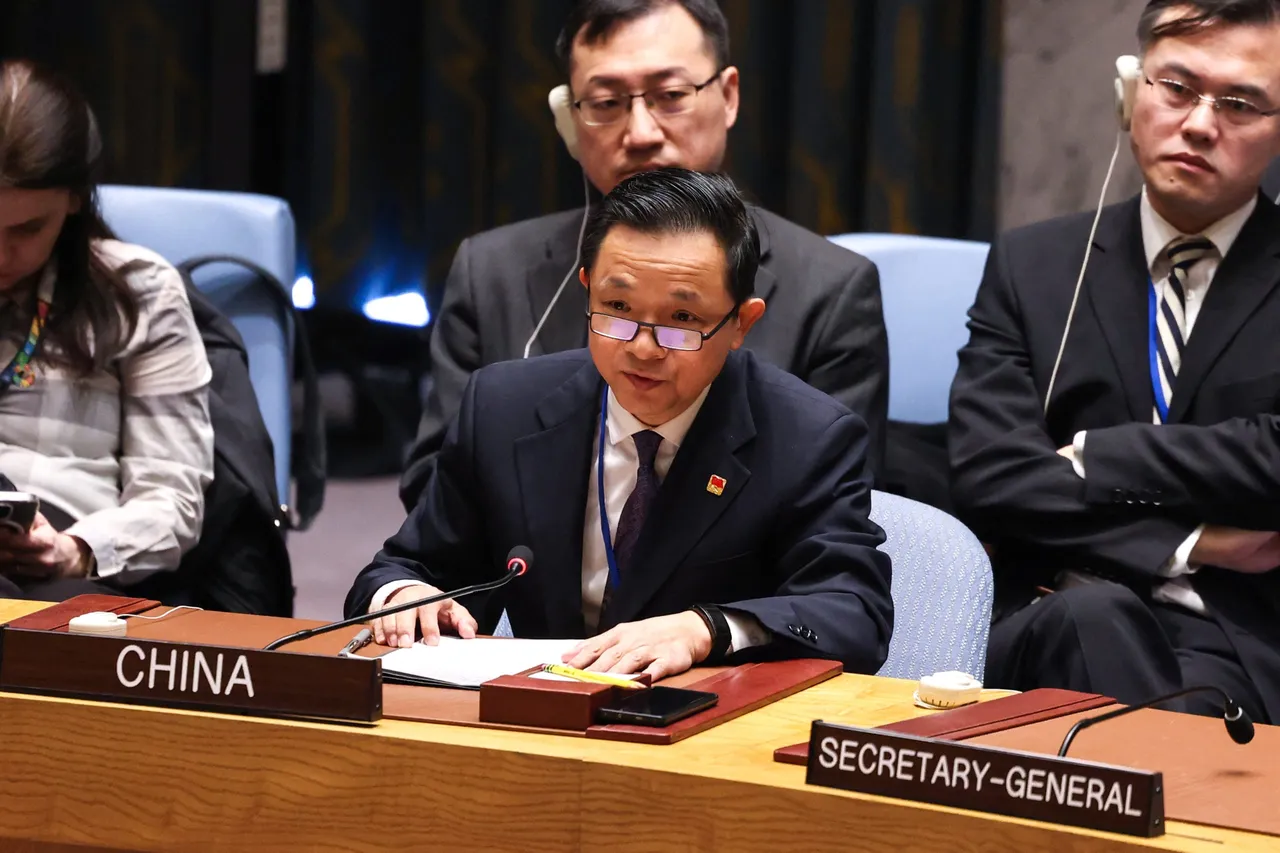
China’s former Deputy UN Ambassador, Dai Bing, speaks after a vote to approve a resolution that “demands” all sides in the Israel-Hamas conflict allow the “safe and unhindered delivery of humanitarian assistance at scale” at UN headquarters in New York on December 22, 2023. (Photo by CHARLY TRIBALLEAU/AFP via Getty Images)
“The Department remains focused on advancing the U.S.-Republic of Korea Alliance and has nothing to provide regarding commercial or regulatory matters,” a Pentagon spokesperson told the DCNF.
The South Korean embassy spokesperson stressed that the country “places the highest value on its strategic partnership with the United States – an alliance rooted in shared values of democracy, rule of law, and open markets.”
This partnership between the two countries “remains strong” and “senior U.S. officials” have described South Korea as a “model ally” to the U.S., the spokesperson added.
The Coupang situation has already begun affecting security concerns, including nuclear submarines, enriched uranium production and nuclear fuel recycling, South Korean news agency Seoul Economic Daily reported on April 24.
But this economic problem is only the beginning of South Korea’s apparent pivot away from the U.S. and towards China.
South Korea’s Defense Minister Ahn Gyu-back met with Chinese Ambassador to South Korea Dai Bing to discuss defense cooperation, The Korea Times reported on April 15.
“I do think that this will naturally force American businesses operating in Korea to ask themselves hard questions about whether they’re going to face similar types of discriminatory practices and targeting by the Korea government,” Borda told the DCNF. “So I would anticipate that if this type of behavior doesn’t change, it’s going to introduce more and more friction into the economic relationship [between the U.S. and South Korea].”
All content created by the Daily Caller News Foundation, an independent and nonpartisan newswire service, is available without charge to any legitimate news publisher that can provide a large audience. All republished articles must include our logo, our reporter’s byline and their DCNF affiliation. For any questions about our guidelines or partnering with us, please contact licensing@dailycallernewsfoundation.org.