ROOKE: Surveillance State Has Arrived, And Masked Heroes Are Already Fighting Back
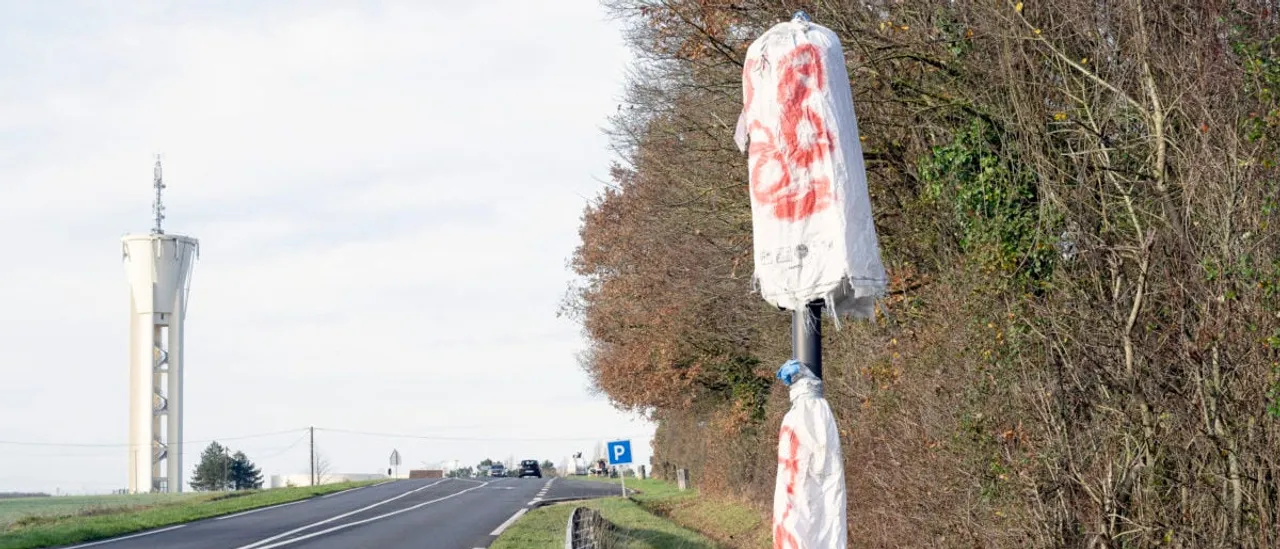
Solar-powered black boxes have been installed in communities across the U.S. under the guise of “public safety.” Yet, in true American fashion, resistance is rising against what can only be described as the arrival of a full-fledged surveillance state.
Flock Safety cameras, the most prominent brand in this AI surveillance space, are automated license plate readers (ALPRs) that capture high-resolution images of every passing vehicle. Flock and similar systems now operate in thousands of communities, with over 110,000 cameras mapped nationwide, according to DeFlock, an open-source project mapping license plate readers.
Thanks to recent tech upgrades like Leonardo’s SignalTrace, these cameras do more than just read license plates and record your vehicle’s unique details; they also track the electronic signatures of Bluetooth, Wi-Fi, RFID, and other wireless signals from devices inside or near your vehicle. (Sign up for Mary Rooke’s weekly newsletter here!)
Using AI and optical character recognition, these systems extract as much private data as possible, including timestamps and geolocation, before uploading it to a cloud platform accessible to all participating law enforcement agencies. And they can do this to law-abiding U.S. citizens without warrants. Flock markets this as solving crimes, but the system inherently sweeps up everyone. Drive past a camera on your work commute or while doing errands, and your route becomes part of a searchable database.
And the truly terrifying reality is that it doesn’t just track your car or devices. Newer Condor cameras use pan-tilt-zoom capabilities and AI to detect and follow pedestrians in real time as they walk through the frame. Your daily trips to work, school, and soccer practice can be reconstructed without ever needing a warrant for traditional GPS or cell tracking. They claim the system doesn’t decrypt message contents, but they don’t really need that because the metadata alone paints an intimate portrait of your life. They know when you typically leave, for what reason, and with whom, based on data that you never gave them permission to track in the first place.
@Flock_Safety is accurately quoting me in this post, but the company left out the rest of our investigations which included: false arrest of an innocent citizen; tracking people without reasonable suspicion; cameras streaming openly & PR people silencing questions. Links below. https://t.co/3HW0tQjblS
— Brendan Keefe – Atlanta News First (@BrendanKeefe) June 28, 2026
Police have used Flock data to issue wrongful accusations. In one Colorado case, an officer used Flock data to arrest a woman, Chrisanna Elser, for stealing a $25 package. Video shows Sgt. Jamie Milliman from the Columbine Valley police interrogating Elser over the alleged theft.
“You know we have cameras in that town. You can’t get a breath of fresh air in or out of that place without us knowing,” Milliman said to Elser, according to Ring doorbell footage from the encounter viewed by The Colorado Sun.
While the Columbine police had dismissed the charges against Elser, she told reporters that it took her weeks to comb through her personal metadata to prove investigators wrong. The whole ordeal left her sleepless and worried about how someone could fight against this if they didn’t have the information she did.
“It’s fortunate that we have our own footage to fight back something like this,” Elser told the outlet.
“It’s a little upsetting that everyone knows that the answer to be, you are innocent until proven guilty. It seemed to be the other way around that it was guilty until you prove yourself innocent,” she said.
Equally shocking are reports detailing law enforcement’s abuse of access to this private data. Multiple officers have been caught using the systems for stalking, including a Kansas lieutenant tracking his estranged wife and a police chief tracking an ex-girlfriend hundreds of times.
“A Florida police officer met a woman on a TV set, surveilled her for weeks, stalked her, and nearly caused a head-on collision while chasing her to pull her over.”
This is a feature, not a flaw.https://t.co/EXECfPDDL7
— DeFlock (@therealDeFlock) July 6, 2026
Americans aren’t taking the abuse lying down. DeFlock.org, the crowdsourcing site, helps users plan routes that avoid cameras. Local efforts have led to contract cancellations in dozens of cities, including Eugene, Oregon, Cambridge, Massachusetts, and Evanston, Illinois. Still, a disturbing pattern arose after these cities terminated their contracts with Flock. Officials discovered that the cameras remained active after cancellation. In the Evanston case, additional cameras were installed, and a state audit revealed the company had given the data to federal authorities.
Some Americans aren’t waiting for their local governments to fight back and have started physically disabling cameras. In Virginia, Jeffrey Sovern faces charges after allegedly disabling 13 Flock Safety cameras in 2025. When his story reached a local news Facebook page, several users congratulated him in the comment section.
“Good for him!!” one said.
“MY ABSOLUTE HERO! I don’t know anything else about him, but I would support a GiveSendGo for his legal fees just because he destroyed a dozen unconstitutional Flock cameras!” another said while posting an American flag emoji.
Sovern, who has not admitted any wrongdoing, created a legal defense fund and asked supporters to help protect his Fourth Amendment rights.
The deflocking of America is now under way… https://t.co/0kjGglYnS8
— HealthRanger (@HealthRanger) June 20, 2026
The Fourth Amendment protects against unreasonable search and seizure and requires warrants based on probable cause. Our Founders opposed British general warrants and broad searches, which is why the Fourth Amendment was included in the U.S. Constitution. Disabling cameras that enable warrantless mass tracking is a legitimate form of self-defense for liberty that the Founding Fathers would have fully supported.
The U.S. Supreme Court has set important limits on location tracking. In United States v. Jones, the Court ruled that placing a GPS tracker on a vehicle is a search under the Fourth Amendment because long-term monitoring invades privacy. Additionally, in Carpenter v. United States, the Court held that accessing historical cell-site location data for extended periods requires a warrant. Such data reveals “an intimate window” into a person’s life and movements. People have a reasonable expectation of privacy, even on public roads.
It’s hard not to see that Flock networks, especially with their updated technology, create similar long-term records and violate the Fourth Amendment. They log vehicles and linked devices across locations without warrants or probable cause. And Americans will likely see this being argued before the Supreme Court soon.
In 2025, a federal court in Virginia allowed a challenge to Norfolk’s Flock system to proceed. Chief Judge Mark Davis found that pervasive camera tracking raised plausible Fourth Amendment issues under Carpenter. However, in January, the same district court ruled the camera program did not violate the Fourth Amendment because it did not track the “whole” of movements in the way Carpenter prohibits. That decision is on appeal to the Fourth Circuit. (ROOKE: SCOTUS Flips The Bird To Young Americans)
The United States was founded on the idea that government power must be limited. The Bill of Rights is a fundamental part of the U.S. Constitution, which is why it became the first ten amendments. All of these rights, especially the Fourth Amendment, protect individual liberty from unchecked authority. These surveillance systems are more reminiscent of authoritarian regimes like China, which treat their citizens as subjects that cannot be trusted without constant monitoring. They do not belong among free people in the U.S.