Tehran Whispers an Apology While Demanding the World Pretend Nothing Happened
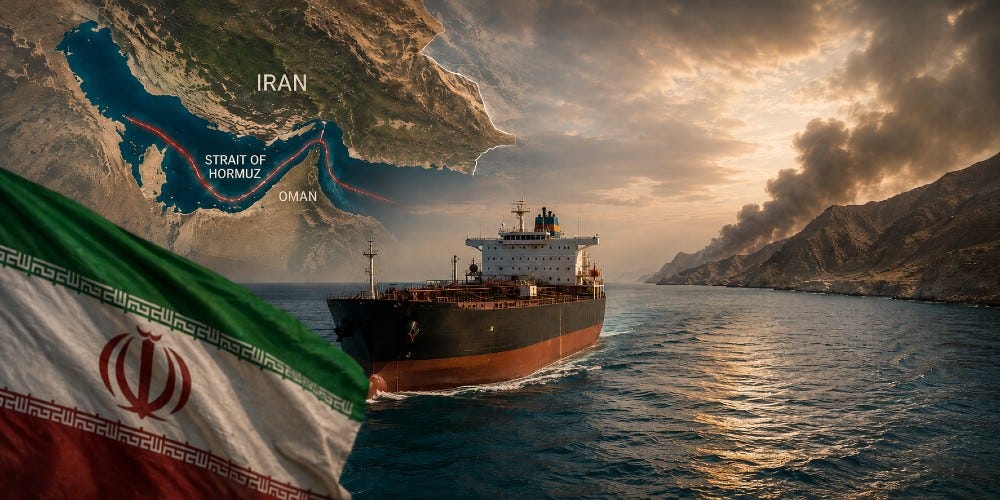
The Islamic Republic of Iran has apologized for shooting at commercial ships in the Strait of Hormuz. You just were not supposed to hear about it.
According to CBS News, senior U.S. officials say Iranian representatives privately told Trump advisers that the attacks were a mistake, that they originated with an “errant” faction of hardliners trying to sabotage negotiations, and that Tehran wants to keep talking. One official paraphrased the Iranian message as an admission that they had blundered badly and a plea to stay at the table. The White House, to its credit, is not letting the regime have it both ways. It wants Iran to say publicly what it has confessed privately.
That demand matters more than it might appear. A private apology costs the mullahs nothing. It is diplomatic currency printed in a back room, spent in a back room, and deniable the moment it becomes inconvenient. A public acknowledgment, by contrast, would require the regime to tell its own people and its own Revolutionary Guard that firing on civilian shipping was wrong and will not happen again.
The regime’s reluctance to do so tells you everything about which audience it actually fears.
The Rogue Hardliner Excuse Is a Trap of Tehran’s Own MakingConsider the explanation Iran is offering. Some errant element within the system, we are told, launched attacks on three commercial vessels transiting one of the most strategically vital waterways on earth, and the government in Tehran simply could not stop it.
There are only two ways to read this, and both should end any illusions about dealing with Iran as a normal state. Either the excuse is a lie, meaning the regime ordered the attacks, watched the American response obliterate more than 80 targets including dozens of Revolutionary Guard boats, and is now hiding behind an invented scapegoat. Or the excuse is true, meaning the government negotiating with the United States does not command its own armed forces, and any signature it puts on any agreement binds no one who actually controls the missiles.
A regime that lies about who pulled the trigger cannot be trusted. A regime that genuinely does not know who pulled the trigger cannot be trusted either. There is no third option in which this story reflects well on Tehran.
What Actually Happened, According to the AmericansThe Trump administration is not buying the rogue faction narrative, and its alternative explanation is more damning. U.S. officials told CBS that Iran expected the southern shipping lane along the Omani coast to carry modest traffic under the memorandum of understanding. When commerce came roaring back faster than Tehran anticipated, with oil and gas moving freely through a lane Iran does not control, the regime reneged and started shooting.
In other words, Iran’s objection was not to some misunderstanding of the agreement’s terms. Its objection was that the agreement worked. Free navigation resumed, the world’s tankers stopped paying tribute to the Islamic Republic, and the men in Tehran discovered they had signed away their favorite instrument of extortion. The attacks were not errant. They were a correction, in the regime’s eyes, of a deal that gave away too much leverage.
This is the same regime whose parliamentary speaker declared that the strait would remain open only under Iranian arrangements. The mask slips whenever the incentives change.
Meanwhile, More Threats Allegedly From the New Supreme LeaderAccording to Fox News:
Iran’s new Supreme Leader Mojtaba Khamenei vowed to avenge the death of his father, former Supreme Leader Ayatollah Ali Khamenei, in a Saturday morning barrage of posts on X.
“We pledge to avenge your pure blood and the blood of all the martyrs of these two [recent] wars by taking revenge against the criminal, disgraceful murderers. This vengeance is what our nation is demanding, and this must definitely be done,” Khamenei wrote.
The 86-year-old Iranian Supreme Leader Ali Khamenei was killed on February 28 in joint U.S.-Israeli airstrikes that struck his compound in Tehran.
“The criminal, disgraceful murderers of the martyred Leader, whose names are fully documented from the highest to the lowest ranks, will carry their dream of a peaceful death in bed to the grave,” the new supreme leader added in his social media screed.
This does not sound like a regime ready to negotiate in good will.
A Pattern Older Than This WarNone of this is new behavior. It is the same regime that spent decades chanting death to America while sending diplomats to Geneva, the same regime that violated the spirit of every arrangement it ever signed, the same regime that this February watched its supreme leader die in the opening strikes of a war his own belligerence invited.
The funeral processions for Ayatollah Khamenei concluded this week. The habits of his regime evidently did not accompany him to the grave.
The prophet described this species of statecraft long ago. “Their tongue is as an arrow shot out; it speaketh deceit: one speaketh peaceably to his neighbour with his mouth, but in heart he layeth his wait.”
The White House is right to demand a public confession, and it should settle for nothing less. A regime that apologizes only in whispers is not sorry for what it did. It is sorry it got caught, and sorrier still that it got hit back.
Stay on top of the latest conservative and Christian news, commentaries, and videos at jdrucker.com